Seeds
Leggy Seedlings Are a Light Problem, Not a Watering Problem
The classic pale, stretched, floppy seedling is almost always starved for light intensity, even when it's sitting right in a bright window.
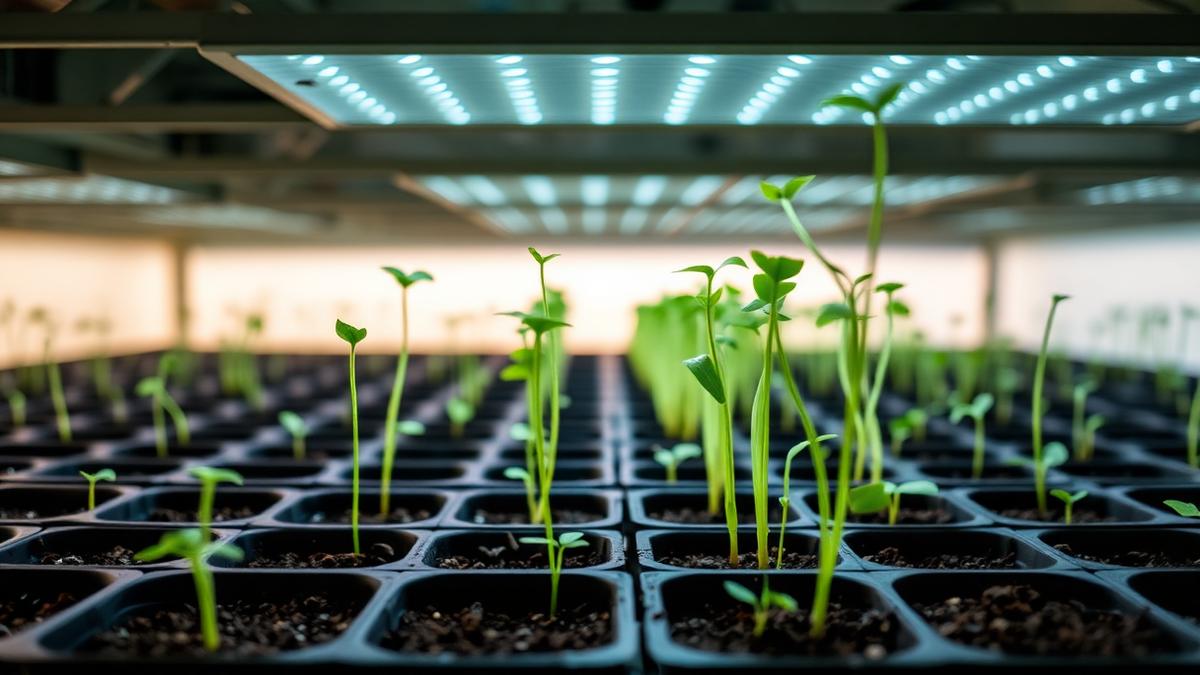
Seedlings respond to light intensity, not just presence of light. A sunny windowsill might feel bright to a human eye, but it delivers a small fraction of the light intensity outdoor sun provides, and light falls off sharply with distance from the source. The seedling responds by elongating its stem, reaching toward the light source in a stress response called etiolation — the classic leggy, pale, weak-stemmed seedling.
A grow light positioned 2-4 inches above the seedlings (adjusted upward as they grow) and run 14-16 hours a day corrects this reliably, since it delivers far more usable intensity than even a south-facing window. Rotating windowsill trays daily helps but rarely matches the light a proper setup provides.
Written and reviewed by Jim Vernon, editor of Home & Garden Answers · Last updated
Put this into practice
- Grow Light CalculatorHow high and how long should my grow light run?
More facts like this
- Old Seed Is Usually Still Good — But Not All Species Age AlikeSeed longevity varies from about one year (parsnip, onion) to ten or more (tomato, cucumber) under the same storage.
- The 'Average Last Frost Date' Has a Coin-Flip Chance of Being WrongPlanting exactly on the average last frost date means, by the statistic's own definition, a roughly 50% chance frost still comes.
- The Bulb Depth Rule Is a Ratio, Not a Fixed NumberUsing one fixed planting depth for every bulb ignores that the standard rule is a multiplier of bulb size, not a single number.