Grow
Garden Bed Plant Spacing
Enter bed size and crop to see how many plants fit using row spacing or square-foot gardening.
Your bed
Formula
Row: Plants = floor(length ÷ in-row spacing) × floor(width ÷ row spacing)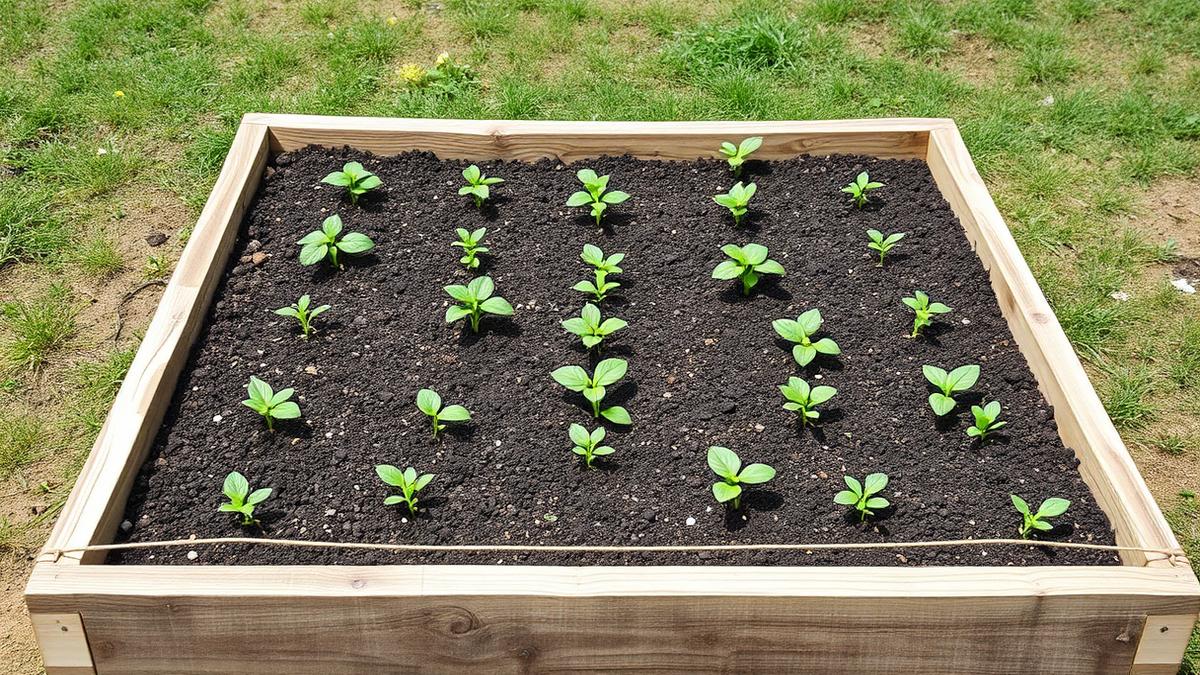
Two ways to space a garden bed
Row spacing and square-foot gardening solve the same problem — fitting healthy plants into a bed — with different philosophies. Row spacing comes from field agriculture: crops sit in straight lines with room between rows for equipment, hands, and airflow. Square-foot gardening drops the row concept entirely and treats the whole bed as a grid of one-foot squares, fitting a set number of plants into each square based on their mature size.
For small raised beds under about 4 feet wide, square-foot gardening usually fits noticeably more plants into the same footprint because there's no wasted inter-row walkway. For larger in-ground plots you still walk through, row spacing remains the practical choice.
Typical spacing by crop
| Crop | In-row spacing | Row spacing | Per sq ft (square-foot method) |
|---|---|---|---|
| Lettuce, loose-leaf | 6-8 in | 12 in | 4 |
| Bush beans | 4-6 in | 18-24 in | 9 |
| Carrots | 2-3 in | 12 in | 16 |
| Tomatoes (staked) | 18-24 in | 36 in | 1 |
| Peppers | 12-18 in | 24 in | 1 |
| Radishes | 1-2 in | 6-12 in | 16 |
| Broccoli / cabbage | 18-24 in | 24-36 in | 1 |
| Bush zucchini / squash | 24-36 in | 36-48 in | 1 per 4 sq ft |
How the square-foot method counts plants
- Divide your bed into 1 ft × 1 ft squares (or use the metric equivalent by area).
- Look up the standard count for the crop: 16 per square for radishes and carrots, 9 for bush beans, 4 for lettuce, 1 for tomatoes and large brassicas.
- Multiply the per-square count by total squares in the bed to get the plant total.
- Group taller plants like tomatoes and pole beans on the north side of the bed so they don't shade shorter crops.
Adjusting for bed shape and access
Whichever method you use, subtract a maintenance margin around the bed edge if you need to reach in from outside — typically 3-4 inches is enough for hand access, more if you'll be kneeling on the soil itself (which you generally shouldn't, to avoid compaction). For beds wider than about 4 feet that you can't reach across from both sides, plan a path through the middle.
What's the difference between row spacing and square-foot gardening?
Row spacing plants crops in straight lines with set distances between rows and between plants within a row, mimicking field agriculture. Square-foot gardening divides a bed into 1-foot squares and fits a fixed number of plants per square based on their size, which usually packs more plants into the same area.
Why does square-foot gardening fit more plants?
Row spacing reserves walking and airflow space between every row, even in a bed you never walk inside. Square-foot gardening uses equilateral triangular spacing within the whole bed area, which fills gaps that row spacing wastes.
Should I always maximize plant count?
No. Packing too tightly reduces airflow, increases disease pressure, and can lower yield per plant even though yield per square foot may rise. Follow the tighter end of a crop's recommended spacing range only if you have excellent soil fertility and airflow.
How do I handle irregular bed shapes?
Break an irregular bed into rectangular sections, calculate each separately, and add the totals. For curved edges, measure the largest inscribed rectangle and treat the curved margins as buffer space.
Written and reviewed by Jim Vernon, editor of Home & Garden Answers · Last reviewed February 2026