How to Winterize Irrigation Systems and Outdoor Faucets
By Jim Vernon · 4 min read · Last updated
A $100 blowout in October beats a $1,200 burst pipe in February.
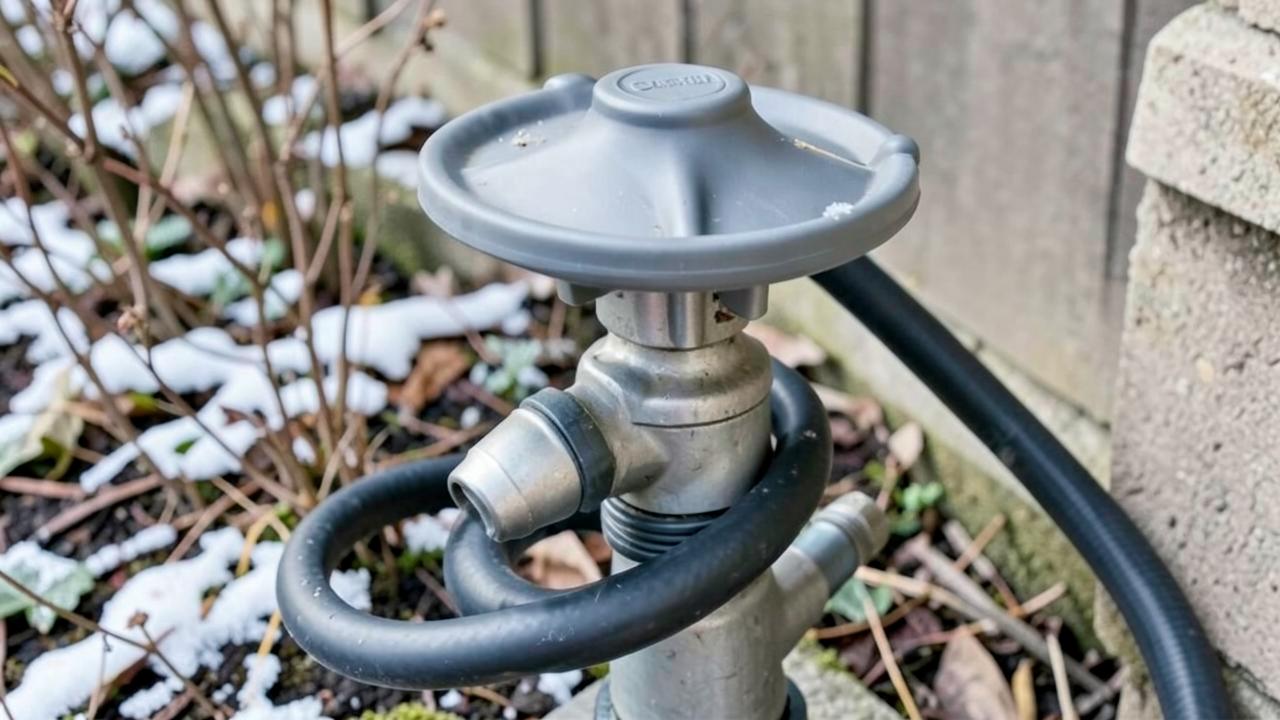
Winterizing irrigation and outdoor faucets means draining or blowing residual water out of every line, valve, and backflow device before the first hard freeze, because water expands roughly 9% as it turns to ice and will crack whatever container holds it — PVC pipe, brass fittings, or a backflow preventer. Do it before your first freeze warning, not after.
What's the actual process for winterizing a sprinkler system?
- Shut off the water supply to the irrigation system at the main valve.
- Shut off the automatic controller or set it to rain mode/off so it doesn't try to run a dry system.
- Open manual drain valves at the low points of the system, if your setup has them, and let gravity drain the lines.
- For systems without manual drains, use a compressed-air blowout: attach an air compressor to the mainline, then open each zone in turn and blow residual water out through the sprinkler heads.
- Insulate the backflow preventer and any exposed above-ground piping with foam pipe insulation or an insulated cover.
- Leave drain valves and controller off until you reactivate the system in spring.
Can I blow out my own sprinkler lines, or do I need a pro?
You can do it yourself with a compressor rated for at least 80-100 CFM for larger multi-zone residential systems (a typical home shop compressor often isn't big enough — check its CFM rating, not just tank size or PSI). Keep air pressure under about 50 PSI for PVC systems and under 80 PSI for polyethylene to avoid blowing out fittings or cracking heads. If you don't own or want to rent a large compressor, hiring an irrigation contractor runs $50-150 for a typical residential system depending on zone count.
| Method | Best for | Typical cost | Risk if done wrong |
|---|---|---|---|
| Gravity drain via manual valves | Systems designed with low-point drains | $0 | Low, but only works if drains exist and are used |
| Compressed-air blowout | Most residential systems without drains | $0 DIY (own compressor) or $50-150 pro | Cracked heads/fittings if PSI too high |
| Auto-drain valves left in place | Systems built with them from installation | $0 ongoing | Can fail over years; check yearly |
| Doing nothing | Never recommended in freeze climates | $0 upfront | $150-500+ per burst zone valve or pipe |
How do you winterize outdoor hose bibs?
Disconnect every hose — a hose left attached traps water in the bib and defeats even a frost-proof faucet. If you have interior shutoff valves for exterior spigots (common in colder climates), close them and open the outside tap to drain and relieve pressure, then leave it open slightly through winter. If you don't have an interior shutoff, a foam or hard-shell insulated faucet cover ($3-15) adds meaningful protection but isn't a substitute for draining if you have a standard (non-frost-proof) bib.
What does it cost when winterizing gets skipped?
- A cracked backflow preventer typically runs $150-400 to replace, plus labor.
- A split zone valve or lateral line repair runs $100-350 depending on accessibility.
- A burst hose bib that leaks into a wall can cause hidden water damage costing $500-3,000+ to remediate.
- Full system repiping after severe freeze damage can run into the thousands, far above the $50-150 a blowout would have cost.
What happens if you wait too long to winterize?
Waiting past the first hard freeze means water already sitting in the mainline, valves, and backflow preventer has a chance to freeze before you drain it, which is exactly the scenario that cracks PVC and brass fittings. Even one missed cold night in the 20s can be enough if the system wasn't drained — the damage often isn't visible until spring startup, when a cracked valve or split lateral line shows up as a geyser or a soggy patch of lawn the moment water pressure returns. If you missed the window and a hard freeze already hit, check the backflow preventer and any exposed piping for cracks before restarting the system, rather than assuming it survived.
How do you reactivate irrigation safely in spring?
- Wait until nighttime lows are reliably above freezing for at least a week before turning the main water supply back on.
- Open the main valve slowly rather than all at once, which lets air escape gradually instead of causing a pressure surge (water hammer) that can damage fittings weakened over winter.
- Run each zone individually and watch for wet spots, weak spray, or heads that don't pop up — signs of a leak or debris that settled into a line over winter.
- Check the backflow preventer for cracks before pressurizing it, since a damaged one can fail suddenly under pressure rather than gradually.
- Reset the controller's schedule for spring conditions rather than leaving it on the setting from the previous fall.
When should I winterize irrigation relative to the first freeze?
Do it before the first forecast night at or below 28°F, with some buffer — a light 32°F frost rarely damages buried lines, but sustained hard freezes do. Check your area's typical first hard freeze date and schedule the blowout a week or two ahead of it.
Do drip irrigation lines need winterizing too?
Yes, especially above-ground drip tubing and emitters, which have very little water volume and no insulation from soil. Drain and disconnect above-ground drip lines; buried mainline can often be blown out the same way as sprinkler lines.
What temperature can irrigation pipes actually survive without draining?
Buried PVC mainline several inches under soil, in a climate with only brief overnight dips to the high 20s, often survives undrained. But this varies by burial depth and freeze duration, so it's not a bet worth making in a climate with sustained freezes.
Run the numbers for your own project
- Drip Irrigation PlannerHow many emitters and how long should my drip system run?
- Frost Date LookupWhen is my last frost and how long is my season?
- Home Maintenance ScheduleWhat should I be doing to my home this month?
Keep reading
- Starting Your First Vegetable Garden Without Wasting a SeasonMost first gardens fail for reasons that have nothing to do with a green thumb. Here are the five that matter.
- Building Soil That Actually Grows ThingsFeeding plants is a short-term fix. Feeding the soil is what makes a garden easy.
- Reviving a Tired Lawn: A Season-Long PlanA thin lawn is a symptom. Treating the symptom with more seed is why it keeps coming back.