Building Soil That Actually Grows Things
By Jim Vernon · 5 min read · Last updated
Feeding plants is a short-term fix. Feeding the soil is what makes a garden easy.
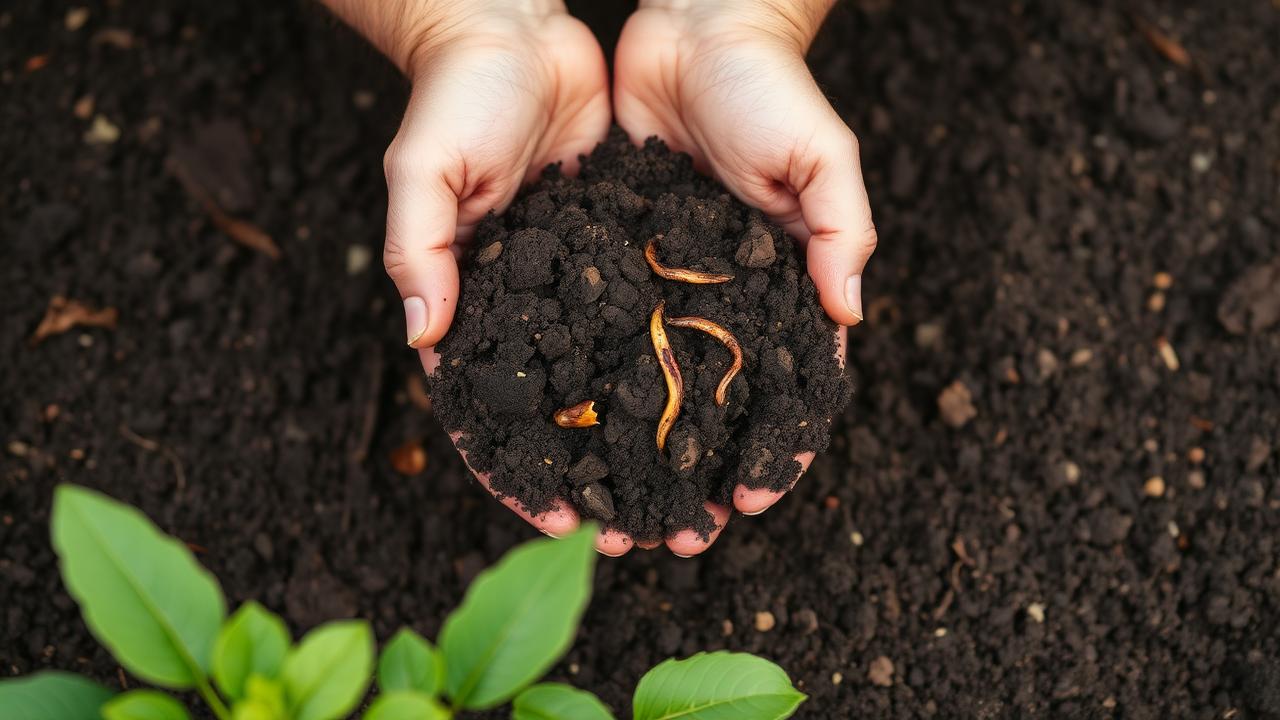
Soil does three jobs: it anchors roots, it holds water and air in the right balance, and it releases nutrients. Fertiliser only touches the third. Most struggling gardens have a problem with the second.
Diagnose structure with your hands
Take a moist handful and squeeze. If it forms a sticky ribbon, it is clay-heavy: nutrient rich, poorly drained, slow to warm. If it collapses immediately and feels gritty, it is sandy: fast draining, quick to warm, hungry. A crumbly ball that breaks under light pressure is loam.
Organic matter fixes both extremes
This is the counterintuitive part: compost improves clay and sand for opposite reasons. In clay it opens pore space so water drains and roots breathe. In sand it acts as a sponge, holding water and nutrients that would otherwise wash straight through.
| Soil type | Main problem | Annual treatment |
|---|---|---|
| Heavy clay | Waterlogging, compaction | 2-5 cm compost on the surface, never dug in wet |
| Sandy | Drying out, nutrient loss | 5 cm compost plus mulch to slow evaporation |
| Chalky | High pH locking iron | Compost and acidifying mulches; choose tolerant plants |
| Silt | Capping and crusting | Compost plus permanent planting to protect the surface |
Stop digging it in
Surface mulching lets worms and roots do the incorporation, which preserves the fungal networks and the pore structure that digging destroys. Beds mulched annually and left undug outperform dug beds within two or three seasons, with less work.
Test pH before you buy anything
A cheap test kit prevents the most common wasted purchase in gardening. At the wrong pH, nutrients already present in the soil are chemically unavailable, so adding more of them changes nothing.
How much compost is enough?
Two to five centimetres spread on the surface each year is the standard maintenance dose. More is rarely harmful but the returns flatten quickly.
Is homemade compost as good as bagged?
Usually better, because it is fresher and more biologically active. Bagged products are more consistent and matter more when you need a known volume for a raised bed.
Can I fix soil in one season?
Structure improves measurably within one season of surface mulching, but full recovery of a badly compacted or depleted bed typically takes two to three years of annual compost applications.
Should I add sand to break up clay?
Generally no, unless applied in large, carefully calculated quantities alongside organic matter. Small amounts of sand mixed into clay often bind together into a dense, brick-like texture rather than the free-draining mix you want.
Worked example: fixing 100 square feet of heavy clay
A 100 square foot bed of heavy clay needs about 2 to 5 centimetres of compost across the surface, which works out to roughly 0.6 to 1.5 cubic yards depending on how deep you go. Spread annually rather than all at once, that same bed reaches noticeably better structure within two to three seasons, with worm activity doing the mixing that a spade used to do — and doing it without destroying the pore structure the way digging does.
A one-season improvement sequence
- Test pH and note current soil type using the squeeze test.
- Clear perennial weeds by hand or by smothering; do not dig heavy clay while wet.
- Spread 2-5 cm of compost across the surface in autumn or early spring.
- Apply a mulch layer to protect the surface from capping rain and to suppress weeds.
- Leave undisturbed through the growing season, topping up mulch as it breaks down.
- Retest pH the following year before adding any amendment aimed at shifting it.
- Common mistake: digging clay soil while it is wet, which compacts it further and can take years to reverse.
- Common mistake: adding sand to clay to improve drainage — in the wrong ratio this creates something closer to concrete.
- Common mistake: applying lime or sulphur before testing pH, which can push a soil to the opposite extreme.
- Common mistake: judging soil health from a single dry summer reading rather than checking after rain and after a dry spell.
What fertiliser actually fixes, and what it cannot
A fertiliser supplies specific nutrients in soluble form, which is useful when a soil test shows a genuine deficiency. It does nothing for compaction, poor drainage, or low organic matter, and repeated use on a structurally poor soil creates a plant that depends on ever more feeding because the soil itself is doing none of the supporting work a healthy soil would otherwise provide for free.
Cover crops for beds resting over winter
A bed left bare over winter loses structure to rain compaction and nutrients to leaching. A quick-growing cover crop such as field beans or a grazing rye, sown in autumn and cut down or dug in lightly before spring planting, adds organic matter and root channels at close to zero material cost — the seed for a 100 square foot bed costs less than a single bag of compost.
| Amendment | What it actually changes | Speed of effect |
|---|---|---|
| Garden compost | Structure, water-holding, slow-release nutrients | One season onward |
| Well-rotted manure | Structure and nitrogen, especially in sandy soil | One season onward |
| Lime | Raises pH | Weeks to months |
| Elemental sulphur | Lowers pH | Months, slower than lime |
| Balanced fertiliser | Immediate nutrient levels only | Days |
Reading a soil test report
A lab soil test reports pH, organic matter percentage, and levels of phosphorus, potassium, and sometimes magnesium and calcium, usually on a low-medium-high scale rather than a raw number. Organic matter below about 3% in a vegetable bed is worth correcting with compost regardless of what the nutrient levels say, since organic matter drives the water-holding and biological activity that make added nutrients usable in the first place. Ignore any report that recommends a specific fertiliser brand — the useful information is the deficiency itself, which any balanced or targeted feed can address.
Run the numbers for your own project
- Composting CalculatorWhat ratio of greens to browns does my compost need?
- Raised Bed Soil CalculatorHow much soil do I need to fill my raised bed?
- Mulch CalculatorHow much mulch do I need for my beds?
Keep reading
- Starting Your First Vegetable Garden Without Wasting a SeasonMost first gardens fail for reasons that have nothing to do with a green thumb. Here are the five that matter.
- Reviving a Tired Lawn: A Season-Long PlanA thin lawn is a symptom. Treating the symptom with more seed is why it keeps coming back.
- Balcony and Container Gardening That Survives AugustContainers fail in heat, not in cold. Almost all of that comes down to volume.