Wildfire-Resistant Landscaping That Still Looks Good
By Jim Vernon · 5 min read · Last updated
Defensible space isn't about removing every plant — it's about spacing and choosing the right ones.
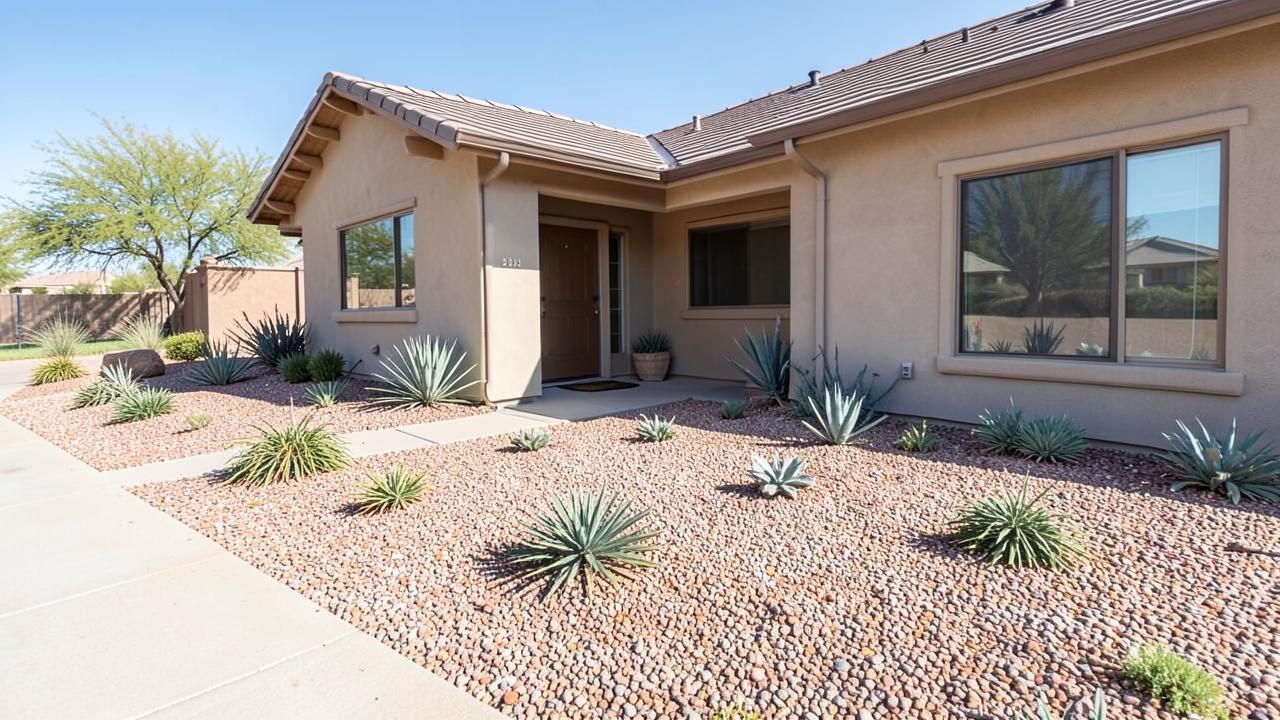
Wildfire-resistant landscaping works by creating defensible space in three zones around a structure — an immediate zone within 5 feet kept nearly free of anything flammable, an intermediate zone to 30 feet with widely spaced, low-resin plants, and an extended zone to 100+ feet with reduced fuel load — while choosing plants with high moisture content and low resin/oil content throughout. It does not require an all-gravel yard.
What are the three defensible space zones and what goes in each?
| Zone | Distance from structure | What belongs there |
|---|---|---|
| Immediate zone | 0-5 ft | Non-combustible mulch (gravel, rock), well-watered low groundcover, no shrubs against siding |
| Intermediate zone | 5-30 ft | Widely spaced low-resin shrubs and trees, mowed lawn, irrigated beds, no continuous fuel path to the house |
| Extended zone | 30-100+ ft | Thinned trees, removed deadwood and ladder fuels, spaced tree canopies |
Which plants are considered fire-resistant, and which should be avoided?
Fire-resistant does not mean fireproof — no living plant won't burn under extreme conditions — but plants with high moisture content, low oil/resin content, and non-flammable leaf litter ignite less readily and burn less intensely. Broadleaf, low-growing, well-irrigated plants generally perform better than resinous conifers, ornamental grasses left unmowed, and plants that accumulate dry, dead material within their structure.
- Better choices: lavender kept well-pruned, rockrose, most succulents, well-irrigated lawn, deciduous shrubs like lilac and spirea, hardy ice plant groundcover.
- Higher-risk choices: juniper (high resin content, holds dead needles), eucalyptus (oily leaves and bark, sheds flammable litter), pampas grass and unmowed ornamental grasses, dense arborvitae hedges planted close to structures.
- Any plant becomes higher-risk if it's allowed to accumulate dead leaves, needles, or branches within its canopy — regular pruning and removal of dead material matters more than species choice alone.
Does mulch choice actually matter for fire risk?
Yes, significantly, in the immediate 0-5 ft zone against the house. Organic mulch (bark, wood chips) is a continuous fuel bed that can carry fire directly to siding; non-combustible options like gravel, rock, or decomposed granite eliminate that pathway. Further out in the intermediate zone, organic mulch is fine and even beneficial for soil health, since the risk of fire reaching the structure through that mulch is much lower.
How much does defensible-space landscaping typically cost?
| Work | Typical cost range | Notes |
|---|---|---|
| Clearing 5-ft non-combustible zone around foundation | $300-1,500 DIY materials to $1,000-3,000 pro | Depends on removing existing plantings vs. new build |
| Tree limbing (removing lower branches, ladder fuels) | $150-500 per tree pro | DIY feasible for small trees with hand tools |
| Replacing resinous shrubs with fire-resistant species | $20-80 per plant installed | Cost scales with plant size and quantity |
| Gravel/rock mulch conversion in immediate zone | $3-8 per sq ft installed | One-time cost, essentially maintenance-free after |
What ongoing maintenance keeps defensible space effective?
- Mow dry grass to under 4 inches within 100 feet of structures during fire season.
- Remove dead leaves, needles, and branches from gutters, roof, and around the base of plants regularly.
- Prune tree limbs so the lowest branches are at least 6-10 feet above ground to reduce ladder fuel that lets ground fire climb into canopy.
- Keep the irrigation system functioning through fire season, since well-watered plants are meaningfully more fire-resistant than drought-stressed ones.
Does the house itself factor into a defensible-space plan?
Landscaping is only half of wildfire preparedness — a home with a Class A fire-rated roof, ember-resistant vents, and non-combustible siding within the first few feet of grade survives radiant heat and ember showers far better than one with a wood shake roof and open eaves, regardless of how good the yard looks. Embers, not the flame front itself, ignite the majority of homes lost in wildfires, often landing in gutters full of dry leaves, on wood decking, or in vents that lack fine mesh screens. Pairing defensible-space landscaping with $200-2,000 in home hardening — ember-resistant vent screens, gutter guards, and clearing debris from under decks — meaningfully improves survival odds beyond plant choice alone. Wood decking attached directly to the house is a particularly common weak point, since it sits close to siding and often has leaf litter and debris packed underneath by wind; replacing at least the section nearest the house with a non-combustible material, or committing to keeping it swept clean, closes a gap that landscaping alone can't fix.
How is defensible space different from a Firewise program?
Defensible space refers to the specific zones and plant/fuel management around an individual structure, while Firewise USA is a national recognition program that organizes entire neighborhoods around shared wildfire risk reduction, including community-wide fuel breaks, coordinated evacuation planning, and shared cost programs for chipping and debris removal. A single well-landscaped property in a neighborhood with no coordinated fuel management still faces risk from a neighbor's overgrown lot or a shared access road blocked by fallen trees, so joining or starting a Firewise effort extends the benefit of individual defensible-space work across an entire area.
Is xeriscaping the same thing as fire-resistant landscaping?
Not automatically. Xeriscaping focuses on water conservation and often uses drought-tolerant plants, some of which (certain ornamental grasses, some conifers) can be more flammable when dry. A fire-resistant design prioritizes moisture content, spacing, and fuel management specifically, which can overlap with but isn't identical to xeriscaping.
Do I need to remove all trees near my house to be fire-safe?
No — well-spaced, properly limbed trees with irrigated ground cover beneath them are part of good defensible space design. The goal is removing continuous fuel paths and ladder fuels, not eliminating all vegetation.
Will insurance companies check for defensible space?
In many wildfire-prone regions, insurers increasingly require documented defensible space compliance to issue or renew a policy, and some offer discounts for verified compliance. Check with your insurer and local fire authority for specific zone requirements in your area.
Run the numbers for your own project
- What to Plant This MonthWhat can I plant right now where I live?
- Plant Watering CalculatorHow often and how much should I water this plant?
Keep reading
- Starting Your First Vegetable Garden Without Wasting a SeasonMost first gardens fail for reasons that have nothing to do with a green thumb. Here are the five that matter.
- Building Soil That Actually Grows ThingsFeeding plants is a short-term fix. Feeding the soil is what makes a garden easy.
- Reviving a Tired Lawn: A Season-Long PlanA thin lawn is a symptom. Treating the symptom with more seed is why it keeps coming back.