What Is the Ideal Depth for a Raised Garden Bed?
By Jim Vernon · 7 min read · Last updated
Building a raised bed too shallow starves your plants, but building it too deep wastes hundreds of dollars on dirt your vegetables will never touch.
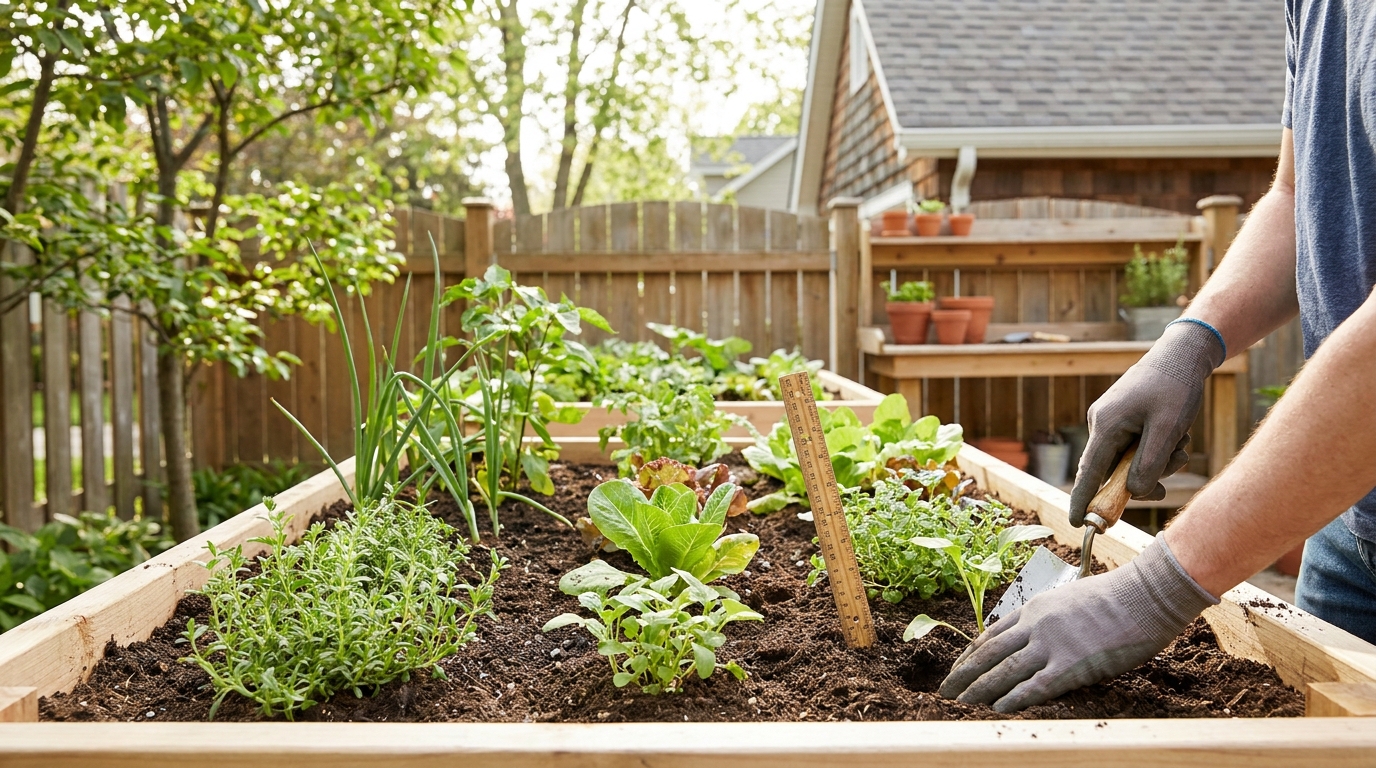
A raised garden bed needs to be exactly 11 to 12 inches (28 to 30 cm) deep to successfully grow 90% of common backyard vegetables without wasting money on excess soil. This depth provides ample room for carrots, peppers, and greens while allowing the deep taproots of tomatoes and squash to safely anchor into the native ground below. Building beds taller than 12 inches is generally only necessary if your native soil is heavily contaminated, solid rock, or if you need an elevated working height for physical accessibility.
- 11 to 12 inches (28 to 30 cm) of quality topsoil is the sweet spot for cost and plant health.
- Deep-rooted crops like tomatoes will push past the raised bed frame into the native soil beneath.
- Every extra 6 inches (15 cm) of depth in a standard 4-by-8 foot bed requires nearly a full cubic yard of additional soil.
- Tall beds over 15 inches (38 cm) require structural cross-bracing to prevent outward bowing from heavy wet soil.
What is the minimum depth for a raised garden bed?
The absolute minimum depth for a raised bed is 6 inches (15 cm), which matches the height of standard entry-level cedar kits found at hardware stores. This shallow depth is strictly for short-cycle, surface-rooted crops. The main problem with a 6-inch bed is a lack of thermal mass and moisture retention. In mid-summer, a shallow bed heats up rapidly, easily pushing soil temperatures above 85°F (29°C) and baking delicate roots, while also drying out completely in a single afternoon.
By stepping up to an 11 or 12-inch (28 to 30 cm) depth, you double the soil volume. This insulates the root zone from extreme ambient heat and holds moisture significantly longer, meaning you water less frequently and plants suffer far less stress.
- Shallow-rooted crops that tolerate 6-inch (15 cm) beds include lettuce, spinach, radishes, and bush beans.
- Crops requiring at least 11 inches (28 cm) of depth include carrots, potatoes, peppers, and bush tomatoes.
How deep do vegetable roots actually grow?
Gardeners often underestimate how far roots travel because they only see the top growth. Vegetable roots do not stop when they hit the bottom of your wooden frame; they continue straight down into the native soil beneath. If you build a 12-inch (30 cm) raised bed over a standard lawn, a healthy indeterminate tomato plant will easily push its roots another 24 inches (61 cm) into the native dirt to find water.
This is exactly why you do not need a 36-inch (91 cm) deep box to grow deep-rooted plants. As long as your raised bed does not have a solid bottom, the raised portion serves as a nutrient-rich, well-draining starting zone. The native soil below acts as a deep moisture reserve for mature plants.
- Shallow roots (6 to 12 inches / 15 to 30 cm): Garlic, onions, and strawberries.
- Medium roots (12 to 18 inches / 30 to 45 cm): Peppers, eggplants, and cucumbers.
- Deep roots (24 to 36+ inches / 61 to 91+ cm): Tomatoes, pumpkins, and watermelons.
How does bed depth affect soil volume and cost in 2026?
Soil is the hidden premium of raised bed gardening. Every inch you add to the height of your bed dramatically increases the total cost of the project. A standard 4-by-8-foot (1.2 by 2.4 meter) bed built 11 inches (28 cm) deep requires just under 1 cubic yard (0.76 cubic meters) of soil to fill. In 2026, a cubic yard of bulk compost and topsoil blend from a local landscape yard costs between $45 and $65, plus a standard $50 to $75 delivery fee.
If you decide to build that same bed 24 inches (61 cm) tall, you double the requirement to nearly 2.4 cubic yards (1.8 cubic meters). If you make the mistake of buying that volume in 1.5-cubic-foot bags from a big box store, you will spend upwards of $400 just to fill a single bed.
- To calculate volume: multiply length by width by height in feet, then divide by 27 to get cubic yards.
- Always add 15% extra to your calculation because fresh soil will settle and compress after the first heavy rain.
What is the most common raised bed failure and how do you avoid it?
The most common failure mode in raised bed construction is mid-wall bowing and corner blowout on beds taller than 12 inches (30 cm). Water is incredibly heavy. A 24-inch (61 cm) tall, 4-by-8-foot bed holds nearly 4,000 pounds (1,814 kg) of saturated soil after a heavy rainstorm. When standard pine or thin cedar is subjected to that hydrostatic pressure, outward bowing starts immediately, eventually snapping standard deck screws and tearing the corners apart.
To avoid this catastrophic failure, you must treat any raised bed taller than 12 inches (30 cm) like a retaining wall. The fix requires structural reinforcement before you add a single shovel of dirt.
- Install a cross-brace (heavy-gauge aluminum wire or a cedar 2x4) across the middle of any bed longer than 6 feet (1.8 meters).
- Fasten all corners using 3-inch (7.6 cm) exterior structural timber screws, never brittle drywall or standard deck screws.
- Use heavy-duty steel corner brackets on the inside or outside of the joints for any beds taller than 18 inches (45 cm).
How do professionals choose raised bed depth differently than beginners?
A beginner often assumes a taller bed is inherently better. They will build a 30-inch (76 cm) tall timber fortress and fill the entire void with premium bagged potting soil, wasting hundreds of dollars. A professional garden designer looks downward first. If planting in a typical backyard in USDA zones 4 through 9 where the ground is just compacted clay, a pro will build a modest 10 to 12-inch (25 to 30 cm) bed.
The professional judgment call is to improve the native soil rather than just building endlessly on top of it. Taller beds are reserved exclusively for sites with literal toxic rubble, solid concrete underneath, or clients who physically require wheelchair accessibility.
- Pros loosen the native dirt beneath the bed with a broadfork or tiller before building the frame.
- Pros rely on the native subsoil for deep moisture retention, treating the raised bed as a premium topsoil cap.
- Beginners often mistakenly line the bottom of their deep beds with landscape fabric, creating a disastrous barrier that traps water and blocks roots.
Can you fill the bottom of a deep raised bed with logs and branches?
Yes, filling the bottom of a tall bed with woody debris is a brilliant cost-saving method adapted from the practice of hugelkultur. If you do build a 24-inch or 30-inch (61 or 76 cm) tall bed for accessibility, you should not fill the bottom 15 inches (38 cm) with expensive garden soil. Instead, place rotting logs, thick branches, and untreated wood chunks at the bottom, then layer autumn leaves and grass clippings over them.
This woody base acts like a giant subterranean sponge. Over the course of 3 to 5 years, the wood slowly breaks down, retaining massive amounts of water during summer droughts and feeding the soil biology above.
- Top the wood base with a minimum of 10 to 12 inches (25 to 30 cm) of finished topsoil and compost so immediate plant roots have access to nutrients.
- Never use treated lumber, cedar, or walnut wood in the base, as these resist rot or contain growth-inhibiting compounds.
- Be prepared to add 2 to 3 inches (5 to 8 cm) of fresh compost to the top of the bed every spring, as the decaying wood will cause the soil level to sink.
| Bed Depth | Soil Required (Cubic Yards) | Bulk Cost Delivered | Bagged Retail Cost |
|---|---|---|---|
| 6 inches (15 cm) | 0.6 cu. yds. | 110 - 130 | 110 - 130 |
| 12 inches (30 cm) | 1.2 cu. yds. | 140 - 160 | 220 - 250 |
| 24 inches (61 cm) | 2.4 cu. yds. | 215 - 240 | 440 - 500 |
Frequently asked questions
Do I need to put cardboard at the bottom of my raised bed?
Yes, placing a single layer of plain, unwaxed cardboard directly over the grass smothers existing weeds. It will decompose completely in 4 to 6 months, allowing your vegetable roots to eventually pass through into the native soil beneath.
Can I place a raised bed directly on a concrete patio?
Yes, but you must build it deeper. Without native soil below to absorb roots and drain water, beds on concrete must be at least 18 to 24 inches (45 to 61 cm) deep to accommodate tomato and pepper roots, and they must have drainage gaps built into the bottom edges.
Does bed depth affect when I can plant in the spring?
Yes. Raised beds thaw and warm up faster than ground soil. A 12-inch (30 cm) deep raised bed in USDA Zone 5 can reach 60°F (15°C) up to two weeks earlier than the surrounding yard, giving you a distinct head start on spring planting.
Should I line the sides of my raised wood bed with plastic?
If you use naturally rot-resistant untreated cedar or redwood, no liner is needed. If you want to prolong the life of standard Douglas fir, you can staple heavy-duty, BPA-free plastic sheeting to the inside walls to block moisture, but never line the open bottom of the bed.
Keep reading
- Starting Your First Vegetable Garden Without Wasting a SeasonMost first gardens fail for reasons that have nothing to do with a green thumb. Here are the five that matter.
- Building Soil That Actually Grows ThingsFeeding plants is a short-term fix. Feeding the soil is what makes a garden easy.
- Reviving a Tired Lawn: A Season-Long PlanA thin lawn is a symptom. Treating the symptom with more seed is why it keeps coming back.