When to Prune Trees, and Which Cuts Do the Most Harm?
By Jim Vernon · 5 min read · Last updated
Topping a tree is the most common serious pruning mistake homeowners make, and it triggers weak regrowth that's more likely to fail in storms, not less.
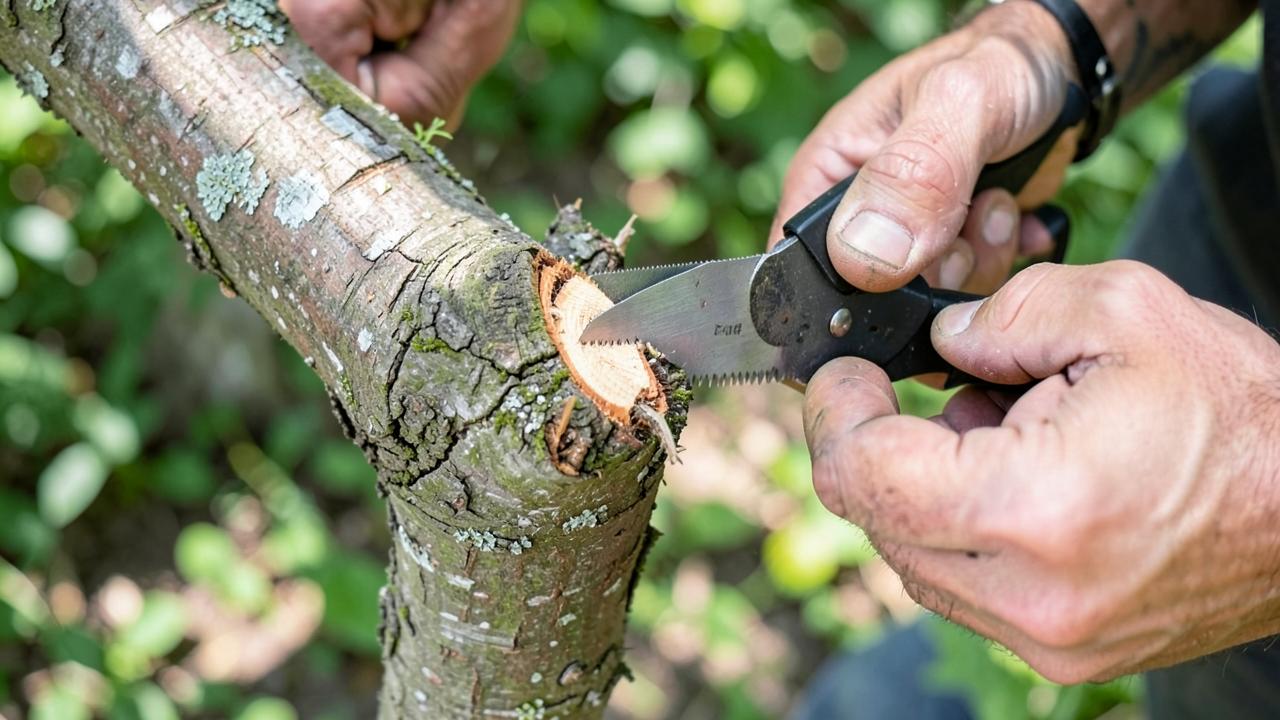
Prune most deciduous trees in late winter while dormant, after the coldest weather has passed but before spring bud break, since wounds close faster once growth resumes and you can see the branch structure clearly without leaves. Spring-flowering trees like dogwood, redbud, and lilac are the exception — prune them right after flowering so you don't cut off the current year's flower buds. Always cut just outside the branch collar, and never remove more than about a quarter of the live canopy in a single season.
What is the branch collar and why does the cut location matter?
The branch collar is the slightly swollen area where a branch joins the trunk or a larger limb, and it contains the tree's natural chemical boundary for sealing off wounds. Cutting flush against the trunk (a 'flush cut') removes this collar and leaves a wound the tree struggles to close, inviting decay fungi. Cutting too far out and leaving a stub does the same thing in reverse — the stub dies back and rots inward. The correct cut sits just outside the collar, angled slightly away from the trunk.
When is the right time to prune, by goal?
| Goal | Best timing | Why |
|---|---|---|
| General structural pruning, deciduous shade trees | Late winter (dormant) | Clear branch visibility, fast spring wound closure |
| Spring-flowering trees/shrubs | Immediately after bloom | Avoids cutting off already-set flower buds |
| Removing dead, damaged, or diseased wood | Any time of year | Delay increases decay spread and hazard risk |
| Oaks (in oak wilt regions) | Late fall to winter only | Avoids sap beetle season that spreads oak wilt |
| Evergreens/conifers | Late winter to early spring | New growth quickly hides cut marks |
Which cuts and habits should you avoid entirely?
- Topping — cutting main leaders back to stubs — which triggers weakly attached water sprout regrowth and long-term structural weakness.
- Flush cuts that remove the branch collar and slow wound closure.
- Leaving long stubs that die back and become entry points for decay.
- Removing more than 25% of a tree's live canopy in one season, which can stress the root system and trigger excessive regrowth.
- Pruning oaks and elms during active growing season in regions with oak wilt or Dutch elm disease pressure, since fresh wounds attract disease-spreading insects.
How do you decide what to cut on a young tree versus a mature one?
Young trees benefit from structural pruning in the first 3-5 years to establish a single dominant leader and well-spaced scaffold branches, since corrections are easy while branches are small. Mature trees need far less intervention — mainly removing dead, crossing, or hazardous limbs — and heavy pruning on an older tree is more likely to cause stress and decay than to improve its structure.
When should you call an arborist instead of doing it yourself?
Bring in a certified arborist for any cut requiring a ladder or pole saw above head height, any limb over 3-4 inches in diameter near a structure, and any tree showing signs of internal decay, cracking, or leaning. Professional tree pruning typically runs $300-$900 for a standard shade tree, while large or hazardous removals can run well over $1,500.
What tools does correct pruning actually require?
- Bypass hand pruners for cuts up to about 3/4 inch — clean, scissor-action cuts that don't crush plant tissue.
- Bypass loppers for branches up to roughly 1.5-2 inches, giving more leverage than hand pruners.
- A pruning saw for anything larger than loppers can handle, ideally a curved blade designed for green wood rather than a straight construction saw.
- Disinfect blades with isopropyl alcohol between cuts on diseased wood, and between different trees entirely, to avoid spreading pathogens like fire blight or oak wilt.
How do you prune to improve a tree's long-term structure rather than just its size?
Structural pruning focuses on removing competing leaders (two trunks of similar size fighting for dominance), correcting branches with narrow, weak attachment angles under about 30 degrees, and thinning crossing or rubbing branches that wound each other over time. Rather than shearing the whole canopy to a smaller size, remove entire branches back to their point of origin at the trunk or a larger limb — this is called thinning, and it keeps the tree's natural form intact while reducing density and weight.
What does over-pruning cost a tree in the long run?
Removing too much canopy at once reduces the leaf area available for photosynthesis, which can weaken root growth and increase vulnerability to pests and disease for a season or more afterward. Trees also often respond to heavy pruning with a flush of fast, weakly attached watersprout growth, especially after topping, which creates a cycle of repeated aggressive pruning every few years just to manage the regrowth it caused in the first place.
Frequently asked questions
Is it ever okay to top a tree to control its height?
No, topping is widely discouraged by certified arborists because it removes the tree's structural leaders and forces weakly attached regrowth that is more prone to breaking in storms. If height is a genuine problem, selective thinning or, in extreme cases, full removal and replacement with a smaller species is the better long-term choice.
Can pruning at the wrong time of year kill a tree?
Pruning at the wrong time rarely kills a healthy tree outright, but it can trigger disease risk (as with oaks and Dutch elm-susceptible trees), reduce flowering for a season, or stress a tree already weakened by drought or pests. Timing matters most for disease risk and bloom, less for the tree's basic survival.
How much of a tree's canopy is safe to remove at once?
A widely used arborist guideline caps live canopy removal at about 25% per season, and less on stressed or mature trees. Removing more than that in one pass can shock the tree, reduce its ability to photosynthesize, and trigger excessive suckering regrowth.
Run the numbers for your own project
- Hedge and Tree Spacing CalculatorHow far apart should I space my hedge or trees?
Keep reading
- Starting Your First Vegetable Garden Without Wasting a SeasonMost first gardens fail for reasons that have nothing to do with a green thumb. Here are the five that matter.
- Building Soil That Actually Grows ThingsFeeding plants is a short-term fix. Feeding the soil is what makes a garden easy.
- Reviving a Tired Lawn: A Season-Long PlanA thin lawn is a symptom. Treating the symptom with more seed is why it keeps coming back.