Planting a Tree Correctly: The Hole Shape That Determines Survival
By Jim Vernon · 5 min read · Last updated
Most struggling young trees were planted too deep in a hole that was the wrong shape, not damaged by pests or drought.
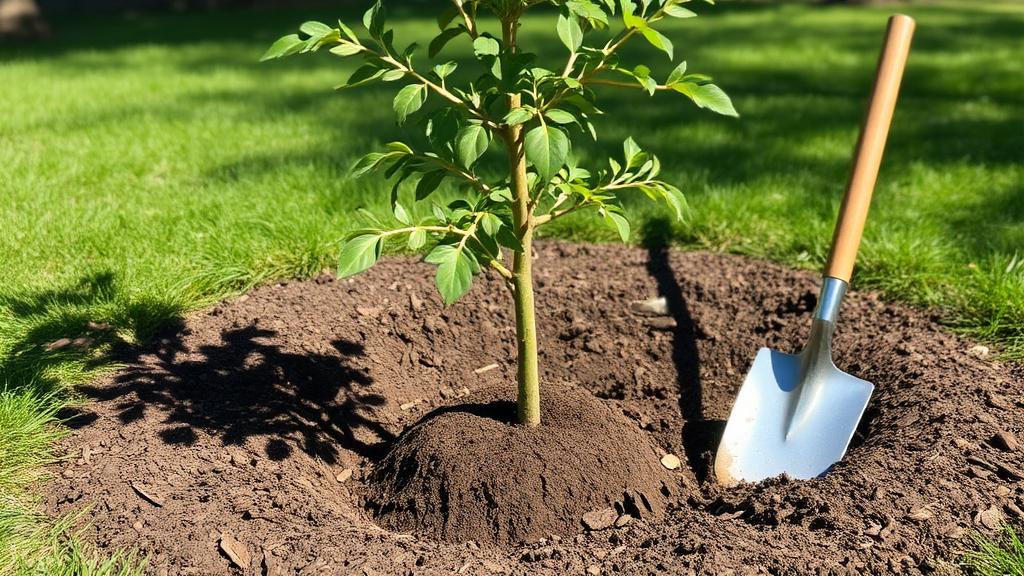
Tree planting mistakes rarely show up immediately — a tree planted too deep or in a too-narrow hole can survive for several years while quietly failing to establish, then decline or blow over once it should be thriving. The planting hole's shape and depth matter more than almost any other single decision in the tree's early life.
Wide and shallow beats deep
Dig the planting hole two to three times the width of the root ball but no deeper than the root ball's height. Most tree roots spread laterally in the top 12-18 inches of soil rather than growing deep, so a wide hole with loosened surrounding soil gives roots room to extend outward, while an overly deep hole invites settling that buries the trunk too low.
Finding and exposing the root flare
The root flare is the point where the trunk widens into the main structural roots, and it should sit at or very slightly above the surrounding soil grade once planting is finished. Nursery stock often arrives with excess soil piled over the flare in the container or root ball; pulling that soil back to find the actual flare before planting is a necessary step, not an optional check.
| Planting depth error | Common cause | Consequence |
|---|---|---|
| Too deep | Flare buried under nursery soil, not checked before planting | Girdling roots, trunk rot, slow decline over years |
| Too shallow | Root ball sitting on unsettled loose soil that later compacts | Exposed roots, instability, drying out |
| Correct | Flare exposed and set level with or slightly above grade | Normal establishment and growth |
Watering schedule through establishment
A newly planted tree needs roughly 10-15 gallons of water per inch of trunk diameter each week through its first growing season, delivered slowly at the root ball's edge rather than at the trunk, so it soaks down rather than running off. Taper to a deep soak every 7-10 days in year two, and every two to three weeks in year three, adjusting for rainfall. Trees are commonly considered established, needing no more supplemental water than the surrounding landscape, after roughly one year per inch of trunk caliper at planting — a 2-inch caliper tree typically needs close watching for about two full growing seasons.
Backfill with the native soil, not a rich amendment
Heavily amending the backfill soil around a new tree creates a pocket of rich, loose soil surrounded by harder native soil, which can encourage roots to circle within the comfortable amended zone rather than extending outward into the surrounding ground. Backfilling with the original excavated soil, broken up but not heavily amended, encourages roots to establish naturally beyond the planting hole.
- Water thoroughly at planting to settle soil around roots and eliminate air pockets.
- Apply mulch 2-3 inches deep in a ring extending to the drip line, keeping it several inches clear of the trunk itself.
- Water deeply once or twice a week through the first one to two growing seasons rather than relying on rainfall alone.
- Remove any nursery stakes or tags left tied to the trunk, which can girdle the bark as the trunk thickens.
Timing the planting
Fall planting, while the soil is still workable but air temperatures have cooled, lets roots establish through winter and early spring before the stress of summer heat arrives, and is often preferable to spring planting in climates where fall soil does not freeze early.
Choosing between container, balled-and-burlapped, and bare-root stock
| Stock type | Best planting season | Key handling note |
|---|---|---|
| Container-grown | Almost any time soil is workable | Check for circling roots before planting |
| Balled-and-burlapped | Fall or early spring | Heavy; handle by the root ball, never the trunk |
| Bare-root | Early spring or fall dormancy | Keep roots moist and plant quickly after purchase |
A worked example: sizing the planting hole
A container tree with a root ball 16 inches across needs a hole roughly 32-48 inches wide — two to three times the root ball width — but still only as deep as the root ball itself, typically around 14-16 inches once the flare has been exposed. Digging that hole a foot deeper than necessary and backfilling under the root ball is a common error, since loose fill under the ball settles unevenly and can sink the flare below grade months after planting looked correct.
Watering in the first two years
A newly planted tree has lost most of the fine roots that once supplied it with water, regardless of how carefully it was dug or grown. Deep, infrequent watering — enough to moisten the full root zone, then allowing the top few inches to dry before watering again — encourages roots to grow downward and outward in search of moisture, while frequent shallow watering keeps roots near the surface and more vulnerable to drought stress later.
Common tree planting mistakes
- Leaving the root flare buried under nursery soil because it was never located before planting.
- Digging a narrow, deep hole instead of a wide, shallow one, restricting the lateral root spread trees rely on.
- Heavily amending backfill soil, encouraging roots to circle within the rich pocket instead of extending outward.
- Leaving stakes or nursery ties in place for multiple years, weakening trunk taper and risking girdling.
Should I remove burlap and wire from a balled-and-burlapped tree?
Remove or fold back as much as possible, especially any wire basket around the upper portion of the root ball, since leaving it can girdle roots as the tree grows even though burlap alone is often marketed as biodegradable.
How far should mulch extend from the trunk?
Out to the tree's drip line where practical, kept a few inches clear of the trunk itself. Wider mulch rings reduce competition from turf grass roots and protect the root zone from mower damage.
How do I know if a tree was planted too deep after the fact?
Dig a small exploratory hole near the trunk to locate the root flare. If it sits several inches below grade, the soil above it can often be excavated back to the correct level without needing to fully replant an established tree.
Run the numbers for your own project
- Hedge and Tree Spacing CalculatorHow far apart should I space my hedge or trees?
- Soil Amendment and pH CalculatorHow much lime or sulfur do I need to fix my soil pH?
- Mulch CalculatorHow much mulch do I need for my beds?
Keep reading
- Starting Your First Vegetable Garden Without Wasting a SeasonMost first gardens fail for reasons that have nothing to do with a green thumb. Here are the five that matter.
- Building Soil That Actually Grows ThingsFeeding plants is a short-term fix. Feeding the soil is what makes a garden easy.
- Reviving a Tired Lawn: A Season-Long PlanA thin lawn is a symptom. Treating the symptom with more seed is why it keeps coming back.