Growing Tomatoes: From Transplant to a Real Harvest
By Jim Vernon · 5 min read · Last updated
Tomatoes are forgiving on variety choice and unforgiving on watering consistency. Get the water right first.
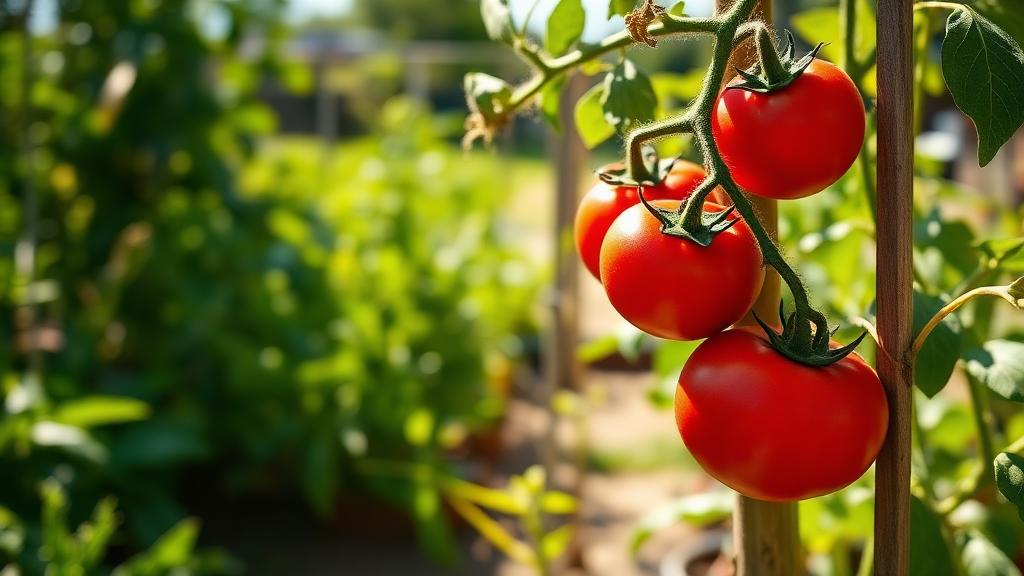
Tomatoes reward attention to a handful of fundamentals — support, spacing, and steady watering — far more than they reward fussing over fertilizer brands or exotic varieties. Most disappointing tomato harvests trace back to one of those three basics being skipped.
Determinate vs indeterminate
Determinate varieties grow to a fixed size, set fruit over a few weeks, and suit containers or a single big harvest for canning. Indeterminate varieties keep growing and fruiting until frost, need taller support, and suit gardeners who want a steady trickle of fruit all season.
Planting deep matters more than most vegetables
Tomato stems grow roots anywhere they touch soil. Bury two-thirds of a leggy transplant, stripping the lower leaves first, and it develops a much larger root system than planting at the original soil line. This single trick often does more for eventual yield than any fertilizer choice.
Support systems compared
| Method | Best for | Effort |
|---|---|---|
| Single stake | Determinate, small spaces | Low, needs regular tying |
| Cage | Determinate or compact indeterminate | Low, set once |
| Florida weave (string between stakes) | Rows of indeterminate plants | Medium, ongoing |
| Trellis with clips | Indeterminate, greenhouse or high tunnel | Medium-high |
Watering consistency prevents the two most common defects
Blossom end rot — a sunken, leathery black patch on the fruit's bottom — is caused by inconsistent watering interrupting calcium uptake, not by a lack of calcium in the soil itself in most gardens. Cracking around the shoulders happens when a dry spell is followed by heavy rain or watering, and the fruit's skin cannot expand fast enough. A consistent watering schedule, roughly 1-1.5 inches of water a week including rain, prevents both.
Pruning suckers on indeterminate varieties
- Suckers grow in the joint between the main stem and a branch and become full stems if left.
- Removing most suckers on staked indeterminate plants improves airflow and directs energy to fewer, larger fruit.
- Leave suckers alone on sprawling or caged determinate plants, where extra foliage protects fruit from sunscald.
Common problems at a glance
| Symptom | Likely cause | Fix |
|---|---|---|
| Black leathery spot on fruit bottom | Inconsistent watering (blossom end rot) | Even watering schedule, mulch |
| Cracked skin near stem | Rain after dry spell | Mulch, consistent watering |
| Yellowing lower leaves | Early blight (fungal) | Remove affected leaves, improve airflow |
| Flowers dropping without fruit | Heat above roughly 90°F or below 55°F | Wait out the temperature swing |
Worked example: how much water is a week's worth
A patch of tomatoes covering 20 square feet needs roughly 1-1.5 inches of water a week, which works out to about 12-19 gallons across that area (1 inch of water over 1 square foot is about 0.62 gallons). If rain supplies half an inch during the week, that leaves 6-14 gallons still to apply through drip irrigation or hand watering, split across two or three sessions rather than one large soak.
Steps for a strong transplant
- Harden off transplants over 7-10 days before moving them to the garden.
- Strip the lower leaves and bury two-thirds of the stem, including the stripped section, at planting.
- Install the stake, cage, or trellis at planting time, not weeks later once roots have spread.
- Water in deeply immediately after planting, then apply 2-3 inches of mulch around the base.
- Begin a consistent watering routine from week one rather than waiting for signs of stress.
Common mistakes
- Letting the soil dry out completely between waterings, then soaking heavily to compensate.
- Adding support after the plant has already sprawled and tangled.
- Fertilizing heavily with high-nitrogen feed, which produces lush foliage at the expense of fruit.
- Watering overhead in the evening, which keeps foliage wet overnight and encourages fungal disease.
- Ignoring early blight symptoms on lower leaves until it has spread up the plant.
Feeding tomatoes through the season
A balanced fertilizer worked into the planting hole gets transplants off to a reasonable start, but the bigger payoff comes from a side-dress of compost or a moderate feeding once the first fruit clusters set, timed to support fruit development rather than more leafy growth. Repeating that every 3-4 weeks through summer is enough for most garden soil; more frequent heavy feeding usually just produces excess foliage.
Container-grown tomatoes need closer attention
- Use at least a 5-gallon container per plant; smaller pots dry out fast and stunt roots.
- Container soil dries out faster than garden beds, often needing daily water in hot weather.
- A self-watering container or drip line reduces the risk of the wide swings that cause blossom end rot and cracking.
- Determinate and dwarf varieties generally perform better in containers than sprawling indeterminate types.
End-of-season decisions
As the first fall frost approaches, pick all mature green fruit rather than leaving it to freeze on the vine — green tomatoes ripen indoors over 1-3 weeks on a windowsill or in a paper bag, though flavor is usually milder than vine-ripened fruit. Pulling and composting spent plants promptly, rather than leaving them to overwinter in the bed, also reduces the amount of blight inoculum carried into next season.
How far apart should tomato plants be spaced?
18-24 inches for staked or caged plants, up to 36 inches for sprawling indeterminate varieties without support, to keep airflow adequate.
Do tomatoes need full sun?
Yes — at least 6-8 hours of direct sun a day for a productive harvest. Less than that produces mostly foliage.
Why aren't my tomatoes ripening?
Cool night temperatures slow ripening considerably. If frost is close, pick mature green fruit and ripen it indoors rather than leaving it to risk freezing on the vine.
Should I fertilize tomatoes heavily?
A moderate, balanced feeding at planting and again when fruit sets is usually enough; excess nitrogen produces vigorous foliage with fewer, later tomatoes.
Is it worth removing lower leaves as the season goes on?
Yes — removing yellowing or disease-affected lower leaves once fruit is set improves airflow and reduces soil-splash-borne fungal spread onto healthy foliage.
Run the numbers for your own project
- Plant Watering CalculatorHow often and how much should I water this plant?
- Hedge and Tree Spacing CalculatorHow far apart should I space my hedge or trees?
Keep reading
- Starting Your First Vegetable Garden Without Wasting a SeasonMost first gardens fail for reasons that have nothing to do with a green thumb. Here are the five that matter.
- Building Soil That Actually Grows ThingsFeeding plants is a short-term fix. Feeding the soil is what makes a garden easy.
- Reviving a Tired Lawn: A Season-Long PlanA thin lawn is a symptom. Treating the symptom with more seed is why it keeps coming back.