Succession Planting: How to Keep a Steady Harvest Instead of One Big Glut
By Jim Vernon · 5 min read · Last updated
Planting everything on one weekend in spring guarantees one glut and then nothing. Succession planting spreads the harvest out.
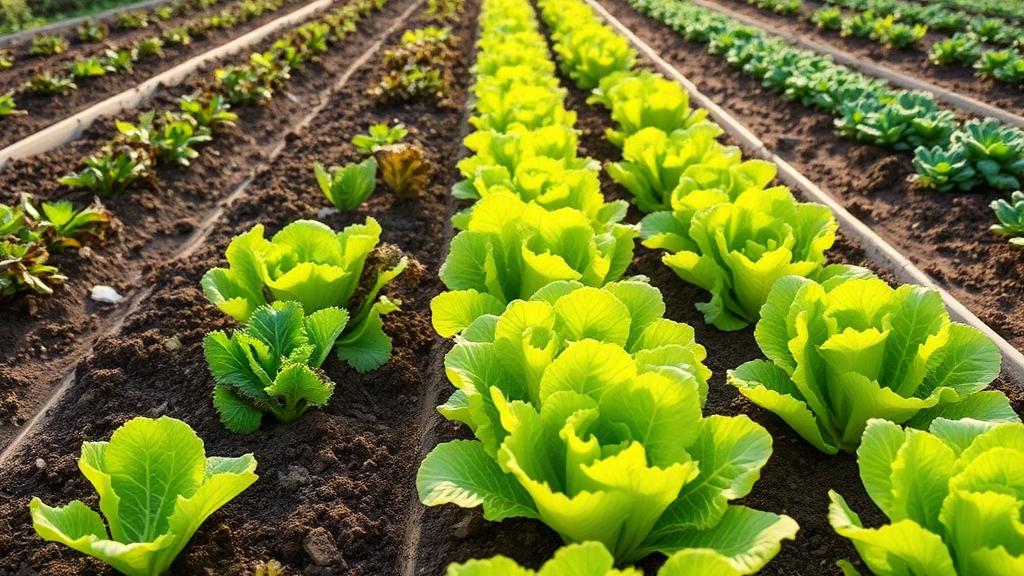
Succession planting means sowing smaller batches of the same crop every one to three weeks instead of one large planting, so the harvest arrives in a steady trickle rather than all at once. It suits fast-maturing crops best and is one of the highest-value habits a vegetable gardener can adopt.
Which crops respond well to succession sowing
- Lettuce, radishes, spinach, and salad greens — fast maturity makes staggered sowing very effective.
- Bush beans — a new sowing every 2-3 weeks keeps pods coming through summer.
- Carrots and beets — sow every 3-4 weeks for a steady supply rather than one glut of roots.
- Sweetcorn — stagger by 10-14 days if space allows, since it matures within a narrow window.
Crops that don't suit succession sowing
Tomatoes, peppers, and winter squash take months to mature and are typically planted once per season since a second sowing would not mature before frost in most climates. These crops are better spread out by variety — early, mid, and late maturing types — than by staggered sowing dates.
Building a simple succession schedule
| Crop | Days to maturity | Suggested resow interval |
|---|---|---|
| Radishes | 25-30 | Every 1-2 weeks |
| Lettuce | 45-55 | Every 2 weeks |
| Bush beans | 50-60 | Every 2-3 weeks |
| Beets | 50-60 | Every 3 weeks |
| Carrots | 60-75 | Every 3-4 weeks |
Work backward from your first fall frost date to find the last safe sowing date for each crop: subtract the days-to-maturity figure plus a buffer of 1-2 weeks for slowing growth as days shorten, and that gives the final planting date in the sequence.
Interplanting fills gaps between successions
Fast crops like radishes can be sown between slower-growing transplants such as young broccoli or tomatoes and harvested before the main crop needs the space, effectively getting two harvests from one bed footprint without true succession timing.
Worked example: planning a lettuce succession
If your first fall frost is October 15 and lettuce takes 50 days to maturity, the last safe sowing date is roughly September 6 (October 15 minus 50 days minus a 10-day buffer for slowing fall growth). Working backward from there in 2-week intervals — say July 26, August 9, August 23, September 6 — gives four staggered sowings that keep salad greens coming steadily through late summer and into fall instead of one bed bolting all at once in July.
Steps to set up a succession schedule
- List the crops you actually eat enough of to justify repeat sowings.
- Find the days-to-maturity for each from the seed packet.
- Pick a resow interval shorter than the harvest window, so a new batch is ready as the previous one finishes.
- Count backward from your first fall frost date to find the last sowing date for each crop.
- Mark all sowing dates on a calendar or spreadsheet at once, rather than deciding week to week.
Common mistakes
- Sowing the entire packet of seed in one go instead of splitting it across several dates.
- Forgetting to reserve bed space for the next sowing while the current crop is still growing.
- Ignoring the fall buffer and sowing too late, leaving a crop that never matures before frost.
- Succession sowing crops like tomatoes that don't benefit from staggered timing.
- Not refreshing soil fertility with compost between back-to-back sowings in the same bed.
Succession planting across a whole season
A full-season succession plan usually layers three phases in the same bed footprint: a quick cool-season crop in early spring, a longer warm-season crop through summer, and a final cool-season sowing timed to mature before the first fall frost. Mapping all three phases out at once, rather than deciding bed by bed as the season unfolds, avoids the common trap of a bed sitting empty for weeks between plantings.
Adjusting for a short or unpredictable season
- Favor shorter days-to-maturity varieties within a crop family if the frost-free window is tight.
- Use transplants instead of direct sowing for the first spring succession to gain 2-3 weeks over direct-seeded starts.
- Keep row cover on hand to protect a late succession crop from an early fall frost and buy an extra week or two of growth.
Worked example: three phases in one bed
A 4x8 foot bed can run spinach in March (harvested by May), bush beans planted late May and harvested through July and August with two staggered sowings, and a final planting of fast lettuce in late August for a September-October harvest. That single bed footprint produces roughly three separate harvest periods across one growing season instead of one long warm-season crop occupying it from May to frost.
Stacking varieties does some of the work staggered dates can't
Alongside staggered sowing dates, planting an early, mid, and late-maturing cultivar of the same crop on the same day spreads the harvest without needing to remember multiple sowing sessions. For sweet corn, pairing a 65-day variety like Bodacious with an 80-day variety like Silver Queen sown on the same weekend gives two harvest windows from one planting day. For lettuce, a fast 45-day loosehead like Black Seeded Simmons alongside a slower 55-day romaine such as Parris Island Cos achieves something similar. Combining both tactics — staggered sowing dates and varied maturity dates within each sowing — gives the most reliable spread when a gardener has limited time to actually get out and plant on a strict biweekly schedule.
How do I keep track of multiple sowing dates?
A simple written or spreadsheet log of sow date, crop, and expected harvest window is far more reliable than memory once more than two or three crops are staggered.
Does succession planting need more fertilizer overall?
Slightly more, since the soil is supporting more total plant growth across the season. Top up beds with compost between successions rather than relying on a single spring feeding.
Can succession planting work in a small garden?
Yes — it is arguably more valuable in small spaces, since it lets one bed footprint produce several harvests across a season instead of one.
What's the difference between succession planting and interplanting?
Succession planting staggers the same crop over time in the same or sequential space; interplanting grows a fast crop alongside a slower one in the same space at the same time.
Should I use transplants or direct sowing for successions?
Direct sowing is usually simpler for fast crops like radishes and beans; starting transplants for each succession of lettuce or brassicas can save a couple of weeks but adds more work per batch.
Run the numbers for your own project
- Seed Starting Schedule CalculatorWhen should I start my seeds indoors?
- Raised Bed Soil CalculatorHow much soil do I need to fill my raised bed?
Keep reading
- Starting Your First Vegetable Garden Without Wasting a SeasonMost first gardens fail for reasons that have nothing to do with a green thumb. Here are the five that matter.
- Building Soil That Actually Grows ThingsFeeding plants is a short-term fix. Feeding the soil is what makes a garden easy.
- Reviving a Tired Lawn: A Season-Long PlanA thin lawn is a symptom. Treating the symptom with more seed is why it keeps coming back.