Succession Planting: How to Extend Your Harvest
By Jim Vernon · 5 min read · Last updated
One big planting day gives you one big harvest week, then nothing. Staggered sowing fixes that.
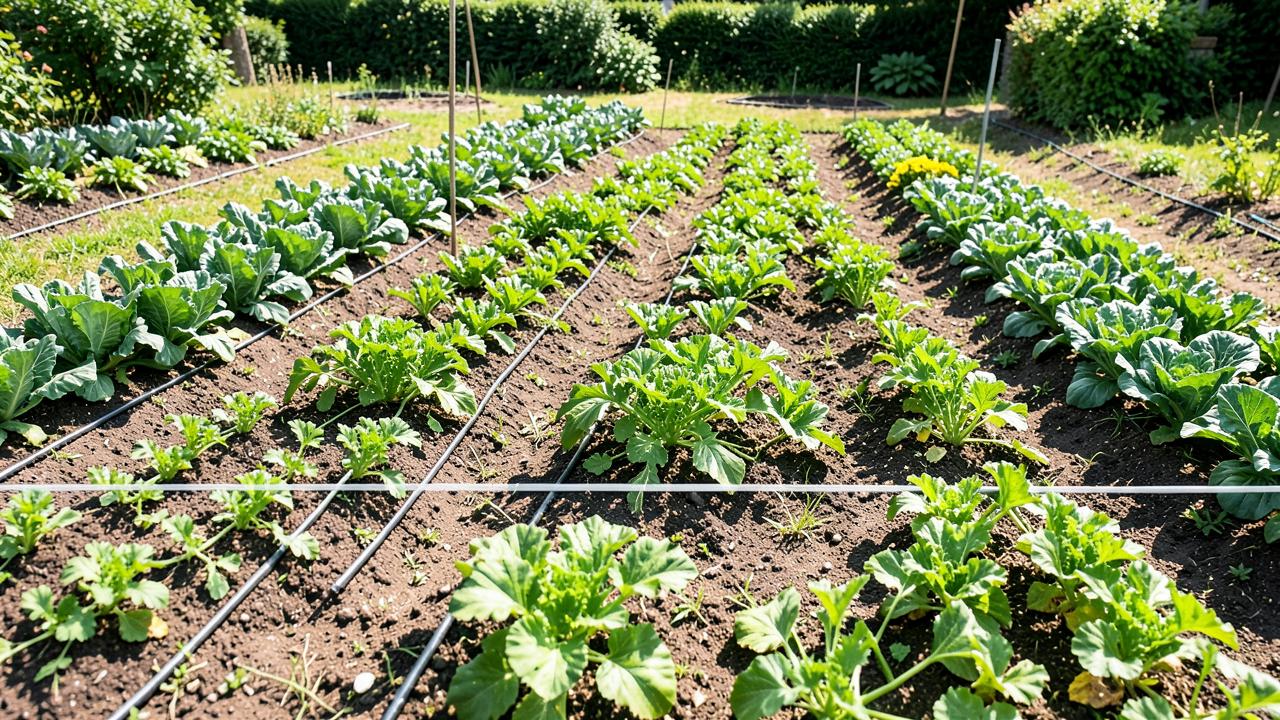
Succession planting is sowing the same crop, or a rotation of crops, in small batches spaced 1-3 weeks apart rather than all at once. Instead of 24 lettuce plants maturing on the same day, you get 6 plants ready every week for a month. It works for any fast crop with a defined days-to-maturity, and it's the single biggest lever for turning a spring garden into a season-long one.
Which crops actually benefit from succession sowing
Fast, single-harvest crops benefit most: lettuce, radishes, bush beans, spinach, arugula, cilantro, beets, and turnips. Crops that produce continuously over weeks from one planting — tomatoes, peppers, indeterminate cucumbers, zucchini — don't need succession because the plant itself staggers its output. Trying to succession-plant zucchini just means more plants than any household can eat.
| Crop | Days to maturity | Sow interval | Batches per season (typical) |
|---|---|---|---|
| Radish | 22-30 | 7-10 days | 6-8 |
| Bush beans | 50-60 | 2-3 weeks | 3-4 |
| Lettuce (leaf) | 45-55 | 10-14 days | 5-6 |
| Spinach | 37-45 | 10-14 days | 3-4 (spring + fall) |
| Beets | 50-60 | 2-3 weeks | 3-4 |
| Cilantro | 50-55 | 2-3 weeks | 4-5 (bolts fast in heat) |
How do you time the last sowing before frost?
Count backward from your area's average first fall frost date, adding 10-14 days to the crop's stated days-to-maturity as a buffer, since growth slows as day length shortens in early fall. For a 50-day beet with a first frost around mid-October, the latest safe sowing is roughly early September. A frost-date lookup for your zip code removes the guesswork here, since 'first frost' varies by weeks even within the same USDA zone depending on elevation and local microclimate.
What replaces a spent bed mid-season?
- Spring lettuce or spinach bolting in early summer heat — follow with bush beans or a heat-tolerant green like Malabar spinach.
- Garlic or overwintered onions harvested in midsummer — follow with fall brassicas (kale, bok choy) or a second bean crop.
- Early peas finished by early summer — follow with cucumbers or a second round of beets.
- Spring radishes cleared in 4 weeks — reuse the space for a heat-loving crop or another radish batch.
How does succession planting change garden layout?
Instead of one bed per crop, divide beds into thirds or quarters and stagger plantings across those sections. A 4-by-8-foot bed split into four 2-by-8 strips lets you sow one strip every two weeks through a 6-8 week window, so by the time the last strip germinates, the first is nearly ready to harvest and replant. This also spreads pest and disease pressure — a flea beetle outbreak that hits one strip doesn't take out the whole bed.
Does succession planting reduce total yield per crop?
No — total yield per square foot stays roughly the same or improves, because the space is in continuous production rather than sitting empty after an early single harvest. What changes is the shape of the harvest curve: instead of one large peak and a long gap, you get a flatter, steadier supply that's easier to actually eat, share, or preserve in manageable amounts.
A simple succession calendar for a home garden
- After last frost: sow radishes, spinach, and lettuce immediately; repeat every 10-14 days through late spring.
- Once soil hits 60°F: start the first bush bean batch; repeat every 2-3 weeks until about 10 weeks before first frost.
- Midsummer: resow lettuce and spinach for fall as daytime highs begin dropping, choosing bolt-resistant or heat-tolerant varieties for the last spring batches.
- 8-10 weeks before first frost: final sowing of any 50-60 day crop; after that, switch to quick 25-35 day crops like radishes and baby greens only.
How much does succession planting actually cost in seed?
Because each batch uses only a fraction of a full packet, succession planting is cheap per batch but uses more total seed across a season than one big sowing — a $3-4 packet of lettuce or radish seed easily covers 5-6 succession batches across spring and fall, working out to under a dollar per batch. The bigger cost is time: each new batch needs its own bed prep, thinning, and watering schedule, which is why many gardeners cap succession crops at 2-3 types rather than staggering everything they grow.
What record-keeping actually helps with succession timing?
A simple written or app-based log with sow date, crop, and expected harvest window is the difference between a smooth rotation and a scramble. Without notes, it's easy to forget when the last lettuce batch went in and either double up on a date or leave a gap of several weeks with nothing new started. Many gardeners keep a small chart pinned near the potting bench listing each bed section, the date it was last sown, and the next sowing due date, updating it in under a minute after each planting session.
What mistakes derail a succession planting schedule?
- Sowing the next batch before the current one is thinned or harvested, so seedlings compete with a nearly finished crop for light and root space.
- Ignoring summer heat stress on cool-season crops — lettuce and spinach sown in the same interval used in spring often bolt within days when midsummer heat hits.
- Ordering only one seed packet per crop for the whole season and running out mid-summer, right when the next batch is due.
- Failing to amend soil between batches, which produces progressively smaller plants by the third or fourth round in the same bed section.
Can I succession-plant in containers?
Yes — containers work well for succession sowing of radishes, lettuce, and herbs since each pot can be started, harvested, and refilled independently without disturbing neighboring plants.
What's the easiest crop to start succession planting with?
Radishes. They mature in under a month, tolerate light frost, and a failed batch costs almost nothing in time or seed, making them a low-risk way to learn the timing.
Should I use the same variety for every succession batch?
Not necessarily. Switching to a slower-bolting or heat-tolerant variety for midsummer sowings of lettuce or spinach often outperforms repeating a spring variety that's bred for cooler conditions.
Run the numbers for your own project
- Seed Starting Schedule CalculatorWhen should I start my seeds indoors?
- Frost Date LookupWhen is my last frost and how long is my season?
- What to Plant This MonthWhat can I plant right now where I live?
Keep reading
- Starting Your First Vegetable Garden Without Wasting a SeasonMost first gardens fail for reasons that have nothing to do with a green thumb. Here are the five that matter.
- Building Soil That Actually Grows ThingsFeeding plants is a short-term fix. Feeding the soil is what makes a garden easy.
- Reviving a Tired Lawn: A Season-Long PlanA thin lawn is a symptom. Treating the symptom with more seed is why it keeps coming back.