Starting Seeds Indoors: Timing, Light, and the Mistakes That Kill Seedlings
By Jim Vernon · 5 min read · Last updated
Most failed seed-starting is not a seed problem. It is a light and timing problem.
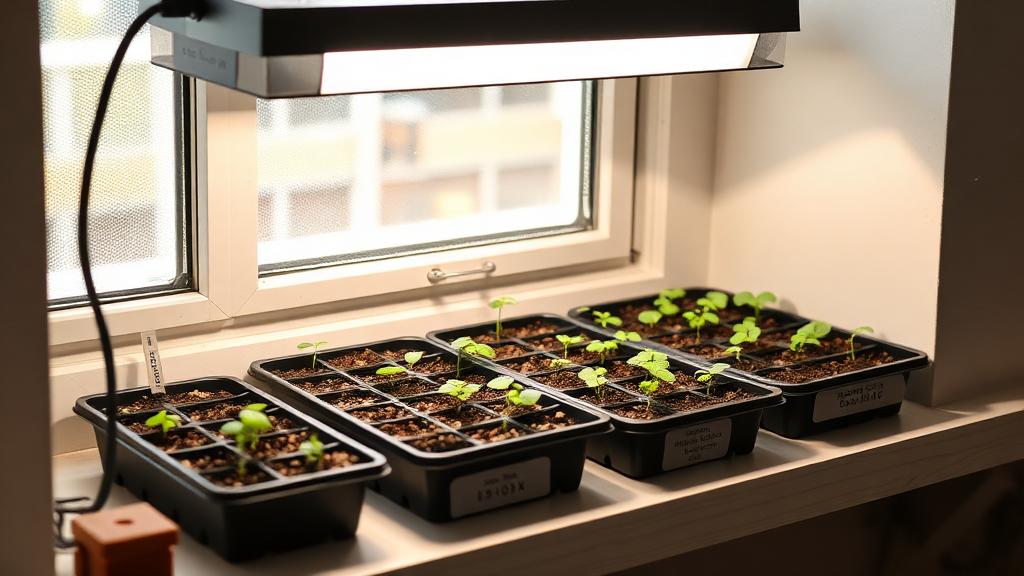
Starting seeds indoors buys a head start on the growing season, but it only pays off if the timing is right and the seedlings get enough light once they germinate. Get either wrong and you end up with leggy, pale plants that transplant poorly, which is worse than direct-sowing later would have been.
Count backward from your last frost date
Seed packets give a 'weeks before last frost' figure for a reason: start too early and plants outgrow their pots before it is safe to move them outside; start too late and you lose the head start entirely. Find your average last spring frost date, then count backward using the packet's window.
| Crop | Start indoors (before last frost) | Notes |
|---|---|---|
| Tomatoes | 6-8 weeks | Grows fast; do not start too early |
| Peppers | 8-10 weeks | Slow to germinate; needs warmth |
| Broccoli, cabbage | 5-7 weeks | Tolerates cool transplant conditions |
| Onions | 10-12 weeks | Slow grower from seed |
| Cucumbers, squash | 3-4 weeks | Resents root disturbance; use large cells |
| Lettuce | 4-6 weeks | Fast; can also be direct-sown |
Light is the limiting factor, not warmth
A sunny windowsill supplies a fraction of the light intensity seedlings actually need, which is why windowsill seedlings almost always stretch toward the glass and topple. A basic shop light or dedicated grow light held 2-4 inches above the leaves and run 14-16 hours a day produces short, sturdy stems instead.
- Raise the light as seedlings grow so it stays 2-4 inches above the topmost leaves.
- Run a small fan nearby for an hour or two a day to strengthen stems before transplanting.
- Bottom water or water gently at the soil line to avoid fungal issues on wet foliage.
- Use a seed-starting mix, not garden soil, which compacts and can carry disease.
Damping off is the most common early failure
Damping off is a fungal disease that collapses seedlings at the soil line within days of emergence. It thrives in cool, wet, poorly ventilated conditions. A fan for airflow, bottom watering instead of overhead misting, and not overwatering are the three most effective preventions.
Hardening off before transplanting
Seedlings raised indoors have never felt direct sun, wind, or temperature swings, and moving them straight to the garden shocks or scorches them. Over 7-10 days, set them outside in a sheltered spot for a couple of hours the first day, gradually increasing sun and time until they are outside full days before the final transplant.
- Days 1-2: a few hours in dappled shade, sheltered from wind.
- Days 3-5: half a day, including some direct morning sun.
- Days 6-8: full days outside, brought in only if a cold night threatens.
- Days 9-10: left out overnight if temperatures are safely above the crop's minimum, then transplanted.
Worked example: counting back for tomatoes
If your average last frost date is May 15 and the seed packet says 'start 6-8 weeks before last frost,' count back 8 weeks to March 20 for the earliest reasonable start and 6 weeks to April 3 for the latest. Starting in that 2-week window gives sturdy, appropriately-sized transplants by the time it's safe to move them outside, instead of leggy plants that have already outgrown their pots by mid-April.
Common mistakes
- Starting everything on the same weekend regardless of each crop's actual weeks-before-frost window.
- Using a warm, sunny windowsill as the sole light source instead of a grow light.
- Overwatering because the seed-starting mix looks dry on the surface while staying soggy underneath.
- Skipping the fan, which leaves stems thin and prone to snapping at transplant time.
- Transplanting straight from the shelf to the garden bed without a hardening-off period.
Building a simple seed-starting setup
A workable setup does not need a dedicated grow room: a wire shelving unit in a spare corner, one or two adjustable shop lights per shelf, and a seedling heat mat for warmth-loving crops covers most home needs. Budget roughly $60-120 for a starter setup covering two shelves of trays, which pays for itself within a season or two compared with buying transplants at retail prices.
| Setup piece | Approx. cost | Notes |
|---|---|---|
| Shop light (4 ft, LED) | $20-35 each | One per shelf, hung on adjustable chains |
| Seedling heat mat | $20-30 | Worth it for peppers, tomatoes, eggplant |
| Seed-starting mix | $8-15 per bag | Covers several trays; buy fresh each year |
| Cell trays with humidity dome | $5-10 each | Reusable for several seasons if cleaned |
Reading a seed packet correctly
Beyond the weeks-before-frost figure, a seed packet lists germination temperature range, days to germination, and days to maturity — all of which affect the schedule. A crop with a wide germination temperature range and a short days-to-germination figure is more forgiving of an imperfect setup than one requiring narrow warmth and weeks to sprout.
Cell size and container choice change the whole schedule
A 72-cell tray works fine for lettuce or brassicas that get potted up or transplanted within 4-5 weeks, but tomatoes and peppers started 8 weeks out will outgrow a 72-cell before it's safe to plant them outside, showing purple-tinged, nutrient-starved lower leaves and a rootbound plug that unwinds poorly at transplant. For anything started more than 6 weeks ahead, plan on potting up once to a 3-4 inch container around the 3-4 true leaf stage rather than trying to hold it in a small cell the whole time. Peat or paper pots skip a step for squash, cucumbers, and melons, which resent root disturbance — the whole pot goes into the ground and breaks down, though in cold, wet soil they can wick away moisture from the root ball faster than a plastic cell would, so water them slightly more generously right after transplant.
Can I reuse potting mix from last year?
For seed starting, no — start fresh each year to reduce the risk of carrying over fungal spores that cause damping off.
Why are my seedlings tall and floppy?
Insufficient light. Move them under a grow light kept close to the foliage, or move them to the brightest window and rotate daily, though a supplemental light almost always outperforms a windowsill.
How do I know when to pot seedlings up to a bigger container?
When roots start showing at the drainage holes or the first true leaves crowd the cell, move up one container size rather than jumping straight to a large pot.
Do I need a heat mat for seed starting?
For warmth-loving seeds like peppers and tomatoes, a heat mat under the tray speeds and evens out germination considerably; it matters less for cool-tolerant crops like lettuce or broccoli.
What happens if I start seeds too early?
Plants outgrow their cell trays before it's safe to transplant, becoming rootbound and stressed. If this happens, pot up to a larger container to buy time rather than transplanting outdoors too early.
Run the numbers for your own project
- Seed Starting Schedule CalculatorWhen should I start my seeds indoors?
- Grow Light CalculatorHow high and how long should my grow light run?
Keep reading
- Starting Your First Vegetable Garden Without Wasting a SeasonMost first gardens fail for reasons that have nothing to do with a green thumb. Here are the five that matter.
- Building Soil That Actually Grows ThingsFeeding plants is a short-term fix. Feeding the soil is what makes a garden easy.
- Reviving a Tired Lawn: A Season-Long PlanA thin lawn is a symptom. Treating the symptom with more seed is why it keeps coming back.