Balcony and Container Gardening That Survives August
By Jim Vernon · 5 min read · Last updated
Containers fail in heat, not in cold. Almost all of that comes down to volume.
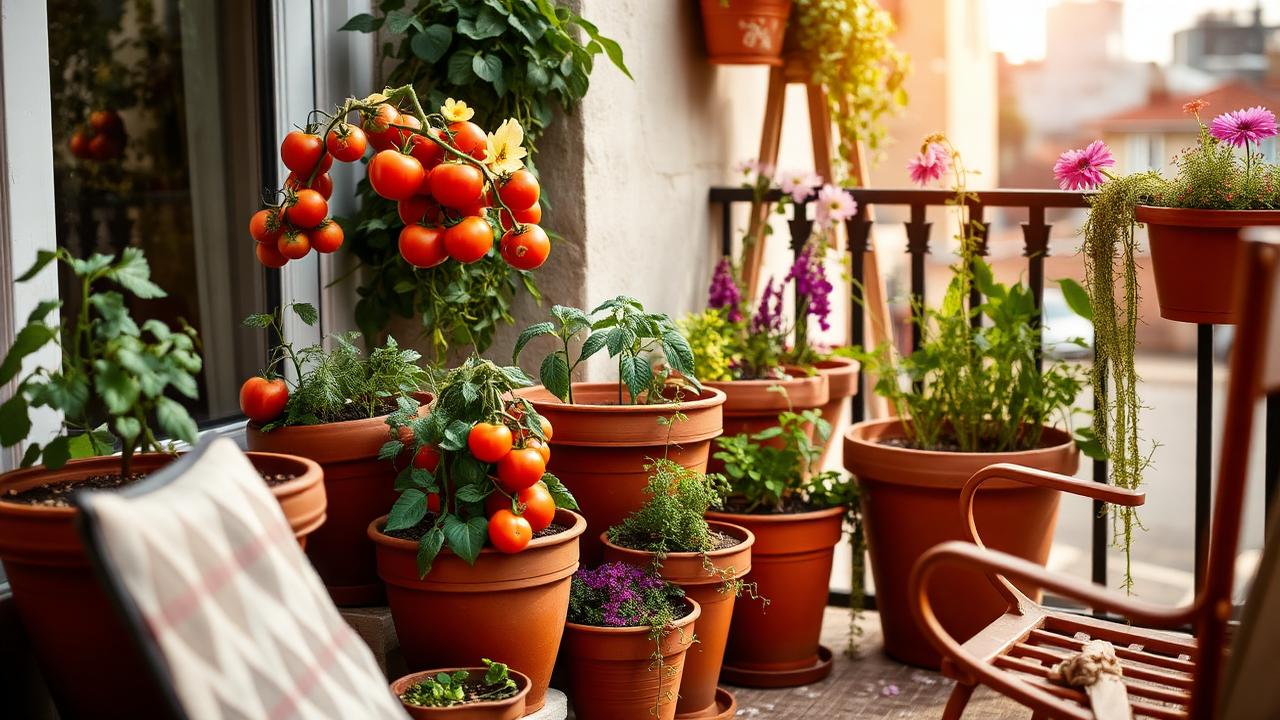
A container is a closed system with a finite water reservoir and no groundwater to draw on. Every recurring container problem — wilting, blossom end rot, stunted growth, salt crusting — traces back to that.
Volume is the single most important choice
| Crop | Minimum pot volume | Notes |
|---|---|---|
| Salad leaves, radish | 10 L | Shallow rooted; a window box works |
| Herbs (most) | 10-15 L | Mint alone, it colonises anything shared |
| Bush tomato, pepper, chilli | 20-30 L | Below 20 L, daily watering becomes mandatory |
| Courgette, aubergine | 30-40 L | Heavy feeders and heavy drinkers |
| Dwarf fruit tree | 45 L+ | Repot or root-prune every three years |
Use potting compost, never garden soil
Garden soil compacts in a container, losing the air-filled porosity roots need, and it brings weed seed and pathogens. Peat-free potting compost with added loam holds structure far longer than a pure peat-free bark blend.
Group pots and mulch them
Clustered containers shade each other's sides and raise local humidity, measurably slowing water loss. A one-centimetre gravel or bark mulch on the surface cuts evaporation further, and pale pots stay several degrees cooler than dark ones in direct sun.
Feed weekly from midsummer
Potting compost carries about six weeks of nutrients. After that, every watering leaches more out of the drainage holes. A dilute liquid feed weekly is the standard, switching to a high-potash feed once fruit sets.
A daily-August watering routine
- Check pot weight or push a finger 2-3 cm into the compost each morning before the heat builds.
- Water early morning where possible, so plants take up moisture before peak heat.
- If a pot is bone dry, water twice with a short pause between to let the first pass rehydrate compressed compost.
- Water again in late afternoon only for pots under 15 L on a genuinely hot day.
- Feed once a week from midsummer, folded into the morning watering rather than as a separate task.
- Common mistake: choosing a pot that looks generously sized but falls below the crop's minimum volume, forcing daily watering all season.
- Common mistake: using saucers that let pots sit in standing water, which drowns roots as fast as underwatering stresses them.
- Common mistake: potting up in spring and never repotting or top-dressing, so a container that fed the plant in May is exhausted by July.
- Common mistake: placing dark plastic pots in full sun, which raises root-zone temperature enough to stress or kill roots in peak summer.
Can I reuse potting compost from last year?
Once, if you refresh it with a third fresh compost and a slow-release feed, but avoid reusing compost that grew a disease-prone crop like tomatoes for a third consecutive year.
How many tomato plants fit on a small balcony?
As a rule of thumb, one 20-30 L pot per plant with at least 45 cm between pots for airflow; three plants is a realistic ceiling for most balconies before light competition and watering time both become limiting.
Do self-watering pots work for every crop?
They suit thirsty, consistent-moisture crops like tomatoes and courgette well, but Mediterranean herbs such as rosemary and thyme prefer to dry out between waterings and often do better in a standard free-draining pot.
Do I need to worry about weight limits on a balcony?
Yes, more than most gardeners realise. Saturated potting compost weighs roughly 1.2 to 1.5 times its dry weight, and a run of large containers along one edge can approach the load limits of a lightweight balcony structure, so spread large pots out rather than lining them along a single rail.
What is the single most common reason a balcony garden fails by August?
Undersized pots combined with dark-coloured plastic in full sun. Both push watering demand above what a daily routine can realistically sustain, and the plant is stressed well before anyone notices wilting.
Wind is the balcony-specific stress most people miss
Balconies several storeys up experience wind speeds and drying effects that a ground-level garden never sees. Tall, top-heavy plants like staked tomatoes or climbing beans need secure ties to a rail or trellis rather than a single central cane, and pots on an exposed corner dry out noticeably faster than the same pot against a sheltered wall, even at identical sun exposure.
Worked example: converting a 6-pot balcony to a lower-maintenance layout
A balcony with six 15 L pots each needing daily watering in summer represents up to six separate watering checks a day if done individually. Grouping them into two clusters of three, adding a one-centimetre mulch layer, and swapping the two sunniest pots to pale-coloured containers typically stretches the interval to once every one to two days for the shaded cluster and once daily for the sun-exposed one — cutting total watering time by roughly half without reducing what is being grown.
Choosing pot material for heat and weight
Terracotta breathes and cools compost through evaporation, which suits Mediterranean herbs but means faster drying for thirsty crops. Glazed ceramic and plastic hold moisture longer but heat up faster in direct sun if dark-coloured. Fibreglass and resin pots split the difference — lighter than ceramic, better insulated than thin plastic — and are usually the better choice for large pots on an upper-floor balcony where weight matters.
Companion planting in limited space
- Basil alongside tomatoes shares watering needs and is a genuinely useful pairing, not just a folk remedy.
- Marigolds in the same pot as brassicas or tomatoes deter some common pests and take up little root space.
- Avoid pairing mint with anything else in a shared pot — its roots outcompete slower growers within weeks.
- Trailing plants like nasturtium or strawberries used at a pot's edge make use of vertical space a single upright crop wastes.
Extending the season at both ends
Containers warm up faster than open ground in spring, which lets you start heat-loving crops like tomatoes and peppers slightly earlier if pots can be moved to a sheltered spot on cold nights. The same mobility works in reverse come autumn — moving pots against a warm wall or under cover can add several extra weeks of harvest to crops that would be cut short by the first frost in open ground.
Recognising nutrient deficiency versus watering stress
| Symptom | Likely cause | Fix |
|---|---|---|
| Pale, uniformly yellow leaves | Nitrogen deficiency, compost exhausted | Switch to weekly balanced liquid feed |
| Purple tinge on leaf undersides | Phosphorus deficiency, common in cold compost | Warm the root zone, feed with a balanced formula |
| Wilting despite moist compost | Root rot or root-bound pot | Check roots, repot if circling or mushy |
Overwintering perennial containers
Perennial herbs and dwarf shrubs left in pots over winter are more exposed to frost than the same plant in open ground, because roots in a container have far less insulating soil mass around them. Grouping pots against a sheltered wall, wrapping the pot itself in hessian or bubble wrap, and raising containers off the ground on pot feet to stop waterlogging at the base all meaningfully improve winter survival for anything left outside year-round.
Run the numbers for your own project
- Plant Watering CalculatorHow often and how much should I water this plant?
- Houseplant Light MatcherWhich houseplants suit this window?
Keep reading
- Starting Your First Vegetable Garden Without Wasting a SeasonMost first gardens fail for reasons that have nothing to do with a green thumb. Here are the five that matter.
- Building Soil That Actually Grows ThingsFeeding plants is a short-term fix. Feeding the soil is what makes a garden easy.
- Storage for Small Rooms That Does Not Make Them SmallerSmall rooms do not need more storage. They need storage that stops interrupting the eye.