How Do You Choose and Space Shrubs for a Hedge or Privacy Screen?
By Jim Vernon · 5 min read · Last updated
The most common hedge mistake is spacing plants for how they look on planting day instead of their mature width five years later.
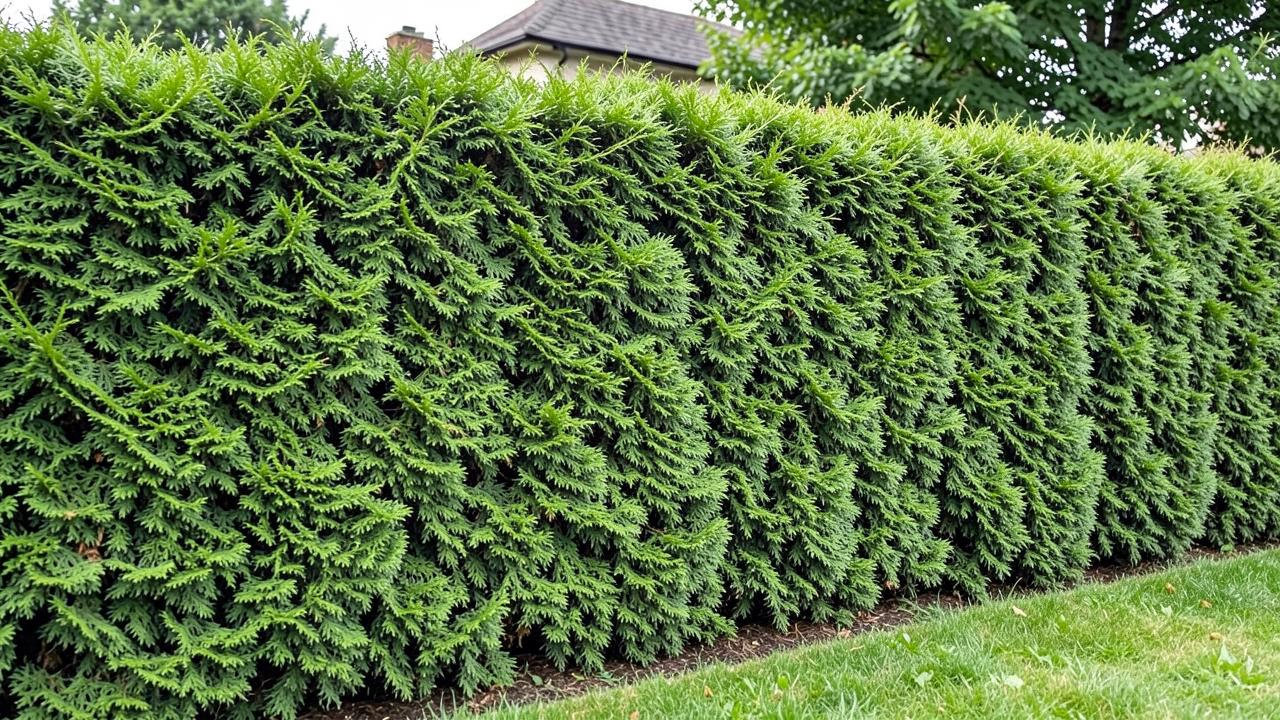
Space hedge shrubs based on their mature width, typically 50-75% of that width apart for a single row that grows together into a solid screen, or use a staggered double row spaced at full mature width within and between rows for faster, denser screening. Choose species first for your sun exposure, soil drainage, and USDA zone, then decide on formal (sheared) versus informal (natural shape) maintenance style.
How far apart should you actually plant hedge shrubs?
| Shrub | Mature width | Zones | Single-row spacing | Height at maturity |
|---|---|---|---|---|
| Boxwood (Green Velvet) | 3-4 ft | 5-9 | 2-3 ft | 3-4 ft |
| Arborvitae (Emerald Green) | 3-4 ft | 3-8 | 3 ft | 12-14 ft |
| Privet | 4-6 ft | 5-8 | 2-3 ft | 8-12 ft |
| Boxwood (American, large) | 8-10 ft | 5-9 | 4-5 ft | 8-10 ft |
| Viburnum (many species) | 6-10 ft | 4-8 | 4-6 ft | 6-12 ft |
| Holly (Nellie R. Stevens) | 8-10 ft | 6-9 | 5-6 ft | 15-20 ft |
Single row or staggered double row — which is better?
A single row is cheaper, uses less width, and is the standard choice for formal sheared hedges under 6 feet tall. A staggered double row, with plants offset in a zigzag between two rows about 2-3 feet apart, closes gaps faster and creates a denser visual and sound barrier, which matters more for privacy screening against a busy road or a neighbor's second-story window. The tradeoff is cost — roughly double the plants — and needing 5-8 feet of total width instead of 2-3.
How long does it take a hedge to actually screen a view?
For fast-growing screening shrubs like privet or arborvitae planted at recommended spacing, expect a functional visual screen in 2-3 years and a fully mature, dense hedge in 5-7 years. Slower species like boxwood or holly can take 4-6 years just to reach a usable screening height. Buying larger starting stock — 5-gallon instead of 1-gallon containers — shortens the wait by roughly a year or two but can cost 3-5 times as much per plant.
- Fast screening in 2-3 years: privet, forsythia, arborvitae, leyland cypress (zones 6-10 only, disease-prone farther north).
- Moderate, 3-5 years: viburnum, holly, wax myrtle, ninebark.
- Slow but long-lived, 5-8 years: boxwood, yew, most hollies grown as formal hedges.
How do you maintain a hedge once it's established?
Formal hedges need shearing 2-3 times during the growing season, shaping slightly narrower at the top than the base (a trapezoid cross-section) so sunlight reaches the lower branches and prevents bare, leggy bottoms. Informal screens need only occasional selective pruning to remove dead wood and control size, generally once a year. Both benefit from an annual slow-release fertilizer application in early spring and 2-3 inches of mulch to conserve moisture.
How do you choose between fast growth and long-term durability?
Fast-growing species close gaps sooner but often live shorter, weaker lives and need more frequent pruning to control size — leyland cypress, for example, can add 3-4 feet a year but is prone to canker disease and storm damage by 15-20 years old. Slower species like boxwood and yew take longer to establish but typically live 40-70 years with far less structural risk, making them a better long-term investment where patience during the first few years is acceptable.
How does soil and sun exposure change which hedge shrub will thrive?
Boxwood and yew need well-drained soil and struggle in low spots that stay soggy after rain, often developing root rot within a few seasons in heavy clay without amendment. Privet and viburnum tolerate a wider range of soil conditions, including periodic wet spots, which makes them a safer choice along low-lying property lines. Sun exposure matters just as much: arborvitae and most junipers need full sun to stay dense, while a shaded property line calls for viburnum, yew, or holly instead, since thin, gappy growth on the shaded side of a sun-loving hedge rarely fills back in.
How do you handle a hedge that's already overgrown and gappy at the base?
For most broadleaf evergreens (privet, holly, boxwood), a hard renovation cut back to 12-18 inches above the ground in late winter can rejuvenate an overgrown, leggy hedge over 2-3 growing seasons, though it leaves a bare, unattractive stretch during recovery. Needled evergreens like arborvitae and most junipers generally don't resprout reliably from old wood, so a badly overgrown or bare-bottomed specimen usually needs replacement rather than a renovation cut — check the species before committing to a hard prune.
What ongoing pest and disease issues affect hedges the most?
- Boxwood blight and boxwood leafminer, both of which spread faster in dense, poorly ventilated plantings — thin interior growth occasionally to improve airflow.
- Bagworms on arborvitae and juniper, easiest to control by hand-removing bags in fall and winter before eggs hatch in late spring.
- Volutella blight on boxwood, often triggered by winter injury or excess nitrogen fertilizer pushing soft, susceptible growth.
- Root rot from poor drainage, which shows first as yellowing at the base of an otherwise healthy-looking hedge.
Frequently asked questions
How much does it cost to plant a 50-foot privacy hedge?
Using 3-gallon shrubs spaced 3 feet apart in a single row (about 17 plants) at $25-$45 each runs roughly $425-$765 in plants alone, plus soil prep and mulch. A staggered double row roughly doubles the plant count and cost but establishes a solid screen faster.
Can you plant a hedge close to a property line or fence?
Check local setback rules first, but as a general horticultural guideline, keep the trunk at least half the plant's mature width away from a fence or property line to avoid disputes and to give roots and branches room to develop without constant conflict-pruning.
Why does the bottom of my formal hedge look bare and thin?
This usually results from shearing the top wider than the base, which shades out the lower branches over time. Reshape gradually over two seasons to a trapezoid profile, narrower at top, and increase light to the lower growth to encourage it to fill back in.
Run the numbers for your own project
- Hedge and Tree Spacing CalculatorHow far apart should I space my hedge or trees?
- Mulch CalculatorHow much mulch do I need for my beds?
Keep reading
- Starting Your First Vegetable Garden Without Wasting a SeasonMost first gardens fail for reasons that have nothing to do with a green thumb. Here are the five that matter.
- Building Soil That Actually Grows ThingsFeeding plants is a short-term fix. Feeding the soil is what makes a garden easy.
- Reviving a Tired Lawn: A Season-Long PlanA thin lawn is a symptom. Treating the symptom with more seed is why it keeps coming back.