Saving Seeds From Your Garden: What Works and What Doesn't
By Jim Vernon · 5 min read · Last updated
Saving seed from a hybrid tomato won't grow the same tomato next year. Knowing which crops save true is half the skill.
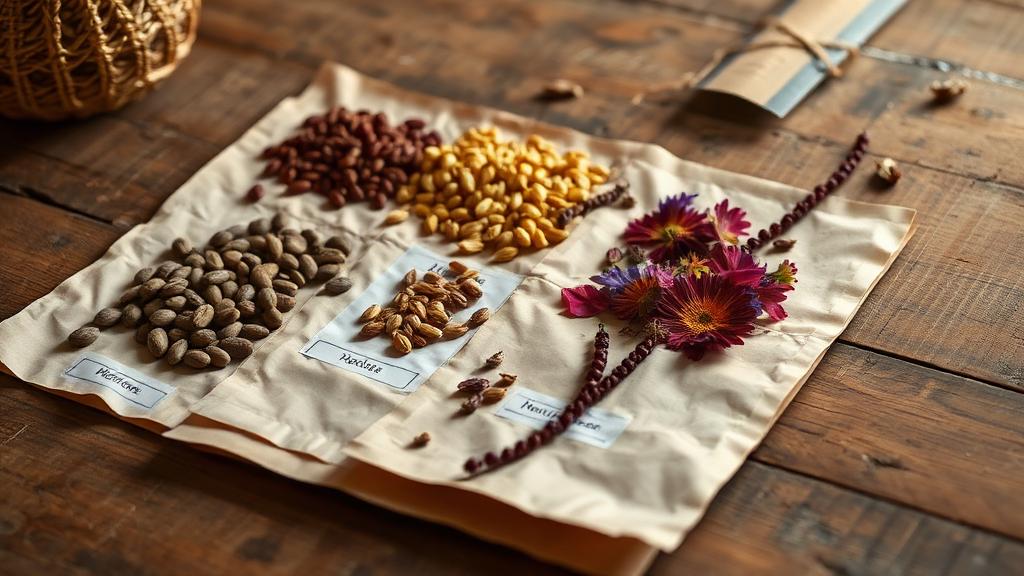
Seed saving cuts a real cost out of gardening and preserves varieties suited to a specific garden's conditions, but it only works reliably with the right crops handled the right way. Saving seed from the wrong variety type, or letting cross-pollination happen unchecked, produces plants that do not resemble the parent.
Open-pollinated vs hybrid seed
Open-pollinated varieties, including heirlooms, breed true from seed — the next generation closely resembles the parent plant. Hybrid (F1) varieties are a deliberate cross of two different parent lines, and their seed grows into an unpredictable mix of traits from both grandparent lines rather than a copy of the hybrid itself.
Which crops are easiest to save seed from
| Crop | Difficulty | Cross-pollination risk |
|---|---|---|
| Tomatoes (open-pollinated) | Easy | Low, mostly self-pollinating |
| Beans and peas | Easy | Low, mostly self-pollinating |
| Peppers | Moderate | Moderate, can cross between varieties |
| Squash and cucumbers | Moderate-hard | High, crosses readily within species |
| Carrots, onions, brassicas (biennials) | Hard | High, and require overwintering to flower |
Basic wet-seed processing (tomatoes, cucumbers)
- Scoop seeds with surrounding pulp into a jar of water and let it ferment at room temperature for 2-4 days, stirring daily.
- Fermentation breaks down the gel coating that inhibits germination and helps separate viable seed, which sinks, from debris and non-viable seed, which floats.
- Rinse the sunken seed thoroughly in a fine sieve, then spread it on a plate or screen — not paper towel, which sticks — to dry for about a week.
- Store only once seed is completely dry and snaps rather than bends.
Basic dry-seed processing (beans, peas, lettuce)
Let pods or seed heads dry fully on the plant before harvesting where weather allows. Thresh by hand or by rubbing dried pods between palms, then winnow lightly in a breeze or with a fan to separate seed from chaff before storage.
Storage conditions decide viability
Dry seed keeps longest in a cool, dark, low-humidity environment — a sealed jar with a food-safe desiccant packet, kept in a refrigerator, extends viability for most common vegetable seeds well beyond room-temperature storage. Label every container with crop, variety, and saving year, since dried seed of different crops looks similar.
Common mistakes
- Saving seed from hybrid (F1) varieties expecting a repeat of the parent plant.
- Drying seed on paper towel, where it sticks and tears away when peeled off.
- Storing seed before it is fully dry, leading to mold in the container.
- Growing two cross-pollinating squash varieties nearby and saving seed from both, mixing traits.
- Skipping labels, leaving a jar of look-alike dried seed impossible to identify next spring.
Worked example: fermenting tomato seed
Scoop the seed and gel from two or three ripe tomatoes into a labeled jar with a splash of water. After 2-3 days at room temperature, a thin layer of mold typically forms on top — that is expected and a sign fermentation is working. Add more water, swirl, and pour off the floating pulp and mold; the viable seed sinks and can be rinsed clean, then spread to dry for about a week before storage.
Hand-pollination for reliable isolation
For crops like squash that cross readily, hand-pollination with temporary bagging is the most reliable way to save true seed without isolating an entire garden by distance. Tape a male and female flower shut the evening before they open, hand-transfer pollen the next morning, then re-bag the pollinated female flower for a few days to keep other pollinators out.
Biennial crops require a two-year commitment
- Carrots, onions, cabbage, and other biennials flower and set seed only in their second year, after overwintering.
- In cold climates, roots are typically dug, stored cool, and replanted in spring for the second-year seed crop.
- This two-year cycle is the main reason biennial seed saving is far less common among home gardeners than saving from annuals like tomatoes and beans.
Worked example: a simple germination test
Fold 10 saved seeds into a damp paper towel, seal it in a plastic bag, and keep it somewhere around 70°F for the crop's typical germination window — about a week for most vegetables. Count how many sprout: 8 of 10 means roughly 80% viability, which is fine to plant at normal density; 3 of 10 means sowing thickly or replacing the batch, since a 30% rate will leave noticeable gaps in a direct-sown row.
Isolation distances for crops that cross-pollinate
| Crop | Recommended isolation distance | Alternative |
|---|---|---|
| Corn | 600-800 ft between varieties | Staggered tasseling by 2+ weeks |
| Squash/pumpkin (same species) | 400-800 ft, or hand-pollination | Bag and hand-pollinate flowers |
| Peppers | 150-500 ft depending on insect pressure | Row cover over a branch during flowering |
| Brassicas (same species, biennial) | 800 ft to 1/2 mile | Isolation cages, one variety flowering per year |
Most home gardens cannot realistically hit these distances, which is exactly why hand-pollination with temporary bagging is the practical fallback for squash and corn grown in a typical suburban lot. Peppers are more forgiving since bee-mediated crossing rates are lower than commonly assumed, but a determined bumblebee can still move pollen between two pepper varieties 30 feet apart, so treat any saved pepper seed from a garden growing multiple varieties as unreliable for exact type unless isolated.
How long do saved seeds stay viable?
It varies by crop: onions and parsnips lose viability within about a year, while tomatoes, beans, and lettuce can remain viable for 3-5 years or more in cool, dry storage.
Can I save seed from squash if I only grow one variety?
It reduces but does not eliminate risk, since squash can still cross with a neighbour's plants of the same species within typical pollinator flight range.
Is it worth testing saved seed before planting a full bed?
Yes — a simple germination test on a damp paper towel with 10 seeds gives a rough viability percentage and avoids discovering a poor germination rate only after planting time has passed.
Do I need to isolate different varieties to save true seed?
For crops with a real cross-pollination risk, like squash or corn, yes — physical distance, timed planting, or hand-pollination with bagging are the usual isolation methods.
Can I save seed from the very first fruit of the season?
It's better to save from mid-season, fully mature fruit from a healthy, true-to-type plant rather than the earliest fruit, which doesn't necessarily represent the plant's typical performance.
Run the numbers for your own project
- Seed Starting Schedule CalculatorWhen should I start my seeds indoors?
Keep reading
- Starting Your First Vegetable Garden Without Wasting a SeasonMost first gardens fail for reasons that have nothing to do with a green thumb. Here are the five that matter.
- Building Soil That Actually Grows ThingsFeeding plants is a short-term fix. Feeding the soil is what makes a garden easy.
- Reviving a Tired Lawn: A Season-Long PlanA thin lawn is a symptom. Treating the symptom with more seed is why it keeps coming back.