Pruning Fruit Trees: When and How to Do It Right
By Jim Vernon · 5 min read · Last updated
An unpruned fruit tree doesn't just look messy — it produces smaller, more disease-prone fruit year after year.
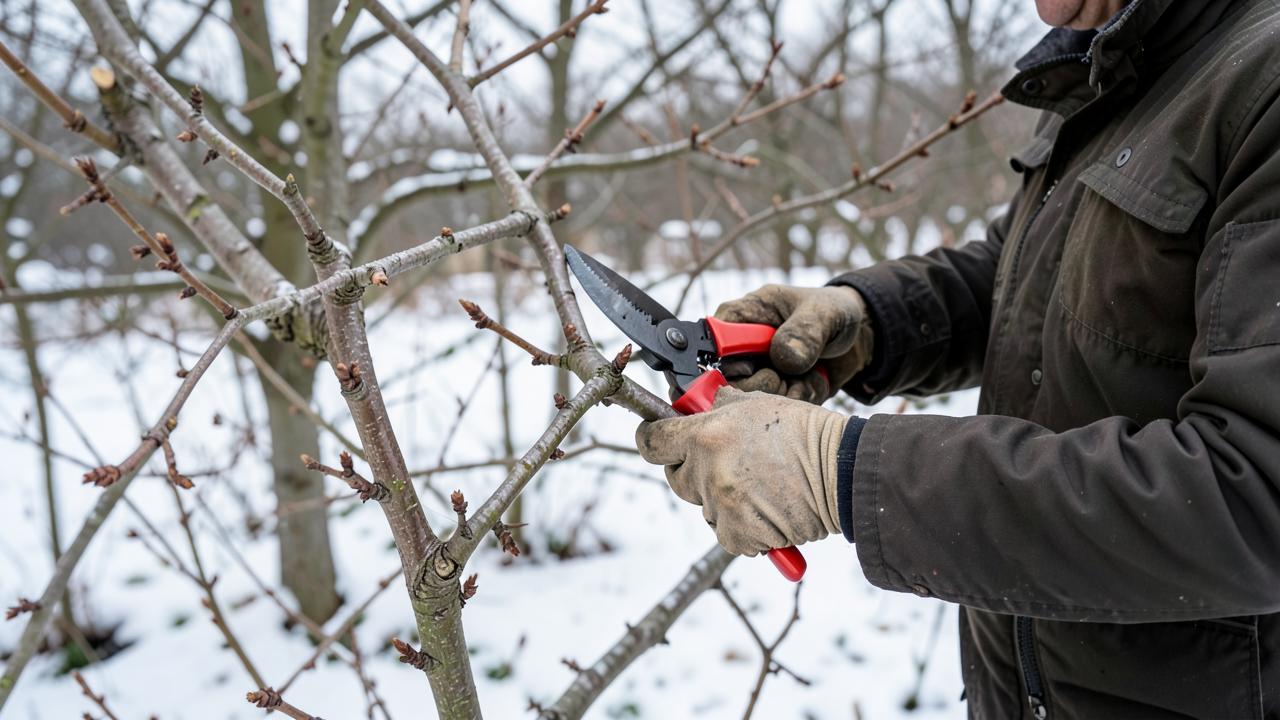
Most fruit trees are pruned during late winter dormancy, after the coldest weather has passed but before buds swell, because cuts made on a dormant tree heal cleanly without the sap loss or disease exposure that comes with cutting active growth. The main goals are removing dead or crossing wood, opening the canopy to light and airflow, and shaping the tree to a manageable, fruitful form — either open-center for stone fruit or central-leader for apples and pears.
Open-center or central-leader: which shape for which tree?
| Tree type | Typical shape | Why |
|---|---|---|
| Peach, nectarine, plum, apricot, tart cherry | Open-center (vase) | These fruit on new wood and need strong light penetration into a low, spreading canopy |
| Apple, pear, sweet cherry | Central-leader (pyramid) | These bear on longer-lived spurs and benefit from a strong central trunk with tiered scaffold branches |
What's the actual order of cuts?
- Remove all dead, damaged, or diseased wood first, cutting back to healthy tissue or the branch collar.
- Remove any branches crossing or rubbing against another branch, keeping the better-positioned one.
- Remove water sprouts (vertical, fast-growing shoots) and root suckers from the base.
- Thin remaining branches to improve light penetration — aim for enough spacing that you could toss a small ball through the canopy without it hitting a branch.
- Head back the leading shoots of young trees lightly to encourage branching, but avoid heavy heading cuts on mature, already-shaped trees.
How much should you actually remove?
A general rule for mature trees is removing no more than 20-25% of the canopy in a single dormant pruning; removing more than that in one year stresses the tree and can trigger a flush of unproductive water sprouts the following summer as the tree tries to compensate. Young trees in their first 2-3 years get lighter, more frequent shaping cuts rather than heavy removal, focused on establishing 3-5 well-spaced scaffold branches.
Do fruit trees need any pruning in summer?
A light summer pass, typically after harvest or in early-to-mid summer, is useful for removing vigorous upright water sprouts and for controlling the size of trees kept intentionally small, since summer cuts remove leaf area and slow regrowth more than winter cuts do. Summer pruning should stay light — heavy cuts in summer heat stress the tree and expose bark to sunscald. Stone fruits like cherries and plums are sometimes pruned primarily in summer rather than winter specifically to reduce exposure to fungal diseases like silver leaf, which enter through winter wounds.
What happens if a fruit tree is never pruned?
- Canopy density increases yearly, shading interior branches until they stop producing fruit at all.
- Fruit size shrinks as the tree sets more fruit than it can properly size on a crowded structure.
- Airflow drops, raising humidity inside the canopy and increasing fungal disease pressure like brown rot and apple scab.
- Branch structure weakens over time, with narrow crotch angles more prone to splitting under a heavy fruit load or ice.
- Harvest becomes physically harder as the canopy grows tall and dense rather than open and reachable.
What tools do you actually need for pruning fruit trees?
| Tool | Use | Typical cost |
|---|---|---|
| Bypass hand pruners | Cuts up to about 3/4 inch diameter | $20-45 |
| Bypass loppers | Cuts 3/4 to 1.5 inch diameter, extra leverage | $30-60 |
| Pruning saw (folding or fixed) | Cuts larger branches loppers can't handle | $20-40 |
| Pole pruner | Reaches upper branches without a ladder | $40-80 |
Bypass tools (which cut like scissors) make cleaner cuts than anvil-style tools (which crush against a flat blade) and are the better choice for live wood on fruit trees, since a crushed cut heals more slowly and is more vulnerable to disease entry. Keeping blades sharp matters as much as the tool type — dull pruners tear rather than cut cleanly, leaving a ragged wound.
How do you make a proper cut without damaging the tree?
Cut just outside the branch collar — the slightly swollen ring where a branch meets the trunk or a larger limb — rather than flush against the trunk or leaving a long stub. Cutting flush removes the collar tissue that would otherwise seal the wound, while leaving a stub gives decay organisms an easy entry point that can work back into the trunk. For branches over about 1.5 inches thick, use the three-cut method (an undercut a foot from the trunk, a matching top cut to remove the bulk of the branch, then a final clean cut at the collar) to prevent the branch's weight from tearing bark down the trunk as it falls.
Does pruning fruit trees actually increase harvest size and quality?
Yes, measurably. An opened canopy lets sunlight reach interior fruit, which improves both sugar content and color development compared to shaded fruit deep in a dense canopy. Thinning also means the tree channels energy into fewer, larger fruit rather than spreading it across an excessive fruit set, which is why commercial orchards combine pruning with hand-thinning young fruit for consistent size. A well-pruned mature apple tree often produces noticeably larger, better-colored fruit in the same season it's pruned, even before structural benefits compound in later years.
Can I prune a fruit tree in fall?
It's best avoided. Fall pruning cuts can stimulate late tender growth that doesn't harden off before winter cold, increasing dieback risk. Wait for full dormancy in late winter instead.
How do I know if I'm pruning too hard?
A summer flush of many thin, vertical water sprouts is the classic sign of overpruning the previous winter — the tree is trying to replace lost canopy fast. Scale back cuts the following year and remove sprouts as they appear instead.
Do newly planted fruit trees need pruning the first year?
Yes, but lightly — mainly to establish 3-5 well-angled scaffold branches and remove any damaged growth from transplanting, not to shape the full mature form all at once.
Run the numbers for your own project
- Garden Bed Plant SpacingHow many plants fit in my bed?
- Frost Date LookupWhen is my last frost and how long is my season?
- What to Plant This MonthWhat can I plant right now where I live?
Keep reading
- Starting Your First Vegetable Garden Without Wasting a SeasonMost first gardens fail for reasons that have nothing to do with a green thumb. Here are the five that matter.
- Building Soil That Actually Grows ThingsFeeding plants is a short-term fix. Feeding the soil is what makes a garden easy.
- Reviving a Tired Lawn: A Season-Long PlanA thin lawn is a symptom. Treating the symptom with more seed is why it keeps coming back.