Backyard Berry Patch: How to Plan One That Produces
By Jim Vernon · 5 min read · Last updated
Mixing berry types in one bed without planning for their different spread habits is the most common berry-patch mistake.
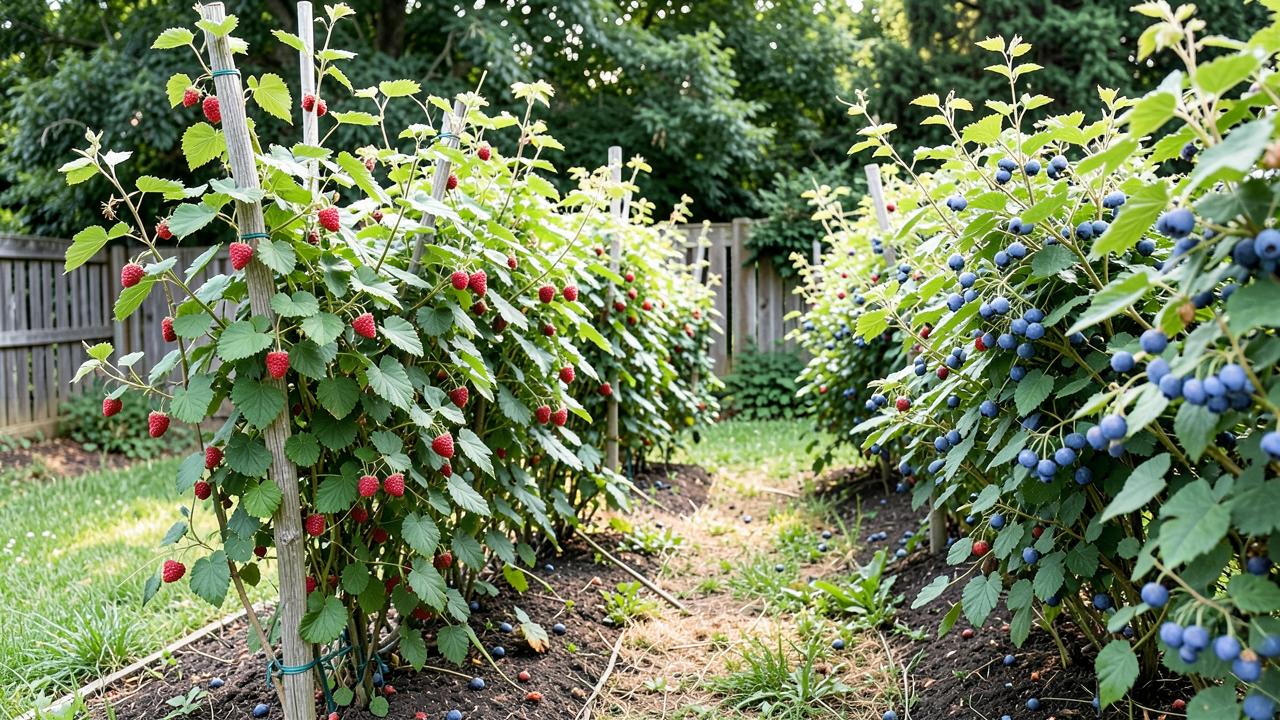
A productive berry patch groups plants by growth habit and gives each type room to spread according to how it actually grows: strawberries by runners, raspberries and blackberries by underground suckers, and blueberries as slow, self-contained shrubs. Planning means picking full-sun space (6-8+ hours), matching soil pH to each fruit's preference, and budgeting real footprint — brambles spread 3-4 feet wider than their planting row within two seasons if left unmanaged.
How much space does each berry type actually need?
| Berry | Plant spacing | Row/bed spacing | Years to full production | Soil pH |
|---|---|---|---|---|
| Strawberries (June-bearing) | 12-18 in | 3-4 ft between rows | 1-2 years | 5.5-6.5 |
| Raspberries | 18-24 in | 6-8 ft between rows | 2-3 years | 5.6-6.2 |
| Blackberries | 3-4 ft | 8-10 ft between rows | 2-3 years | 5.5-6.5 |
| Blueberries | 4-5 ft | 8-10 ft between rows | 3-4 years for full yield | 4.5-5.5 |
Why do blueberries need separate treatment from other berries?
Blueberries need distinctly acidic soil (pH 4.5-5.5), well below what raspberries, blackberries, or strawberries tolerate, so mixing blueberries into a shared bed with other berries usually means one type suffers. Most gardeners either dedicate a separate bed amended with sulfur or acidic compost, or grow blueberries in large containers with an acidic potting mix, especially where native soil runs alkaline. Blueberries also need a second variety nearby for cross-pollination and heavier fruit set, even in varieties labeled self-fertile.
Do raspberries and blackberries need a trellis?
Not strictly, but an unsupported bramble patch sprawls, tangles, and makes harvest painful given the thorns on most varieties. A simple two-wire trellis — posts every 10-15 feet with wires at 3 and 5 feet — keeps canes upright and organized, cuts disease pressure by improving airflow, and roughly doubles how easily you can pick without getting scratched. Thornless blackberry varieties reduce this problem but still benefit from support to keep long canes off the ground.
How do you contain spreading berries?
- Install a root barrier (buried plastic or metal edging 12-18 inches deep) around raspberry and blackberry beds to stop underground sucker spread into lawn or paths.
- Mow or dig out strawberry runners you don't want to root, redirecting only enough to replace older, less productive plants every 3-4 years.
- Give blackberries and raspberries their own bed entirely separate from annual vegetables, since their perennial roots make bed rotation impossible.
- Prune out spent canes each year (see fruit tree and bramble pruning practices) to prevent overcrowding that reduces airflow and fruit size.
What's a realistic first-year expectation?
Strawberries planted in spring often give a light picking the same year and a full crop the next; pinching off first-year flowers on June-bearers is commonly recommended to push energy into root establishment instead. Raspberries and blackberries typically give a small harvest in year two and full production by year three. Blueberries are the slowest, often needing 3-4 years before yields become meaningful, which is why many gardeners plant blueberries first and treat the wait as a background project while faster berries produce in the meantime.
How much does it cost to start a small berry patch?
Bare-root strawberry crowns run roughly $1-3 each and are typically sold in bundles of 25, making a 25-plant bed cost $25-75. Raspberry and blackberry canes run $8-15 per plant, so a modest 6-plant bramble row costs $50-90. Blueberries are the priciest to start, often $15-30 per potted shrub, meaning a 4-bush planting runs $60-120 before soil amendment costs for acidifying the bed. Across all types, soil prep (compost, sulfur for blueberries, root barrier material) often costs as much as the plants themselves in the first year.
How do you protect a berry patch from birds and other wildlife?
- Netting draped over a simple frame just before fruit starts to color is the most reliable defense against birds, which can strip a ripening strawberry bed in a single morning.
- Raised beds or containers reduce (but don't eliminate) access for ground-level pests like slugs and voles that go after strawberries in particular.
- Deer will browse blueberry and bramble foliage in winter and ripening fruit in summer; a 6-8 foot fence or individual cage is usually needed in deer-heavy areas since repellents alone tend to fail over a full season.
- Removing overripe or fallen fruit promptly reduces the wasp and yellowjacket activity that builds up around a berry patch by late summer.
How long does a berry patch stay productive before it needs renewal?
Strawberry beds decline after 3-4 years as plants age and get crowded by their own runners, so most gardeners plan to renovate or replant a June-bearing bed on that cycle, keeping only the newest, most vigorous runners. Raspberries and blackberries are longer-lived, often productive for 10-15 years with annual pruning, though yields can decline if old, overcrowded canes aren't thinned. Blueberry bushes are the longest-lived of the group, commonly productive for 20+ years with only routine pruning, making the slow 3-4 year wait to full production a one-time cost against a long payoff.
Can I grow berries in partial shade?
Strawberries tolerate light afternoon shade better than the others, but all berry types produce noticeably less fruit with under 6 hours of direct sun. For a shaded yard, prioritize sun on whichever bed holds the berries and accept reduced yield elsewhere.
How far apart should different berry types be planted from each other?
At least a few feet of separation with a barrier or path between bramble types and strawberries is enough to prevent physical tangling, but soil pH needs (especially blueberries) matter more than distance for keeping each type healthy.
Do I need two varieties for pollination?
Strawberries and most raspberries and blackberries are self-fertile and don't require a second variety. Many blueberry varieties benefit significantly from a second variety nearby, even ones marketed as self-fertile, producing larger and more abundant fruit.
Run the numbers for your own project
- Garden Bed Plant SpacingHow many plants fit in my bed?
- Soil Amendment and pH CalculatorHow much lime or sulfur do I need to fix my soil pH?
- Raised Bed Soil CalculatorHow much soil do I need to fill my raised bed?
Keep reading
- Starting Your First Vegetable Garden Without Wasting a SeasonMost first gardens fail for reasons that have nothing to do with a green thumb. Here are the five that matter.
- Building Soil That Actually Grows ThingsFeeding plants is a short-term fix. Feeding the soil is what makes a garden easy.
- Reviving a Tired Lawn: A Season-Long PlanA thin lawn is a symptom. Treating the symptom with more seed is why it keeps coming back.