Overwintering Tender Plants: Dahlias, Cannas, Geraniums and Potted Figs
By Jim Vernon · 4 min read · Last updated
Frost does not have to be the end. A box of peat in the basement can save you the cost of replacing dahlias every spring.
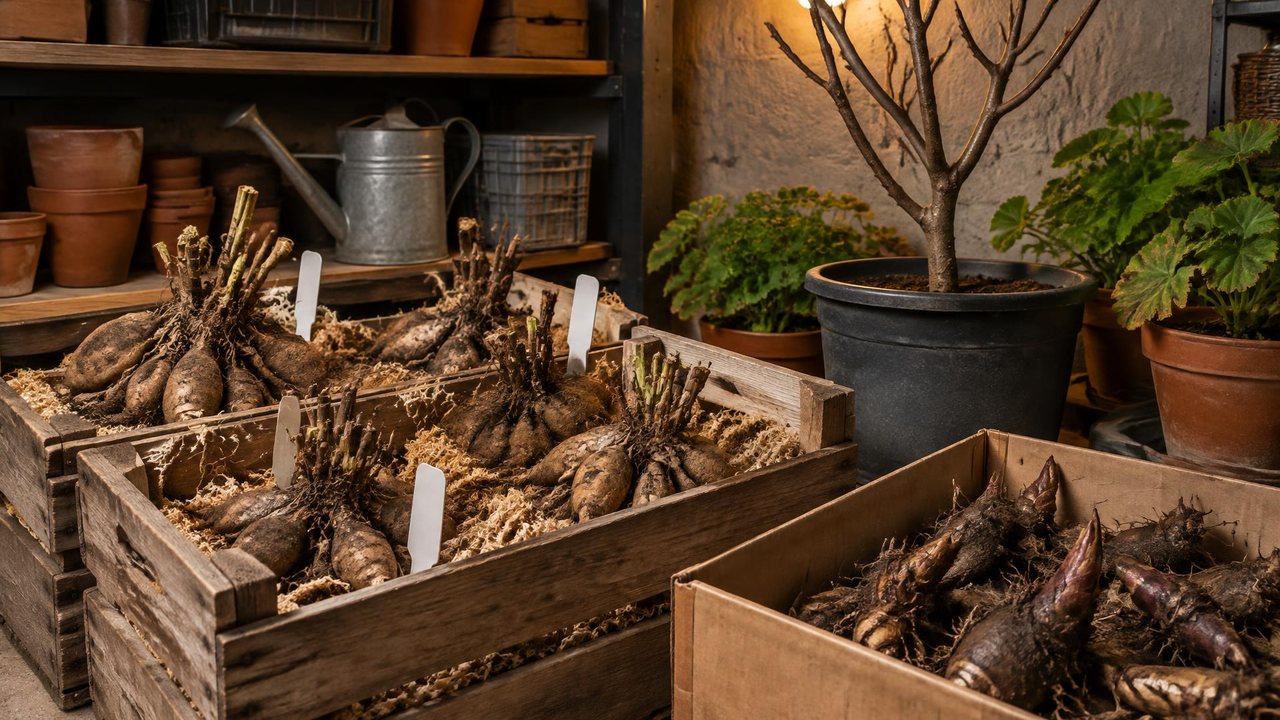
Overwintering tender plants means protecting plants that cannot survive your winter outdoors so you can replant them in spring. Dahlias and cannas are dug after frost and stored dormant in a cool, dark place around 40-50°F. Geraniums can be kept as houseplants, rooted as cuttings or stored dormant. Potted figs go dormant in an unheated garage or shed that stays just above freezing. Each method takes an afternoon in fall and saves buying new plants every spring.
Which plants are worth overwintering?
| Plant | Method | Storage temperature | Light |
|---|---|---|---|
| Dahlia | Dig tubers, store dormant | 40-50°F | Dark |
| Canna | Dig rhizomes, store dormant | 40-50°F | Dark |
| Gladiolus | Dig corms, dry and store | 35-45°F | Dark |
| Geranium (pelargonium) | Houseplant, cuttings or bare-root dormant | 45-60°F | Bright light unless dormant |
| Potted fig | Dormant in its pot | About 25-40°F | Dark is fine once leaves drop |
| Rosemary | Bright, cool indoor spot | 45-60°F | As much as possible |
How do you dig and store dahlias?
- Wait until the first frost blackens the foliage, which signals the tubers to toughen their skins.
- Cut the stems back to about 4-6 inches and label each plant with its variety.
- Loosen the soil in a wide circle with a garden fork and lift the clump gently; dahlia necks snap easily.
- Rinse or brush off soil and let the clumps dry for a few days somewhere frost-free and airy.
- Pack them in boxes or crates with barely damp peat moss, vermiculite or wood shavings, with tubers not touching.
- Store at 40-50°F and check every month. Remove any soft or rotting tubers and lightly mist any that are shriveling.
In mild areas, roughly USDA zone 8 and warmer, dahlias often survive in the ground under 4-6 inches of mulch, as long as the soil drains well. Wet winter soil rots them faster than cold does.
How do you store cannas and gladiolus?
Dig canna rhizomes after frost, cut stems to a few inches, and store them in their soil clumps or in barely damp peat at 40-50°F. Gladiolus corms are dug when the leaves yellow, dried for two to three weeks until the old corm at the base snaps off, then stored dry in mesh bags at 35-45°F.
What are the options for geraniums?
- As a houseplant: cut back by a third, check for pests, and grow in your brightest window. Expect leggy growth to prune back in late winter.
- As cuttings: take 4-inch tip cuttings in early fall, remove the lower leaves and root them in moist mix. Cuttings take the least space.
- Bare-root dormant: shake soil off the roots and hang plants upside down in paper bags in a cool basement around 45-50°F. Soak the roots and pot them up in early spring. Losses are higher with this method.
How do you overwinter a fig in a pot?
Leave the fig outside until a light frost drops its leaves, then move it into an unheated garage, shed or cool basement that stays above about 20-25°F. It needs no light while dormant. Water lightly about once a month so the roots never dry out completely. Bring it back outside gradually in spring once hard frosts are over, because new leaves burn easily in full sun.
When do you bring them back out?
Start dahlias and cannas in pots indoors 4-6 weeks before your last frost date for earlier flowers, or plant them directly once the soil has warmed to about 60°F. Move geraniums and figs outside after the last frost, hardening them off over a week of increasing time outdoors.
How do you choose a storage spot?
Use a thermometer for a week before you commit to a spot. A basement corner far from the furnace, an insulated attached garage or a crawl space often sits in the right range, while a heated room is too warm and an uninsulated shed in a cold area can freeze. Keep boxes off concrete floors, which stay damp and cold, by setting them on a shelf or pallet, and keep them away from mice by using lidded crates with a few air holes.
How do you divide dahlia clumps?
Divide in spring rather than fall, when the eyes, the small buds at the base of the old stem, start to swell and are easy to see. Cut the clump with a clean, sharp knife so that each piece has at least one tuber, a section of the crown and one visible eye. A tuber without an eye will not sprout. Let the cuts dry for a day before potting or planting.
Can I store tubers in the refrigerator?
Small amounts, yes, in a paper bag with barely damp peat, but keep them away from fruit. Ripening fruit gives off ethylene gas that can damage stored tubers and bulbs.
Why did my stored dahlias shrivel?
The storage area was too warm or too dry. Use a slightly damper packing material, move them somewhere cooler, and mist lightly if they start to wrinkle.
Can I overwinter annual flowers like petunias?
Some, such as coleus and impatiens, root easily from cuttings on a windowsill, but most seed-grown annuals are cheaper to replace than to keep indoors.
Run the numbers for your own project
- Frost Date LookupWhen is my last frost and how long is my season?
- Bulb Planting CalculatorHow many bulbs do I need and how deep should I plant them?
Keep reading
- Starting Your First Vegetable Garden Without Wasting a SeasonMost first gardens fail for reasons that have nothing to do with a green thumb. Here are the five that matter.
- Building Soil That Actually Grows ThingsFeeding plants is a short-term fix. Feeding the soil is what makes a garden easy.
- Reviving a Tired Lawn: A Season-Long PlanA thin lawn is a symptom. Treating the symptom with more seed is why it keeps coming back.