When and How Should You Overseed and Dethatch a Lawn Each Year?
By Jim Vernon · 5 min read · Last updated
Overseeding into thatch you never removed is like planting seed on a doormat — most of it never reaches soil.
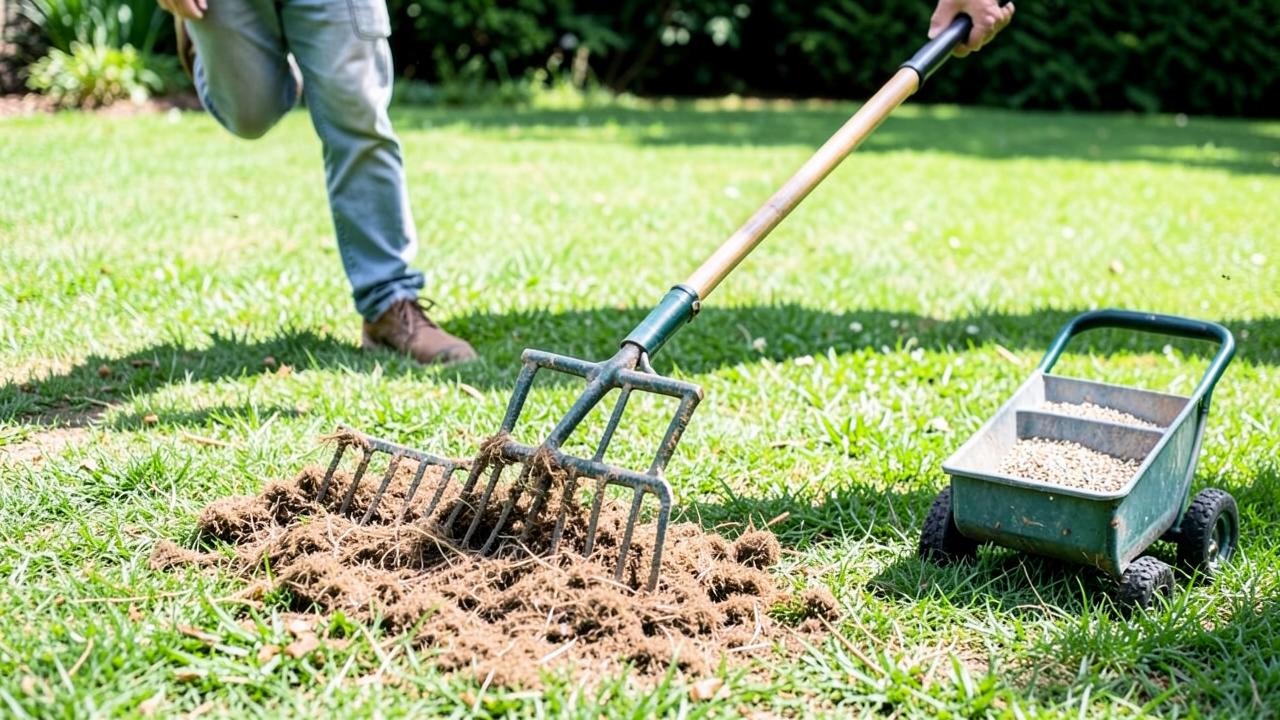
Dethatch first, then overseed, and do both during your grass type's peak growth window: early fall for cool-season lawns (fescue, bluegrass, ryegrass) and late spring through early summer for warm-season lawns (bermudagrass, zoysia). Dethatching opens the canopy and removes the spongy organic layer that blocks seed-to-soil contact, and overseeding right after takes advantage of the lawn's natural recovery push.
What is thatch and when does it actually become a problem?
Thatch is the layer of dead stems, roots, and debris that accumulates between the soil surface and the green blades. A thin layer under half an inch is normal and even helps retain moisture; once it exceeds three-quarters of an inch, it starts blocking water, air, and nutrients from reaching the soil, and it creates a spongy surface that shallow-roots new grass. Pull a small plug with a trowel to check thickness before deciding whether dethatching is worth the effort this year.
How do you dethatch without damaging the lawn?
- Use a dethatching rake for small lawns under 2,000 square feet or a power dethatcher (rental, roughly $60-$90/day) for anything larger.
- Set the blades to just skim the thatch layer, not gouge into soil — too aggressive a pass tears out healthy grass along with the thatch.
- Work in one direction, then rake up and remove the debris; leaving it on the lawn defeats the purpose.
- Follow with core aeration on compacted soil in the same session, since the two tasks solve related but different problems.
What is the right overseeding rate and timing?
| Grass type | Best overseed window | Seed rate (per 1,000 sq ft) | Days to germination |
|---|---|---|---|
| Tall fescue | Late Aug-early Oct | 5-8 lb | 7-14 days |
| Kentucky bluegrass | Late Aug-Sept | 1-2 lb | 14-30 days |
| Perennial ryegrass | Late Aug-Sept | 3-5 lb | 5-10 days |
| Bermudagrass | May-June (soil above 65°F) | 1-2 lb (hulled) | 7-14 days |
| Zoysia | Late spring-early summer | 1-2 lb | 14-21 days |
Do you need to dethatch and overseed every single year?
No. Dethatch only when the layer exceeds roughly three-quarters of an inch, which for most lawns is every 2-4 years, not annually. Overseeding is more often useful yearly on high-traffic or thin lawns, but a healthy, dense lawn with good mowing and watering habits may only need it every other year to stay ahead of natural thinning.
How should you water after overseeding?
Keep the top half-inch of soil consistently moist with light watering once or twice daily for the first 10-14 days, since seed that dries out even briefly during germination dies. Once seedlings reach mowing height (about 3 inches for most cool-season grasses), taper to deeper, less frequent watering — roughly 1 inch total per week — to push roots downward instead of keeping them shallow.
How does a lawn's existing weed pressure affect the overseeding plan?
Overseeding into a lawn with heavy existing weed pressure without addressing the weeds first often just adds new grass competing against an established weed population it can't outcompete in one season. Spot-treat perennial weeds a few weeks ahead of overseeding, or hand-pull isolated patches, rather than relying on the new grass alone to crowd them out. Avoid broadleaf herbicide within 3-4 weeks before or 8-10 weeks after overseeding, since most formulations also damage or kill germinating grass seedlings.
What equipment actually makes overseeding successful?
A broadcast or drop spreader calibrated to the seed bag's recommended rate prevents the common mistake of dumping too much seed in one pass and starving seedlings of light and nutrients as they compete. After spreading, a light raking or rolling step presses seed into the loosened soil for better seed-to-soil contact; seed left sitting on the surface is far more likely to wash away or dry out before it germinates. A push-behind slit seeder, rentable for $50-$80 a day, cuts small grooves and drops seed directly into them, which improves germination rates noticeably over simple broadcast seeding on compacted lawns.
How does grass type change the dethatching approach?
Bermudagrass and zoysia build thatch faster than most cool-season grasses because of their dense, spreading growth habit, so warm-season lawns often need dethatching every 1-2 years rather than every 2-4. Tall fescue rarely builds problematic thatch at all since it grows in bunches rather than spreading rhizomes, so many fescue lawns go 4-5 years or longer without ever needing a dethatching pass. Checking the actual thatch depth with a trowel each spring is more reliable than following a fixed calendar schedule regardless of species.
What happens if you skip mowing adjustments during establishment?
New seedlings are fragile, and mowing too soon or too short can pull them out of loose soil before roots anchor. Wait until new grass reaches about a third taller than its normal mowing height before the first cut, and raise the mower deck for that first pass. Keep foot traffic and mower passes to a minimum on freshly overseeded areas for the first 3-4 weeks, since compaction from repeated walking undoes much of the benefit of the dethatching work that preceded it.
Frequently asked questions
Can you overseed without dethatching first?
You can, but germination rates drop noticeably when seed sits on top of thatch instead of reaching soil, since thatch dries out fast and blocks root contact. If thatch is under half an inch, skip dethatching; above that, remove it first for meaningfully better results.
Should you fertilize right after overseeding?
Yes, apply a starter fertilizer higher in phosphorus at seeding time to support root development, then switch to a balanced or nitrogen-focused feed once the new grass reaches its second mowing. Avoid pre-emergent herbicides for 8-10 weeks after overseeding, as they also block grass seed germination.
Why did my overseeded patches come up thin and patchy?
The most common causes are seed drying out between waterings, seed sitting on undisturbed thatch, or seeding into shade too deep for the species chosen. Check watering consistency first, since that accounts for most failed overseeding attempts.
Run the numbers for your own project
- Grass Seed CalculatorHow much grass seed do I need?
- Lawn Fertilizer CalculatorHow much fertilizer does my lawn need?
Keep reading
- Starting Your First Vegetable Garden Without Wasting a SeasonMost first gardens fail for reasons that have nothing to do with a green thumb. Here are the five that matter.
- Building Soil That Actually Grows ThingsFeeding plants is a short-term fix. Feeding the soil is what makes a garden easy.
- Reviving a Tired Lawn: A Season-Long PlanA thin lawn is a symptom. Treating the symptom with more seed is why it keeps coming back.