Mulch Types Compared: Matching Material to the Job
By Jim Vernon · 5 min read · Last updated
The wrong mulch for the job either breaks down too fast to matter or never breaks down at all when the bed needed it to.
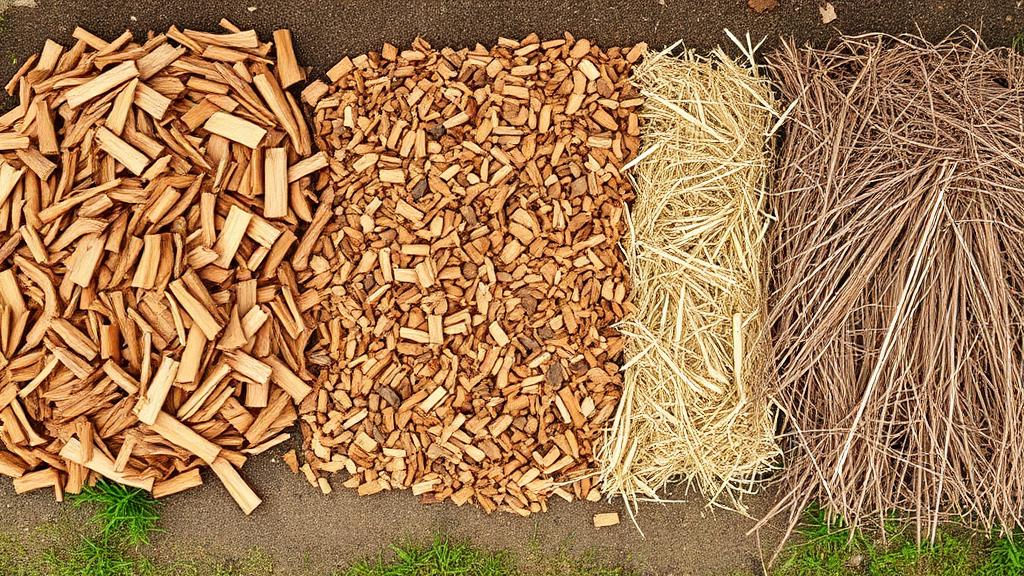
Mulch choice is often made on appearance alone, but each material behaves differently underground — some feed the soil as they decompose, some smother weeds mechanically without adding nutrients, and some are meant to last for years without changing at all. Matching the material to the bed's actual need avoids both wasted money and repeat labour.
Organic mulches at a glance
| Material | Weed suppression | Soil benefit | Lifespan | Best use |
|---|---|---|---|---|
| Shredded bark | Good | Slow nutrient release | 1-2 years | Ornamental beds, shrub borders |
| Wood chips | Very good | Slow nutrient release; ties up nitrogen at surface | 2-4 years | Pathways, trees, long-term beds |
| Straw | Fair | Fast breakdown, feeds soil quickly | One season | Vegetable gardens, annual beds |
| Compost | Fair | High, immediate | Weeks to a few months | Top-dressing, feeding beds directly |
| Grass clippings | Fair, if applied thin | High nitrogen return | Days to weeks | Vegetable beds, thin layers only |
Inorganic mulches for permanence
| Material | Weed suppression | Soil benefit | Lifespan | Best use |
|---|---|---|---|---|
| Gravel or stone | Very good over fabric | None | Indefinite | Xeriscape beds, paths, drought zones |
| Landscape fabric alone | Good short-term, fails over time as soil builds on top | None | 3-5 years effective | Under gravel, not alone in planted beds |
Why wood chips can starve nitrogen at the surface
As wood chips break down, the microorganisms doing the work draw nitrogen from the immediate surrounding soil, which can temporarily deprive shallow-rooted plants if chips are mixed into the soil rather than left on top. Kept as a surface layer rather than tilled in, wood chips avoid this problem almost entirely since the nitrogen drawdown stays confined to the mulch-soil interface.
Vegetable beds want a mulch that disappears
Straw, shredded leaves, or grass clippings suit annual vegetable beds precisely because they break down within a season, feeding the soil in time for the next planting rather than accumulating as a woody layer that has to be raked back each spring before tilling.
Matching depth to material
- Bark and wood chips: 2-4 inches, deeper for weed suppression in tough perennial weed situations.
- Straw: 3-4 inches, since it compresses significantly.
- Compost: 1-2 inches maximum, since deeper layers can smother shallow roots and crowns.
- Gravel: 2 inches over landscape fabric for most applications.
A worked example: comparing two beds over three years
A 200-square-foot shrub bed mulched with 3 inches of wood chips needs topping up roughly every other year, while the same bed mulched with straw needs full replacement each season since it fully breaks down. Over three years the wood chip bed needs about one and a half applications; the straw bed needs three — a useful way to weigh lower per-bag cost against total labor and material over time.
Common mulching mistakes
- Piling mulch against tree trunks and shrub stems, trapping moisture against bark and inviting rot.
- Applying gravel mulch without landscape fabric, letting stones sink into soil and become impossible to fully remove later.
- Using a fast-decomposing mulch like straw in a permanent ornamental bed, requiring far more frequent replacement than a longer-lived material would.
- Tilling wood chips directly into vegetable soil, temporarily tying up nitrogen that plants need immediately.
A worked example: choosing mulch for three different beds
A vegetable bed replanted each spring is best served by straw or shredded leaves, since both fully break down before the next planting and add organic matter in the process. A permanent shrub border under a young ornamental tree does better with wood chips, which need topping up only every couple of years and slowly build soil structure without the annual labor straw would require. A gravel-and-succulent xeriscape bed needs neither — stone over landscape fabric there outlasts any organic option and needs essentially no seasonal attention.
Estimating mulch quantity and cost per bed
Because bagged mulch is typically sold by the cubic foot and bulk mulch by the cubic yard, converting bed area and depth into the matching unit avoids under- or over-ordering. A 150-square-foot bed at 3 inches deep needs about 37.5 cubic feet, which is roughly 1.4 cubic yards — close enough to a full cubic yard delivery that most suppliers would round up rather than sell a fractional yard.
What each material costs delivered
| Material | Bagged cost (2-3 cu ft bag) | Bulk cost per cubic yard |
|---|---|---|
| Shredded bark or wood chips | $4-6 per bag | $25-45 |
| Dyed mulch | $4-7 per bag | $35-55 |
| Straw bale (covers ~50 sq ft at 3 in) | $6-10 per bale | N/A |
| Bulk compost | $5-8 per bag | $30-60 |
| Gravel or decorative stone | $5-8 per bag | $45-80 |
Bulk delivery beats bagged material on cost for anything over roughly 8-10 cubic yards worth of coverage, which is a mid-sized yard's full mulch order, not a single small bed. Below that threshold, the delivery minimum many suppliers charge can erase the per-yard savings, making bagged material the more practical choice for a single 100-200 square foot bed.
Can I mix mulch types in the same bed?
Yes, for example gravel on pathways with bark mulch in the planted areas, as long as an edging separates them so gravel does not migrate into planting soil.
Does mulch attract termites?
Wood-based mulch can shelter termites if piled against a house foundation, but it does not attract them from a distance any more than any cellulose material would. Keep mulch pulled back several inches from foundations regardless of type.
Is cedar mulch actually better at repelling insects?
It has some natural insect-repellent compounds, but the effect is modest and fades as the mulch weathers, so it should not be relied on as pest control on its own.
How much mulch do I need for a given bed?
Multiply bed square footage by desired depth in feet, then convert to cubic yards: a 100-square-foot bed at 3 inches (0.25 ft) needs about 25 cubic feet, or roughly one cubic yard.
Should mulch touch the base of perennials?
No, leave a small gap around crowns and stems, similar to the gap kept around tree trunks, to avoid trapping moisture against the plant and inviting rot or pests.
Run the numbers for your own project
- Mulch CalculatorHow much mulch do I need for my beds?
- Composting CalculatorWhat ratio of greens to browns does my compost need?
Keep reading
- Starting Your First Vegetable Garden Without Wasting a SeasonMost first gardens fail for reasons that have nothing to do with a green thumb. Here are the five that matter.
- Building Soil That Actually Grows ThingsFeeding plants is a short-term fix. Feeding the soil is what makes a garden easy.
- Reviving a Tired Lawn: A Season-Long PlanA thin lawn is a symptom. Treating the symptom with more seed is why it keeps coming back.