How Deep and How Often Should You Actually Water a Lawn?
By Jim Vernon · 4 min read · Last updated
Daily five-minute sprinkler runs are the most common lawn-watering mistake — they wet only the top inch and starve roots of any reason to grow deep.
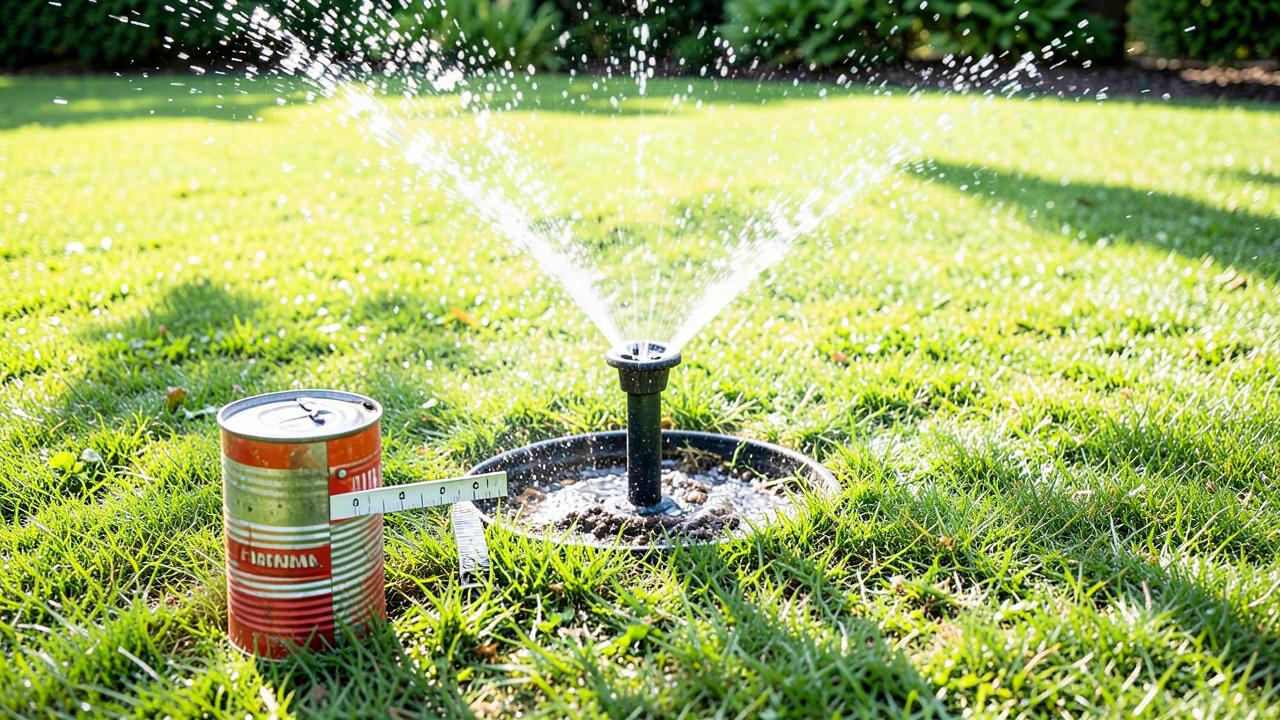
Most established lawns need roughly 1 to 1.5 inches of water per week, including rainfall, delivered in one or two deep sessions rather than daily light watering. Deep, infrequent watering pushes roots down 6-8 inches in search of moisture, which makes the lawn far more drought-tolerant than a lawn watered shallowly every day.
How do you know how much water your sprinkler is actually putting down?
Set out 4-6 straw-sided cans or tuna cans in a grid across the sprinkler's coverage area and run it for 15 minutes. Measure the depth in each can, average them, and multiply by four to get the hourly output rate. Most residential sprinklers deliver 0.5-1.5 inches per hour, so a target of 1 inch per week might mean one 45-60 minute session or two 25-30 minute sessions depending on your system's output.
What is the best time of day to water?
- Early morning, roughly 5-9 a.m., loses the least water to evaporation and gives grass blades time to dry before evening.
- Evening watering leaves grass wet overnight, which raises the risk of fungal diseases like brown patch and dollar spot.
- Midday watering wastes a meaningful share of applied water to evaporation, especially in hot, windy conditions.
How does watering need change by season and grass type?
| Season/condition | Cool-season lawns | Warm-season lawns |
|---|---|---|
| Spring/fall, mild temps | 0.5-1 in/week (often rainfall alone) | 0.5-0.75 in/week |
| Summer, 85-95°F | 1-1.5 in/week | 1-1.25 in/week |
| Drought/heat wave, 95°F+ | 1.5-2 in/week or allow dormancy | 1.25-1.5 in/week |
| Newly seeded lawn (first 2 weeks) | Light, 2x daily, keep top 0.5 in moist | Light, 2x daily, keep top 0.5 in moist |
Is it better to let a lawn go dormant during drought than to keep watering it?
For established cool-season lawns, yes — going dormant is a normal survival response, and the lawn typically recovers within 2-3 weeks once regular rain or watering resumes, as long as dormancy doesn't stretch past 4-6 weeks. Warm-season grasses handle drought stress better without full dormancy but still benefit from reduced mowing and no fertilizer during dry stretches.
How do compacted or sloped lawns change the watering approach?
On compacted soil or slopes, water runs off before it soaks in, so splitting a 45-minute session into three 15-minute cycles with 30-60 minutes between each gives water time to infiltrate instead of sheeting away. Core aeration in spring or fall also meaningfully improves infiltration on compacted clay soils, often cutting runoff enough that a single session becomes workable again.
How does mowing height interact with watering needs?
Taller grass shades the soil surface and reduces evaporation, so raising the mower deck to the top of a grass type's recommended range — roughly 3-3.5 inches for tall fescue, 2-2.5 inches for most warm-season grasses — can meaningfully reduce how often a lawn needs watering during hot stretches. Cutting too short, a common summer mistake meant to reduce mowing frequency, exposes more soil to direct sun and increases both water loss and weed germination in the thinner canopy.
Do different grass species need meaningfully different watering strategies?
Warm-season grasses like bermudagrass and zoysia have deeper, more efficient root systems and generally need 20-30% less water than cool-season grasses to maintain the same appearance, which is part of why they dominate in the Southwest and drought-prone regions. Fine fescue and buffalo grass stand out as the most drought-tolerant options within their respective categories, sometimes surviving on rainfall alone in temperate climates once fully established after two full growing seasons.
How much does smart or automated irrigation actually save?
A basic mechanical timer waters on a fixed schedule regardless of rain or soil moisture, which routinely overwaters during wet stretches. A smart controller with a local weather feed or a soil moisture sensor, costing roughly $100-$250 installed for a typical home system, adjusts run times automatically and commonly cuts outdoor water use by 15-30% compared to a fixed schedule, based on utility program data from several Western water districts that offer rebates for these controllers.
What are the visible warning signs that a lawn is underwatered versus overwatered?
- Underwatered: footprints stay visibly compressed in the grass for more than a few seconds after walking across it, and blades take on a dull, blue-gray cast before browning.
- Underwatered: soil pulls away from the edges of walkways and beds, showing visible cracking in clay soils.
- Overwatered: mushrooms or fungal rings appear, especially after humid, warm stretches.
- Overwatered: the lawn feels spongy or squishy underfoot even a day or more after the last watering or rain.
Frequently asked questions
Can you overwater a lawn even in summer heat?
Yes, watering beyond what roots can use encourages shallow roots, fungal disease, and thatch buildup, and it wastes water that runs off or drains past the root zone. The screwdriver test and a rain gauge are more reliable guides than watering on a fixed daily schedule.
Do new sod and new seed need different watering than an established lawn?
Yes, both need frequent light watering for the first 2-3 weeks to keep the top half-inch of soil consistently moist while roots establish, then a gradual taper toward deep, infrequent watering over the following month as roots grow down.
Why does my lawn look wilted even right after watering?
Wilting soon after watering usually points to compacted soil blocking infiltration, a fungal disease affecting root uptake, or grub damage severing roots near the surface. Check with the screwdriver test first, then pull back a small patch of turf to look for grub larvae if the soil test comes back fine.
Run the numbers for your own project
- Plant Watering CalculatorHow often and how much should I water this plant?
- Lawn Fertilizer CalculatorHow much fertilizer does my lawn need?
Keep reading
- Starting Your First Vegetable Garden Without Wasting a SeasonMost first gardens fail for reasons that have nothing to do with a green thumb. Here are the five that matter.
- Building Soil That Actually Grows ThingsFeeding plants is a short-term fix. Feeding the soil is what makes a garden easy.
- Reviving a Tired Lawn: A Season-Long PlanA thin lawn is a symptom. Treating the symptom with more seed is why it keeps coming back.