Mowing Height and Frequency: The Two Settings Most Lawns Get Wrong
By Jim Vernon · 5 min read · Last updated
Two dials control most lawn health outcomes: how short you cut and how often. Most mowers get both wrong.
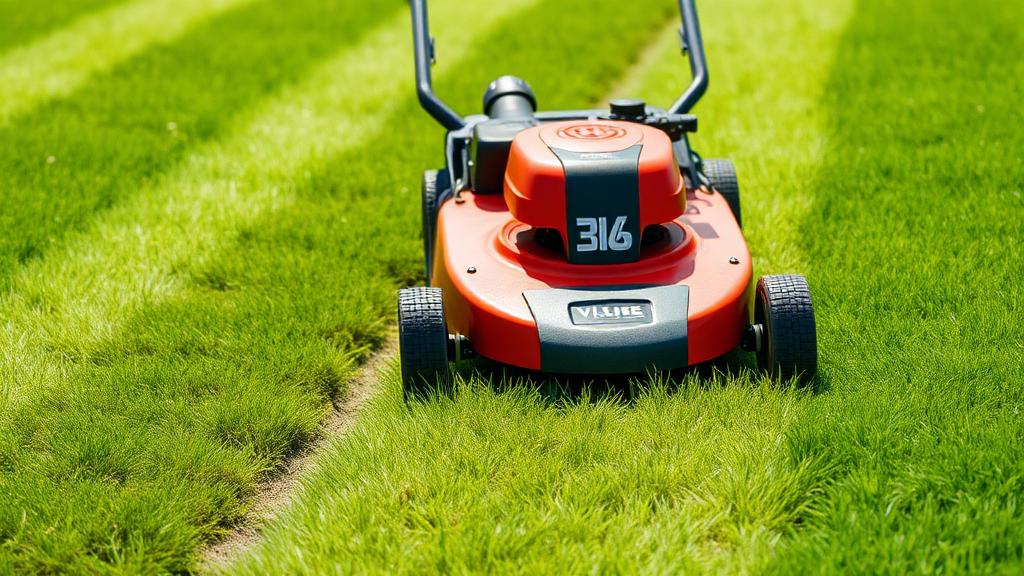
A lawn's biggest stresses are usually self-inflicted at the mower. Cutting too short weakens roots and lets weeds in; cutting too infrequently means each mow removes more leaf than the plant can recover from. Both mistakes are free to fix — they just require resetting habits, not buying anything.
The one-third rule
Never remove more than one third of the grass blade's height in a single cut. Removing more shocks the plant, forces it to draw on root reserves to regrow leaf, and thins the stand over a season. In practice this means mowing frequency should track growth rate, not a fixed weekly calendar — every 4-5 days in peak spring growth, every 10-14 days in the heat of summer or during a dry spell.
Target heights by grass type
| Grass type | Recommended height | Notes |
|---|---|---|
| Kentucky bluegrass | 2.5-3.5 in | Taller in summer heat reduces drought stress |
| Tall fescue | 3-4 in | Deep roots reward taller mowing |
| Perennial ryegrass | 2-3 in | Tolerates lower cuts than fescue |
| Bermudagrass | 1-2 in | Warm-season; scalps if left too tall between cuts |
| Zoysiagrass | 1-2.5 in | Slow growing; wider mowing interval possible |
| St. Augustinegrass | 2.5-4 in | Shade-tolerant only when kept taller |
Why taller is usually better, not just safer
Taller grass shades the soil surface, which suppresses weed seed germination and slows moisture loss between waterings. Lawns mowed at the top of their recommended range typically need less supplemental water and show fewer crabgrass and spurge outbreaks than the same lawn cut short, all else being equal.
Blade sharpness changes the outcome as much as height
A dull blade tears rather than slices, leaving ragged, whitish tips that lose more water and are more vulnerable to fungal entry. Sharpen mower blades at least once per season, more often for larger lawns or sandy soil that dulls edges faster.
- Leave clippings on the lawn when mowing at the correct frequency — they return nitrogen and rarely cause thatch on their own.
- Bag clippings only after a rare longer-than-planned gap, when clumps would smother the grass beneath them.
- Change mowing direction between cuts to avoid soil compaction ruts and grain patterns.
- Raise the deck a notch for the last cut before winter dormancy in cool-season lawns to protect the crown.
Adjust height with the season
Raise mowing height through the hottest weeks of summer and in the weeks before the first expected frost. Both periods put cool-season grasses under stress, and extra leaf area helps the plant photosynthesize enough to cope with heat or to build root reserves before dormancy.
A worked example: two lawns, two schedules
Consider two identical fescue lawns growing three quarters of an inch per week in spring. Lawn A is mowed every five days at 3.5 inches, so it grows about half an inch between cuts and never crosses the one-third limit. Lawn B is mowed every twelve days at the same target height, meaning it reaches roughly 5 inches before each cut and loses close to 30% of its blade in one pass — right at the edge of shock. Over a season, Lawn A stays denser and greener with the same fertilizer and water inputs, purely from cutting more often at the same height.
Common mowing mistakes
- Mowing to a fixed calendar day regardless of actual growth rate, which causes scalping during fast spring growth and unnecessary cutting during summer dormancy.
- Cutting warm-season lawns at cool-season heights, or vice versa, instead of matching height to the specific grass species present.
- Mowing in the same direction every time, which compacts soil in wheel tracks and creates a visible striping pattern that never evens out.
- Ignoring blade sharpness for an entire season, leaving torn tips that brown at the edges within a day or two of each cut.
Equipment choice changes the maintenance math
A reel mower gives a cleaner, scissor-style cut than a rotary blade and suits low, dense lawns like Bermudagrass or zoysia cut under 1.5 inches, but it struggles with tall fescue or overgrown patches and needs sharpening on a specialist bed grinder rather than a bench grinder. A rotary mower is more forgiving of missed weeks and variable height but tears rather than shears, especially once the blade has done 15-20 hours of cutting in sandy or gritty soil. Budget roughly $15-25 for a DIY blade sharpening kit, or $10-15 per blade at a small-engine shop twice a season for a typical quarter-acre lawn; a $40-60 replacement blade every two to three seasons is usually cheaper than chasing a badly nicked edge back to true.
Regional growth-rate caveats
The one-third rule and mowing calendar shift by climate. In the humid Southeast, warm-season lawns can add half an inch a week through July and August, pushing mowing to twice weekly even at correct height. In arid Southwest climates with unirrigated or minimally irrigated lawns, growth can stall for weeks at a time in summer, and mowing on a fixed schedule during that stretch does nothing but stress a lawn that has gone semi-dormant to conserve water. Watching the grass rather than the calendar matters more in these variable climates than in a consistently temperate one.
Is it bad to mow wet grass?
It is not harmful to the grass itself, but wet clippings clump, can tear rather than cut cleanly, and are more likely to spread fungal spores. Wait for the lawn to dry when possible.
How short should the first spring mow be?
Slightly lower than the season's normal height, to remove winter-damaged tips and let sunlight reach the crown faster, then return to the standard height for subsequent cuts.
Does mowing direction really matter?
Yes for compaction and for grain — alternating direction prevents wheel ruts from forming in the same tracks and keeps the grass standing more upright between cuts.
Do electric mowers cut differently than gas mowers?
The cutting mechanics are the same; what matters is blade sharpness and deck design, not power source. A well-maintained electric mower cuts as cleanly as a gas one at the same height setting.
How much does mowing frequency actually change growth stress?
A lawn growing half an inch a week that is cut weekly at 3 inches stays inside the healthy one-third range. The same lawn left two weeks would need to drop from about 4 inches to 3, removing roughly a quarter of its height — still workable, but push it to three weeks and one cut removes closer to 40%, well into scalping territory.
Run the numbers for your own project
- Lawn Fertilizer CalculatorHow much fertilizer does my lawn need?
- Grass Seed CalculatorHow much grass seed do I need?
Keep reading
- Starting Your First Vegetable Garden Without Wasting a SeasonMost first gardens fail for reasons that have nothing to do with a green thumb. Here are the five that matter.
- Building Soil That Actually Grows ThingsFeeding plants is a short-term fix. Feeding the soil is what makes a garden easy.
- Reviving a Tired Lawn: A Season-Long PlanA thin lawn is a symptom. Treating the symptom with more seed is why it keeps coming back.