How Many Inches of Soil Do Raised Bed Vegetables Actually Need?
By Jim Vernon · 8 min read · Last updated
You can grow a massive crop of salad greens in the depth of a baking pan, but starving a tomato of soil will cost you the entire harvest.
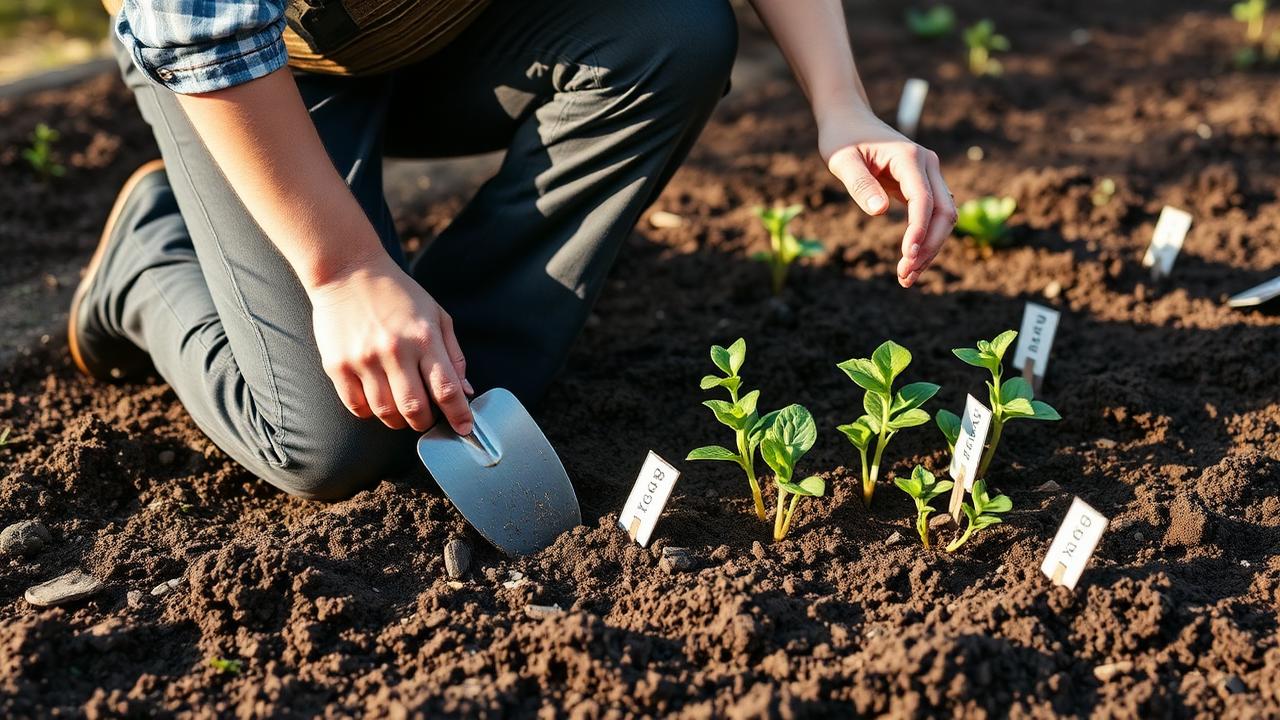
A raised garden bed only needs to be 6 inches (15 cm) deep to grow shallow-rooted crops like lettuce, radishes, and herbs, but it must be at least 12 to 18 inches (30 to 45 cm) deep to support heavy yielders like tomatoes, peppers, and carrots. If you are building on top of hardpan, compacted clay, or concrete, default to an 18-inch (45 cm) minimum depth. Depth directly dictates root health and water retention, but building beds deeper than 24 inches (60 cm) usually wastes money on unnecessary lumber and soil volume. The goal is to match your bed height to the biological needs of what you want to grow, your underlying soil conditions, and your 2026 budget for bulk soil.
- Shallow 6-inch (15 cm) beds are perfect for leafy greens, radishes, and bush beans but require more frequent watering during summer heat.
- Deep 12-to-18-inch (30 to 45 cm) beds provide the necessary root space and structural support for top-heavy summer crops like tomatoes and peppers.
- Loosening the native soil beneath your raised bed can make a 6-inch frame perform like a 12-inch bed without the added soil expense.
- Beds taller than 18 inches (45 cm) must have mid-span cross-bracing to prevent wet soil from blowing out the sidewalls.
Which crops can thrive in a shallow 6-inch raised bed?
Leafy greens, shallow-rooted alliums, and fast-growing root vegetables thrive in just 6 inches (15 cm) of quality soil. This includes spinach, arugula, lettuce, radishes, garlic, and onions. Because these plants naturally spread their roots horizontally just beneath the soil surface, they do not require deep vertical space to access nutrients. Bush beans and strawberries are also excellent candidates for shallow beds. Building a 6-inch (15 cm) bed is highly cost-effective, requiring only a single stack of standard 2x6 or 1x6 dimensional lumber.
However, because shallow beds contain a smaller total volume of soil, they hold less moisture. During mid-summer heatwaves in USDA Zones 7 through 10, a 6-inch bed can completely dry out in a single afternoon. If you live in a hot climate and want to use shallow beds, plan to install drip irrigation on a daily timer and apply a heavy 2-inch (5 cm) layer of straw mulch to slow evaporation.
- Lettuce, spinach, and arugula
- Radishes and shallow beets
- Garlic and bunching onions
- Bush beans and strawberries
Which vegetables require a 12-to-18-inch bed depth?
Heavy-yielding summer crops and deep taproot vegetables require a minimum of 12 to 18 inches (30 to 45 cm) of loose soil. Tomatoes, peppers, eggplant, cucumbers, and pole beans develop massive root systems to support their fast vertical growth and heavy fruit loads. Without adequate depth, these plants become root-bound, stunting their growth and making them highly susceptible to blossom end rot due to calcium and moisture fluctuations. Root vegetables like full-size carrots, parsnips, and potatoes physically need 12 inches (30 cm) of obstruction-free space to develop. If a carrot hits compacted native soil at 6 inches (15 cm), it will fork and deform.
A 12-inch (30 cm) bed depth is the sweet spot for most backyard gardeners because it accommodates almost every common vegetable while remaining relatively affordable to build and fill. It also provides enough structural weight and depth to anchor a tall trellis system for indeterminate tomatoes or vining squash without the wind blowing the entire structure over.
- Tomatoes and peppers
- Carrots, parsnips, and potatoes
- Cucumbers and squash
- Eggplant and pole beans
How does the ground underneath affect the required bed depth?
The surface you build on drastically alters how deep your wooden frame actually needs to be. This is where a classic pro-versus-beginner judgement call comes into play. A beginner often builds a 12-inch (30 cm) tall wooden box, sets it on top of compacted lawn or hard clay, and fills it with soil. When tomato roots reach the bottom of the box, they hit a hard wall of native clay, causing the water to pool and rotting the roots.
A professional landscaper tackles this differently. Before placing a 12-inch (30 cm) frame on native soil, a pro will use a broadfork or a rear-tine tiller to break up the existing ground to a depth of 8 inches (20 cm), mixing in a layer of compost. This allows the roots to transition easily from the raised bed into the native earth, effectively turning a 12-inch (30 cm) frame into a 20-inch (50 cm) deep growing environment. If you are forced to build over concrete, asphalt, or heavily contaminated soil, your raised bed frame becomes a true container. In these closed-bottom scenarios, you must build the frame at least 18 inches (45 cm) tall to ensure adequate root space and internal drainage.
What is the true cost of soil volume for deep beds in 2026?
The most common mistake gardeners make when planning deep beds is underestimating the cost of the soil required to fill them. Soil volume is calculated in cubic feet or cubic yards, and the math scales rapidly. A standard 4-by-8-foot (1.2 by 2.4 m) raised bed built to a 12-inch (30 cm) depth requires 32 cubic feet (906 liters) of soil. That equals roughly 1.2 cubic yards. In 2026, a bulk delivery of high-quality 50/50 topsoil and compost blend costs between $55 and $85 per cubic yard depending on your region, plus a delivery fee of $75 to $150. This brings the cost to fill a single 12-inch bed to around $150.
If you decide to build a 24-inch (60 cm) tall bed purely for aesthetic reasons, you double the required soil to 64 cubic feet (2.4 cubic yards). You are now paying over $200 just for the soil to fill one bed. If you attempt to fill a 24-inch (60 cm) deep bed using 1.5-cubic-foot bags of premium potting mix from a big box store, you will need 43 bags, easily pushing the cost of filling a single frame past $400.
How fast does soil dry out based on the depth of the bed?
Soil depth is your primary defense against rapid moisture loss. A massive volume of soil acts as a sponge, holding water deep below the surface where the sun cannot reach it. In a shallow 6-inch (15 cm) bed, the entire soil profile is exposed to ambient heat. When temperatures push past 90 degrees Fahrenheit (32 degrees Celsius), the top two inches of soil can evaporate in hours, leaving shallow-rooted crops incredibly vulnerable to heat stress.
Conversely, an 18-inch (45 cm) deep bed maintains a cool, damp reservoir at its core. Even if the top 3 inches (7.5 cm) turn to dust, deep-rooted crops can continue pulling moisture from the bottom 15 inches (38 cm). This depth buffer allows you to water less frequently. A shallow bed typically requires 15 minutes of drip irrigation every single day during the summer, whereas an 18-inch (45 cm) bed can often thrive on a deep, 45-minute soaking just twice a week. Deep watering encourages roots to chase the moisture downward, making your plants more resilient to unexpected dry spells.
Why do tall raised beds fail, and how can you prevent bowing?
A common failure mode for tall raised beds is sidewall blowout. Wet garden soil is exceptionally heavy, weighing between 75 and 100 pounds per cubic foot (1,200 to 1,600 kg per cubic meter). If you build a bed that is 4 feet wide, 8 feet long, and 24 inches tall (1.2m x 2.4m x 60cm), the wet soil inside exerts thousands of pounds of hydrostatic outward pressure against the long wooden sides. Without proper reinforcement, the boards will visibly bow outward within the first season, eventually snapping the corner screws and collapsing the bed.
To avoid this, any raised bed longer than 6 feet (1.8 m) and taller than 12 inches (30 cm) requires mid-span cross-bracing. You can easily achieve this by running a piece of heavy-gauge galvanized wire or a 2x4 board across the center of the bed, connecting the two long sides to pull them together. Install this brace halfway up the height of the bed before you add the soil. This simple structural tie completely neutralizes outward bowing and extends the life of your wooden frame by years.
Is it worth filling the bottom of a deep bed with logs and branches?
If you want the ergonomic height of a 24-inch (60 cm) or 30-inch (76 cm) tall bed so you do not have to bend over, you do not need to fill the entire volume with expensive topsoil. Borrowing from the Hugelkultur method, you can fill the bottom 50 to 60 percent of a deep raised bed with decaying logs, thick branches, yard clippings, and untreated scrap wood. As this woody material breaks down over several years, it acts as a sponge, retaining immense amounts of moisture and slowly releasing nutrients to the plant roots above.
You only need to add 10 to 12 inches (25 to 30 cm) of quality garden soil on top of the wood layer to grow almost any vegetable. However, be aware that the organic material will compress as it decomposes. A bed filled with logs at the base will settle by 2 to 4 inches (5 to 10 cm) annually for the first three years, requiring you to top-dress the surface with fresh compost each spring to maintain your soil level.
| Crop Type | Root Architecture | Recommended Minimum Bed Depth |
|---|---|---|
| Lettuce & Spinach | Shallow horizontal | 6 inches (15 cm) |
| Bush Beans | Shallow but dense | 8 inches (20 cm) |
| Tomatoes (Indeterminate) | Deep taproot & wide feeder | 18 inches (45 cm) |
| Carrots (Full Size) | Vertical taproot | 12 inches (30 cm) |
| Potatoes | Deep tubers | 18 inches (45 cm) |
Frequently asked questions
Can a raised bed be too deep?
Yes, anything over 36 inches (90 cm) provides diminishing returns for vegetable roots and can create compaction issues at the base, impeding proper drainage if the bottom soil gets waterlogged.
Do I need landscape fabric at the bottom of my raised bed?
Only if you are building over weeds you cannot eradicate, like Bermuda grass, or over a patio. If building over bare dirt or lawn, put down overlapping layers of plain cardboard instead. It blocks weeds initially but decomposes to let roots pass through.
Can I fill a raised bed entirely with potting soil?
You can, but it is expensive and not structurally ideal. Potting soil is meant for containers and is often too light and fluffy for deep raised beds. A 50/50 blend of screened topsoil and compost provides better moisture retention and structural weight.
How much space should I leave at the top of the raised bed?
Always leave a 2-inch (5 cm) lip between the soil level and the top edge of the wooden frame. This gap prevents water and loose soil from washing over the sides when you use a hose or during heavy rainstorms.
Keep reading
- Starting Your First Vegetable Garden Without Wasting a SeasonMost first gardens fail for reasons that have nothing to do with a green thumb. Here are the five that matter.
- Building Soil That Actually Grows ThingsFeeding plants is a short-term fix. Feeding the soil is what makes a garden easy.
- Reviving a Tired Lawn: A Season-Long PlanA thin lawn is a symptom. Treating the symptom with more seed is why it keeps coming back.