How Do You Refinish Weathered Teak Patio Furniture So It Lasts?
By Jim Vernon · 7 min read · Last updated
That silver-gray patio set isn't dead wood, it's just hiding a rich, honey-colored grain behind a millimeter of oxidized buildup.
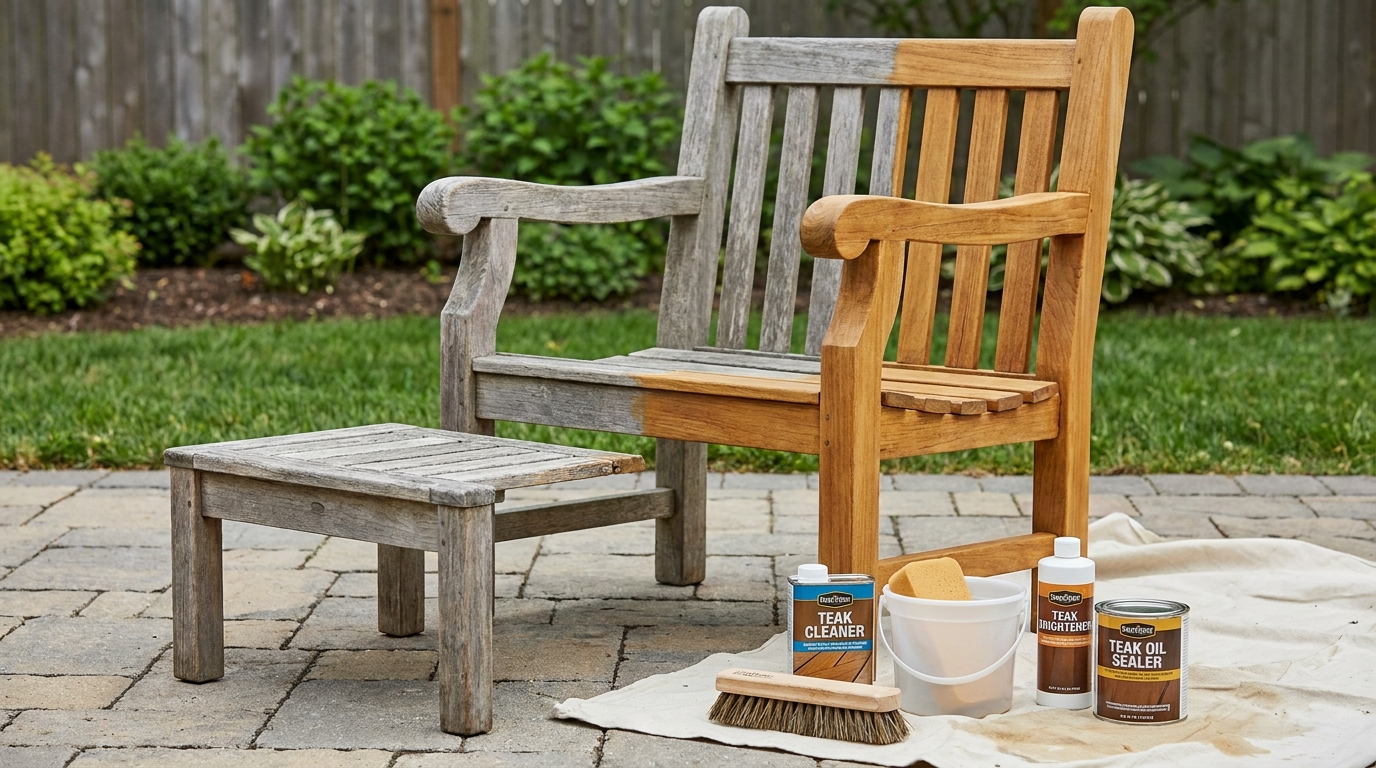
To refinish weathered teak patio furniture, you must scrub away the oxidized gray surface with an alkaline teak cleaner, neutralize the wood with an acid brightener, let it dry until the internal moisture drops below 15 percent, lightly sand the raised grain, and wipe on two coats of UV-blocking teak sealer. Do not use a pressure washer, which will gouge the soft grain, and avoid marine varnishes unless you are prepared to scrape peeling flakes next spring. Restoring teak takes a weekend of manual labor, but the chemical reaction between the brightener and the wood does most of the heavy lifting, instantly returning a silver table to its original golden-brown factory finish.
- Two-part teak cleaners strip gray oxidation and kill mildew chemically, avoiding the structural damage caused by power washers.
- Wood brighteners are mandatory after stripping; they neutralize the high-pH cleaner and restore the original warm wood tone instantly.
- Teak must dry for at least 48 hours before sealing; trapping moisture under oil causes immediate black mildew growth.
- A water-based or synthetic polymer teak sealer lasts three to four times longer than traditional linseed or tung oil in full sun.
Why Does Teak Turn Gray in the Sun?
Teak (Tectona grandis) is incredibly dense and naturally packed with silica and natural oils, making it virtually impervious to rot, insects, and warping. However, those internal oils do not protect the surface cells from the sun.
When exposed to direct sunlight, ultraviolet rays break down the lignin in the top layer of the wood. This photochemical degradation, combined with rain washing away the surface oils, causes the wood to oxidize. The resulting silver-gray patina is entirely cosmetic. The oxidation is rarely deeper than 1/100th of an inch (0.25 mm). The wood underneath remains perfectly sound and retains its original honey-brown color.
Allowing teak to turn gray is a valid, maintenance-free choice that does not harm the furniture's structural integrity. However, if you want the showroom look, you have to strip away that dead cellular layer and apply a protective barrier against the UV light.
Should You Power Wash or Chemically Clean Teak?
This is the most common judgement call a professional wood restorer makes differently from an eager weekend beginner. A beginner sees a dirty, gray patio chair and immediately fires up a 3,000 PSI pressure washer. It blasts away the gray instantly, but it ruins the furniture.
Wood grain consists of hard winter wood and softer summer wood. High-pressure water blasts the soft pulp right out from between the hard grain lines. This leaves the teak with a deeply grooved, splintery texture that catches clothing and holds dirt like a sponge. Once the surface is blown out, you have to spend hours with an orbital sander to make it flat again.
Professionals rely on chemistry rather than brute force. A two-part chemical teak cleaner dissolves the oxidized cells, dirt, and mildew. It requires manual scrubbing with a medium-stiff nylon brush, but it leaves the factory-milled face of the wood perfectly smooth and intact.
What Is the Step-by-Step Chemical Cleaning Process?
Two-part teak restoration kits rely on a highly alkaline cleaner followed by a highly acidic brightener. Because these are harsh chemicals, move the furniture off the lawn to a driveway or gravel pad, and wear thick rubber gloves and safety glasses.
First, wet the furniture thoroughly with a garden hose. Apply the Part 1 cleaner (usually sodium hydroxide based) using a spray bottle or a sponge. Let it dwell on the wet wood for 10 to 15 minutes, adding more water if it starts to dry. Scrub the wood vigorously along the grain with a nylon bristle brush. The runoff will look like dark brown mud as the oxidized wood lifts away. Rinse the piece entirely.
While the wood is still wet, apply the Part 2 brightener (typically oxalic acid). The chemical reaction is immediate. The dark, muddy wood will flash bright golden-brown right before your eyes. The brightener neutralizes the alkaline cleaner and re-establishes the wood's natural pH. Scrub lightly, then flood the furniture with a hose to rinse away all chemical residue.
- Work in the shade if possible; hot sun dries the chemicals before they can work.
- Use a toothbrush or a small detailing brush to get into the tight joints of slatted chairs.
- Never mix Part 1 and Part 2 together; they will neutralize each other in the bucket and become useless.
How Long Must Teak Dry Before You Sand and Seal It?
After a heavy chemical scrub and a hose rinse, the wood is saturated. You must move the furniture out of the rain and let it dry completely. At 70°F (21°C) with moderate humidity, this takes a minimum of 48 hours. If you own a wood moisture meter, check the dense joints; the moisture content must be below 15 percent.
The most common failure mode in teak restoration is rushing the drying phase and sealing damp wood. If you wipe oil or sealer over wood that still holds internal water, the finish traps the moisture. Within two to three weeks, the trapped water breeds mold, and your golden teak will break out in ugly black spots underneath the finish. The only fix is to strip the piece and start over.
Once bone dry, you will notice the water has raised the grain, making the wood feel fuzzy. Hand-sand the flat surfaces lightly with 120-grit sandpaper followed by 220-grit to knock off the fuzz. Wipe away all dust with a tack cloth before finishing.
Teak Oil vs. Teak Sealer: Which Finish Lasts Longer?
The term 'teak oil' is mostly marketing. True teak oil comes from the tree, but commercial teak oil is usually just a blend of linseed or tung oil cut with naphtha and chemical dryers. While it looks rich and beautiful on day one, natural oils are food for mildew in humid climates, and they burn off rapidly in direct sun. In USDA Zones 8 and warmer, a traditional oil finish might only last eight weeks before turning black or evaporating.
Modern teak sealers are the superior choice. These are typically water-based or synthetic polymer liquids suspended in a solvent. Instead of feeding mildew, they lock into the wood pores and contain heavy UV inhibitors to physically block the sun. A high-quality sealer will easily last six to twelve months in full sun.
To apply a sealer, dip a lint-free cotton rag into the can and wipe a generous coat along the grain. Let it soak in for 15 minutes, then use a clean, dry rag to aggressively wipe off any excess on the surface. Sealer that dries on the surface rather than in the pores will turn sticky. Apply a second thin coat after the first has cured, usually four to six hours later.
How Much Does Teak Refinishing Cost in 2026?
Hiring a professional to chemically strip and seal a standard six-person teak dining set costs between $400 and $800, mostly due to the manual labor of scrubbing all those slats. Doing it yourself requires a modest investment in specialized chemicals, but the materials will easily cover multiple pieces of furniture.
How Do You Maintain the Finish Through the Summer?
Once sealed, teak requires very little ongoing maintenance. Do not use harsh household cleaners, bleach, or ammonia on the sealed wood, as these will strip the UV protectants.
To clean dirt, bird droppings, or food spills, simply wash the furniture down with a bucket of water mixed with a few squirts of mild dish soap and a soft sponge. Rinse with a hose. When water stops beading on the surface—usually at the end of the summer or early the following spring—wash the wood with soap, let it dry, and wipe on a fresh, single maintenance coat of sealer to rejuvenate the UV protection.
| Material | Quantity Needed | Estimated Cost |
|---|---|---|
| Two-Part Teak Cleaner & Brightener | 1 Quart Kit | $35 - $50 |
| Premium UV Teak Sealer | 1 Quart | $40 - $65 |
| Nylon Scrub Brushes (Assorted) | 2 - 3 Brushes | $10 - $15 |
| Sandpaper (120-grit and 220-grit) | 1 Multi-pack | $8 - $12 |
| Lint-Free Cotton Rags | 1 Small Bag | $5 - $10 |
Frequently asked questions
Can I use household bleach to clean black mildew spots off my teak?
A mild solution of bleach and water can kill surface mold, but it should be avoided as a general cleaner. Bleach destroys the natural lignin in the wood, bleaches out the color unevenly, and does not effectively remove the silver-gray oxidation.
Does teak furniture have to be sealed to survive outdoors?
No. Teak's extreme density and natural internal oils make it rot-resistant even when left bare. Applying sealer is strictly a cosmetic choice to maintain the golden-brown color. If left bare, it will weather to a silver-gray but will remain structurally sound for decades.
Can I put marine polyurethane or exterior varnish over teak?
It is highly discouraged. Because teak is naturally oily, hard-shell finishes like polyurethane and varnish struggle to adhere properly. After a season of fluctuating temperatures and UV exposure, the varnish will inevitably crack and peel, forcing you to use chemical paint strippers and scrapers to remove it.
Keep reading
- Starting Your First Vegetable Garden Without Wasting a SeasonMost first gardens fail for reasons that have nothing to do with a green thumb. Here are the five that matter.
- Building Soil That Actually Grows ThingsFeeding plants is a short-term fix. Feeding the soil is what makes a garden easy.
- Reviving a Tired Lawn: A Season-Long PlanA thin lawn is a symptom. Treating the symptom with more seed is why it keeps coming back.