How Do You Build a Wood Compost Bin That Won't Attract Rodents?
By Jim Vernon · 7 min read · Last updated
A standard slatted compost bin is an open invitation to every rat and mouse in the neighborhood, but a few specific design tweaks will lock them out for good.
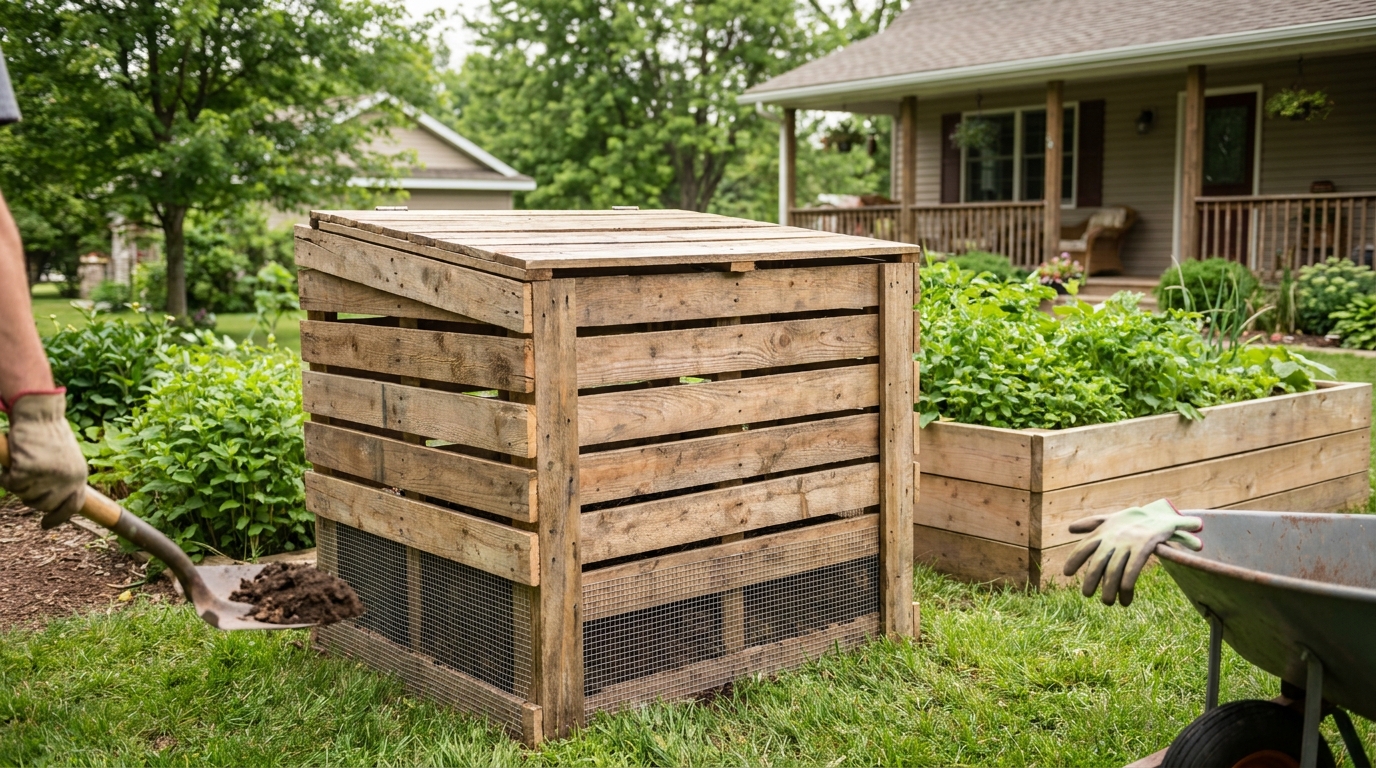
To build a wood compost bin that won't attract rodents, you must line every interior surface, including the bottom, with 1/4-inch (6.35 mm) galvanized hardware cloth and secure a tight-fitting, hinged lid. Rodents are drawn to the food scraps and ambient warmth of an active compost pile, and mice can squeeze through gaps as small as 1/4 inch (6.35 mm). By framing a simple 3x3x3-foot (90x90x90 cm) box from rot-resistant cedar, stapling heavy-gauge wire mesh to the inside, and locking the top with a raccoon-proof latch, you create a breathable but impenetrable fortress. This approach gives you the excellent airflow of a traditional wooden bin without turning your backyard into a pest hotel.
- Line all interior walls and the bottom with 1/4-inch (6.35 mm) hardware cloth to stop rats from chewing through.
- Never build a bin directly on dirt without a wire mesh floor, as rodents will easily burrow under the walls.
- Frame the bin from cedar to resist rot naturally without leaching chemical preservatives into your future garden soil.
- Use a hasp latch with a carabiner or padlock on the lid to stop dexterous pests like raccoons from opening the top.
Why Do Rats and Mice Invade Compost Bins in the First Place?
An active compost pile generates internal temperatures between 130 and 160 degrees Fahrenheit (54 to 71 degrees Celsius) due to intense microbial activity. In late fall and winter, this radiating heat is a massive draw for small mammals seeking shelter from freezing temperatures. When you combine that thermal advantage with a steady supply of vegetable peelings, discarded fruit, and grain-based kitchen scraps, you have created an all-inclusive resort for local rodents.
Rats and mice do not just come to a compost pile to eat; they come to nest, breed, and hide from predators. Stopping them requires more than just leaving out meat and dairy scraps. It requires a physical, structural barrier that their incredibly sharp teeth and flexible bodies cannot penetrate.
What Materials Actually Stop Rodents from Chewing Through?
This is where a critical judgment call separates the professionals from the beginners. A beginner will often frame a compost bin and staple standard 20-gauge hexagonal chicken wire to the inside, assuming any metal mesh will keep pests out. A pro knows that chicken wire is only designed to keep chickens inside a coop. A rat's jaw can exert a bite force of up to 7,000 psi, which allows them to snip through thin poultry netting or standard plastic landscape mesh in minutes.
To stop a determined rat, you must use 19-gauge or 23-gauge, 1/4-inch (6.35 mm) galvanized hardware cloth. The steel wire is simply too thick for them to chew, and the 1/4-inch (6.35 mm) square openings are too small for even a juvenile mouse to squeeze its skull through. Do not use 1/2-inch (12.7 mm) hardware cloth, as small mice can slip right through the larger gaps and infest the pile.
How Big Should You Build a Backyard Compost Bin?
To successfully compost yard and kitchen waste, your bin needs enough mass to self-insulate and reach optimal breakdown temperatures. The golden rule for a freestanding compost pile is a minimum volume of 3 by 3 by 3 feet (90 by 90 by 90 cm), which equals exactly 27 cubic feet (764 liters). If you build it smaller, the pile will dry out too quickly and fail to heat up.
If you build it much larger than 4 by 4 by 4 feet (120 by 120 by 120 cm), the pile becomes too heavy and dense to turn manually with a pitchfork, cutting off oxygen to the core. Frame your bin using 2x4 (50x100 mm) cedar or redwood for the corner posts, as these wood species naturally resist rot and decay in wet environments.
How Do You Construct the Base to Prevent Burrowing?
The most common failure mode in DIY compost bin construction is building four sturdy walls and setting them directly on the bare dirt. Rats are exceptional diggers and will easily tunnel 12 to 18 inches (30 to 45 cm) down to pop up right in the middle of your food scraps, entirely bypassing your wall defenses.
To prevent this, your bin must have a floor that allows worms and drainage to pass through while completely stopping mammals. Before setting your wall frames upright, build a bottom square out of 2x4 (50x100 mm) lumber and staple a continuous sheet of the 1/4-inch (6.35 mm) hardware cloth across the entire frame. Once placed on the ground, beneficial earthworms can easily wriggle up through the mesh, and excess moisture will drain away, but burrowing rodents will hit an impenetrable steel ceiling.
How Do You Frame the Walls for Airflow Without Creating Gaps?
Compost requires constant oxygen to support aerobic bacteria; without it, the pile turns anaerobic, stops breaking down, and smells like rotting garbage. For the walls, attach 1x6 (25x150 mm) cedar slats horizontally across your corner posts, deliberately leaving a 1-inch (2.5 cm) air gap between each board for ventilation.
Cut your hardware cloth to size and staple it to the interior side of the walls, ensuring the mesh overlaps by at least 2 inches (5 cm) at the corners. Use heavy-duty 3/8-inch (9.5 mm) galvanized staples driven every 4 inches (10 cm) along the wood to hold the mesh tight. If you leave the mesh loose or fail to overlap the corners, rodents will push against the flexible seam until it gives way.
How Do You Build a Lid That Keeps Pests Out and Heat In?
An open-top bin will invite raccoons, squirrels, and roof rats, while also allowing heavy rain to waterlog the pile and drown the beneficial bacteria. Build a lightweight lid frame using 1x4 (25x100 mm) lumber, stretch the same 1/4-inch (6.35 mm) hardware cloth across the bottom, and top it with a solid sheet of exterior-grade plywood or a corrugated roofing panel to shed rain.
Attach the lid to the back wall with heavy-duty galvanized strap hinges. Crucially, install a latch on the front. Raccoons have incredibly dexterous front paws and can easily flip a simple hook-and-eye latch. Use a heavy metal hasp latch secured with a carabiner or an outdoor padlock to ensure nothing can lift the lid overnight.
How Much Does It Cost to Build a Rodent-Proof Bin in 2026?
Upgrading from a flimsy plastic bin to a heavy-duty, rodent-proof cedar enclosure requires a moderate upfront investment, but the structure will last a decade or more. In 2026 US dollars, a 36-inch by 25-foot (90 cm by 7.6 meter) roll of 1/4-inch hardware cloth costs between $65 and $80.
The untreated rough-sawn cedar 2x4s and 1x6 slats will run approximately $110 to $140, depending on your region and current lumber prices. Add in $30 for heavy-duty hinges, a hasp latch, exterior deck screws, and galvanized staples. Expect to spend a total of $205 to $250 for all the materials required to build a single 3x3x3-foot (90x90x90 cm) composting bay.
| Mesh Type | Animal Stopped | Durability Against Chewing |
|---|---|---|
| 20-Gauge Chicken Wire | Chickens and large dogs | Poor (rats chew through easily) |
| 1/2-Inch Hardware Cloth | Rats and raccoons | Excellent (but mice can slip through) |
| 1/4-Inch Hardware Cloth | All rodents including mice | Excellent (industry standard) |
| Plastic Landscape Mesh | Birds and large pests | Very Poor (easily chewed) |
Frequently asked questions
Can rats chew through solid wood compost bins?
While rats can theoretically chew through wood, they rarely chew through flat wooden planks unless there is an existing gap, hole, or exposed edge they can gain purchase on. Lining the interior with hardware cloth protects the wood edges and ensures they cannot gnaw through the air gaps between your slats.
What food scraps should I avoid putting in my compost to deter rodents?
Never add meat, bones, dairy products, oils, or heavy grease to a backyard compost pile. These materials break down very slowly, produce intense odors that attract scavengers from miles away, and create a breeding ground for harmful pathogens. Stick to fruit peels, vegetable scraps, coffee grounds, and yard waste.
Do I need to elevate the compost bin off the ground?
No, elevating a compost bin is counterproductive if you want a healthy pile. The bin needs direct ground contact so beneficial earthworms and soil microbes can migrate up into the pile to break down the organic matter. A hardware cloth bottom resting directly on the soil provides this ground contact while stopping burrowing pests.
Will a hardware cloth bottom rust away in the damp soil?
Galvanized hardware cloth is coated in zinc to resist rust. While it will eventually degrade after years of constant contact with wet, acidic compost and soil, a quality 19-gauge galvanized mesh will easily last 7 to 10 years before needing replacement.
Keep reading
- Starting Your First Vegetable Garden Without Wasting a SeasonMost first gardens fail for reasons that have nothing to do with a green thumb. Here are the five that matter.
- Building Soil That Actually Grows ThingsFeeding plants is a short-term fix. Feeding the soil is what makes a garden easy.
- Reviving a Tired Lawn: A Season-Long PlanA thin lawn is a symptom. Treating the symptom with more seed is why it keeps coming back.