Growing Strawberries in Containers, Towers and Hanging Baskets
By Jim Vernon · 4 min read · Last updated
Strawberries grown off the ground stay cleaner, escape slugs and fit on a step. The variety you choose decides how long they keep fruiting.
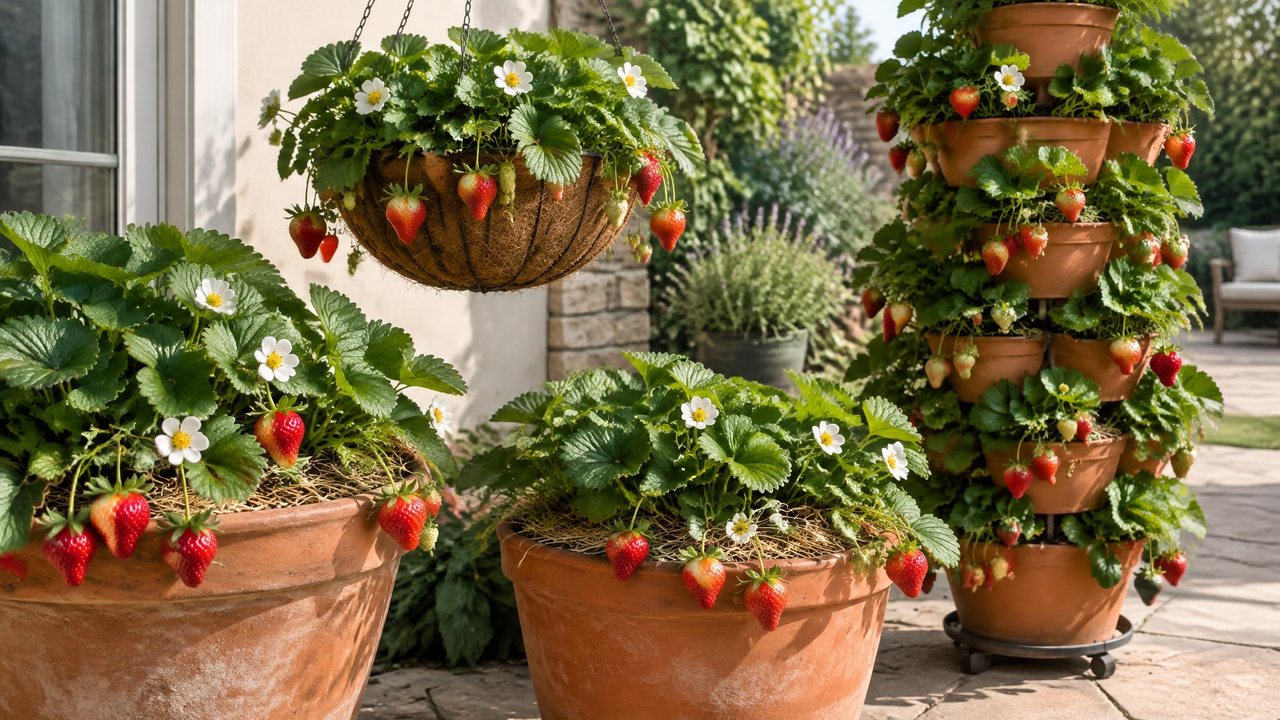
Strawberries grow well in containers because they have shallow roots and stay small. For pots, towers and hanging baskets, day-neutral or everbearing varieties are best, because they fruit on and off from early summer until fall instead of in one short burst. Give each plant about 1 gallon of quality potting mix, plant with the crown exactly at soil level, water whenever the top inch dries, and feed every 2-3 weeks during fruiting.
Which strawberry type suits containers?
| Type | When it fruits | Container fit |
|---|---|---|
| June-bearing | One heavy crop over 2-3 weeks in late spring or early summer | Fine for one big harvest; then mostly runners and leaves |
| Everbearing | Two or three flushes, early summer and late summer | Good |
| Day-neutral | Small, steady crops from early summer until frost | Best for pots, towers and baskets |
What size container do strawberries need?
- One plant per pot about 8 inches across, or 3 plants in a pot 12-14 inches across.
- At least 6-8 inches of soil depth for roots.
- Strawberry jars and vertical towers work if every pocket gets watered; the top pockets dry first and bottom ones stay wettest.
- Hanging baskets 12-14 inches across hold 3-4 plants and keep fruit away from slugs, but dry out fastest of all.
- Every container needs drainage holes. Strawberries rot quickly in waterlogged mix.
How do you plant strawberries correctly?
Fill the container with a peat-free or standard potting mix, not garden soil, and mix in a slow-release fertilizer if the bag does not already contain one. Spread the roots out, then set the plant so the crown, the thick point where leaves meet roots, sits exactly at soil level. A crown buried too deep rots; one set too high dries out and the roots are exposed. Firm the mix gently and water well.
How much sun and water do they need?
Give containers at least 6-8 hours of direct sun for the sweetest fruit. Water whenever the top inch of mix feels dry, which can mean daily in hot weather and twice a day for hanging baskets in summer heat. Water the soil rather than the leaves and fruit, which reduces gray mold. A layer of straw or a few dry leaves on the surface keeps berries clean and slows drying.
How should you feed container strawberries?
Once flowers appear, feed every 2-3 weeks with a liquid fertilizer that is higher in potassium, such as a tomato feed, at the label rate. Too much nitrogen gives lush leaves and runners but fewer berries. Stop feeding in early fall so the plants can harden before winter.
How do you keep container strawberries through winter?
Roots in pots freeze much harder than roots in the ground. Once the plants go dormant after a few frosts, move containers against a house wall, group them and wrap them with burlap or bubble wrap, or move them into an unheated garage or shed. Water lightly once a month if they are under cover. Bring them back into full sun as new leaves appear in spring.
How long do strawberry plants last in pots?
Most plants crop best in their first and second years, then yields drop and disease builds up. Replace plants every 2-3 years with fresh, certified disease-free stock or with your own rooted runners, and refresh the potting mix at the same time.
What problems are most common?
- Small, seedy berries: usually too little sun or irregular watering.
- Gray fuzzy mold on fruit: overcrowding and wet leaves; space plants and water at the base.
- Berries eaten before you get them: birds and squirrels; drape fine netting over pots as fruit colors.
- Leaves but no flowers: too much nitrogen or a June-bearing plant that has finished for the year.
Which varieties do well in pots?
Day-neutral varieties such as Albion, Seascape and San Andreas are widely sold and fruit steadily in containers. Alpine strawberries are another good choice for shade and small pots: they make tiny, intensely flavored berries and send out few runners. If you prefer one big harvest for jam, a compact June-bearing variety works, but expect the pot to be mostly leaves for the rest of the summer.
How do you harvest for the best flavor?
Pick berries when they are fully red all the way to the stem and slightly soft, ideally in the cool of the morning. Pinch through the stem just above the berry instead of pulling, so you do not damage the plant. Check containers every day or two at peak season; overripe fruit left on the plant attracts slugs, wasps and gray mold.
Can I grow strawberries indoors?
Day-neutral varieties can fruit indoors under strong grow lights for 12-16 hours a day, but you will need to pollinate flowers by brushing them gently with a small paintbrush.
How many strawberry plants does a family need?
For regular fresh eating, plan on roughly 10-15 day-neutral plants per person; one container of three plants gives an occasional handful rather than a steady supply.
Should I remove the first flowers?
On new June-bearing plants, removing first-year flowers builds a stronger plant for next year. On day-neutral plants, remove flowers for the first 4-6 weeks only, then let them fruit.
Run the numbers for your own project
- Plant Watering CalculatorHow often and how much should I water this plant?
- Frost Date LookupWhen is my last frost and how long is my season?
Keep reading
- Starting Your First Vegetable Garden Without Wasting a SeasonMost first gardens fail for reasons that have nothing to do with a green thumb. Here are the five that matter.
- Building Soil That Actually Grows ThingsFeeding plants is a short-term fix. Feeding the soil is what makes a garden easy.
- Storage for Small Rooms That Does Not Make Them SmallerSmall rooms do not need more storage. They need storage that stops interrupting the eye.