Storage for Small Rooms That Does Not Make Them Smaller
By Jim Vernon · 4 min read · Last updated
Small rooms do not need more storage. They need storage that stops interrupting the eye.
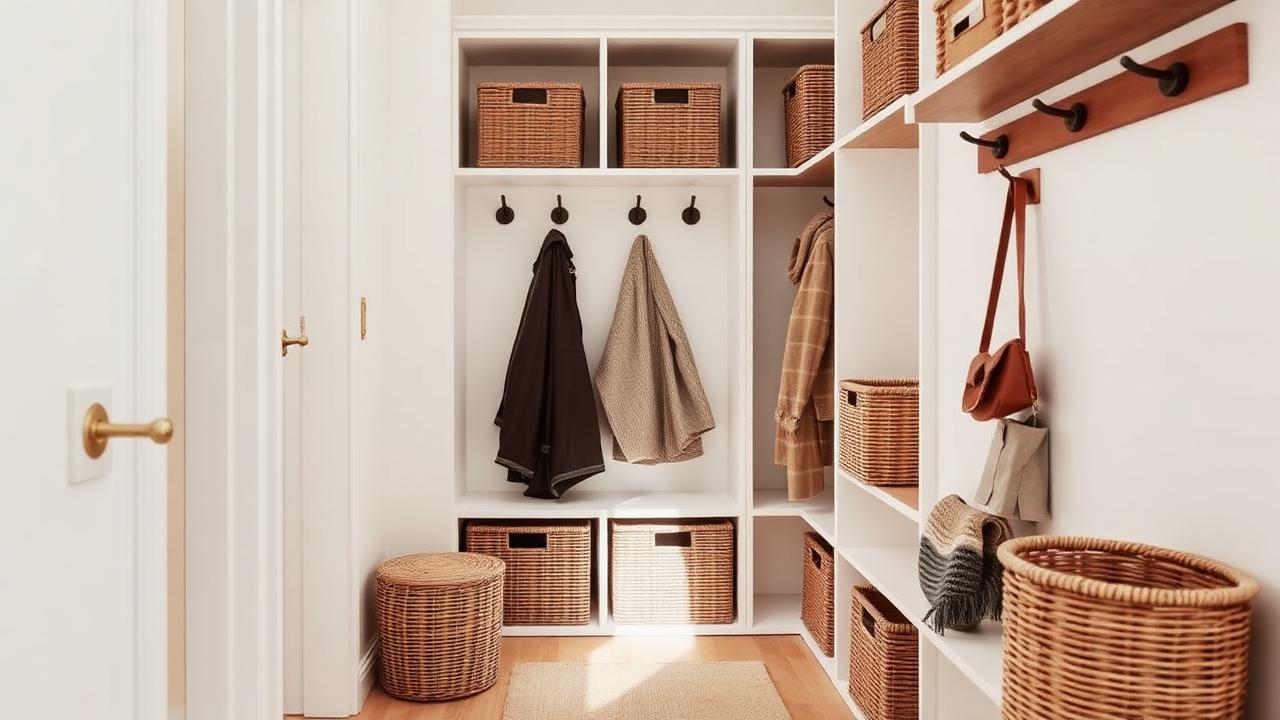
Perceived room size depends less on floor area than on how far the eye can travel uninterrupted. That single idea explains most of what works and what does not in small-room storage.
The depth rule
Anything deeper than about 350 mm reads as furniture and intrudes. Below that, it reads as wall. Shallow full-height shelving holds more books than a deep low bookcase and occupies less visual space doing it.
Use the three vertical zones
- Below 700 mm: heavy, daily, closed storage. Keep it flush with other low elements.
- 700 mm to 1600 mm: the sightline band. Keep this as clear as possible — it is where the room's size is judged.
- Above 1600 mm: archive and display. Most small rooms leave this entirely empty.
Match the storage to the wall colour
Built-in shelving painted the same colour as the wall behind it visually disappears. The same shelving in a contrasting timber becomes an object in the room. This is the cheapest change in the entire list.
Buy furniture that stores
- Ottoman beds recover the largest unused volume in any bedroom.
- A bench with drawers replaces both a hallway chair and a shoe rack.
- Wall-hung units keep the floor visible, which reads as more floor.
Worked example: a 10 by 11 foot bedroom
That room has about 110 square feet of floor and roughly 336 square feet of wall at an 8 foot ceiling. Fitting a full-depth wardrobe (600 mm) along one 11 foot wall consumes nearly a fifth of the floor area just in footprint plus door swing. Swapping to a 350 mm shallow wardrobe with sliding doors reclaims about 6 square feet of usable floor and removes the door swing entirely, which is often the difference between a room that feels cramped and one that does not.
A room-by-room storage audit
- Measure every piece of storage furniture's depth, not just its width and height.
- Mark the 700 mm to 1600 mm sightline band on one wall with tape and see what currently sits inside it.
- Move anything deeper than 350 mm out of the sightline band if possible.
- Check remaining walkway width after furniture is placed — aim for at least 600 mm.
- Add one piece of dual-purpose furniture (storage bed, storage bench, or ottoman) before adding any new shelving.
| Room type | Best storage move | Move to avoid |
|---|---|---|
| Small bedroom | Ottoman or divan bed base | Full-depth freestanding wardrobe |
| Small living room | Wall-hung media unit | Deep bookcase against the main sightline |
| Small entryway | Bench with drawers, wall hooks | Freestanding shoe cabinet blocking the path |
| Home office nook | Floating shelf plus closed cabinet below desk height | Bulky filing cabinet in the walkway |
- Common mistake: buying storage furniture before measuring the walkway that will remain.
- Common mistake: filling the 1600 mm-and-above zone with display items that add visual clutter without adding function.
- Common mistake: mixing timber tones and finishes across storage pieces in a small room, which fragments the eye's path.
- Common mistake: choosing storage based on the showroom floor plan rather than the room's actual door swings and sightlines.
Does mirrored or glass-fronted storage really help?
Yes, modestly. Reflective and transparent fronts reduce the sense of a solid block of furniture, though the effect is smaller than simply reducing depth or matching wall colour.
Is built-in always better than freestanding in a small room?
Built-in wins when it can be made shallow and flush, since it reads as part of the wall. A cheap built-in that still projects 500 mm offers no advantage over a well-chosen freestanding piece of the same depth.
How do I store seasonal items without deep cupboards?
Use the space above 1600 mm or under a storage bed for anything accessed only a few times a year, and keep daily items exclusively in the lower zone so the frequently used storage stays shallow and close at hand.
What is the single cheapest change that makes the biggest difference?
Painting existing shelving the same colour as the wall behind it. It costs a small tin of paint and an afternoon, and it removes visual weight without buying anything new.
Should lighting be part of a storage plan?
Yes. A dark corner of shelving reads as a void that draws the eye and makes the room feel smaller, while a shelf lit with a slim LED strip reads as a feature and pulls the eye outward instead.
Corners and awkward angles
A square freestanding unit pushed into an angled or bay corner wastes the triangular gap behind it, which is exactly the kind of dead space a small room cannot spare. A corner shelf unit built to the actual angle, or an open shelving ladder that leans into the corner rather than boxing it off, uses that space without adding a visible footprint.
A five-minute test before you buy
- Stand in the doorway and note what you see first — that sightline is what visitors judge the room by.
- Tape out the footprint of the piece you are considering, including door or drawer swing.
- Walk the room as you normally would with the tape in place for a full day.
- Note any point where you slow down or turn sideways — that is a walkway failure, not a storage win.
- Only proceed with the purchase if the taped footprint survives a full day of normal use.
Run the numbers for your own project
- Room Size and Furniture FitWill this furniture actually fit my room?
Keep reading
- How Much Paint Do You Actually Need for a Room?The tin says 400 square feet. Your wall says otherwise. Here is the arithmetic that actually holds up.
- DIY or Hire a Pro? A Decision Framework That Is Not About MoneyThe labour saving is real. So is the cost of a job done twice — and of tools you use once.
- Sealing Draughts: The Cheapest Energy Work in Any HouseAir leakage is invisible, unglamorous, and usually the largest single heat loss you can fix in a weekend.