Growing Potatoes in Containers: Setup and Yields
By Jim Vernon · 4 min read · Last updated
A single 15-gallon grow bag can produce 5-10 pounds of potatoes with no digging required at harvest.
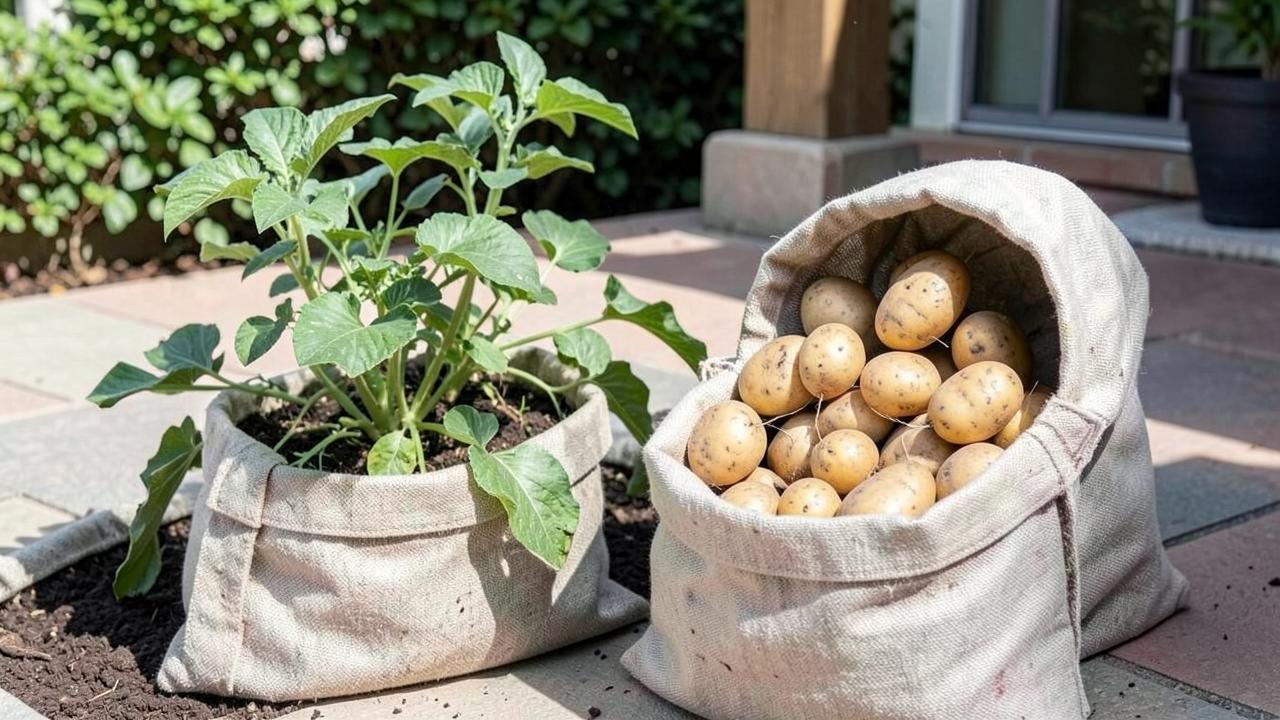
Container-grown potatoes work by planting seed potatoes in a shallow layer of soil, then adding more soil as the plant grows to bury the stem — a technique called hilling that tricks the plant into forming tubers along the buried stem. A 10-15 gallon fabric grow bag or a barrel with drainage holes, hilled correctly, typically yields 5-10 pounds of potatoes per container, and harvest means dumping the bag rather than digging a bed.
What container size and soil actually work?
| Container | Volume | Seed potatoes per container | Expected yield |
|---|---|---|---|
| Fabric grow bag | 10-15 gal | 2-3 pieces | 5-10 lb |
| 5-gallon bucket (drilled) | 5 gal | 1 piece | 1.5-3 lb |
| Half wine barrel | 25-30 gal | 4-5 pieces | 12-20 lb |
| Stacked tire/box tower | 20+ gal | 3-4 pieces | 8-15 lb |
Use a light, well-draining mix rather than dense garden soil — a blend of potting mix, compost, and coarse material like perlite or aged wood chips drains well and lets tubers expand without resistance. Dense, compacted soil in a container produces smaller, misshapen potatoes.
How does hilling work in a container?
- Cut seed potatoes into 1.5-2 inch chunks with at least one eye each; let cut sides callus for 1-2 days before planting to reduce rot.
- Add 4 inches of soil to the container bottom and plant chunks eye-up, spaced 6-8 inches apart.
- Cover with 3-4 more inches of soil and water in.
- As green growth reaches 6-8 inches tall, add soil to bury two-thirds of the plant, leaving just the top leaves exposed.
- Repeat hilling every 2-3 weeks as the plant grows until you reach the container's rim.
How much water and feeding do container potatoes need?
Containers dry out faster than garden beds, often needing water every 1-2 days in hot weather since there's no surrounding soil mass to buffer moisture. Water deeply until it runs from drainage holes, but avoid keeping soil saturated, which promotes rot. Feed lightly every 3-4 weeks with a balanced or low-nitrogen fertilizer once plants are established — too much nitrogen produces lush foliage at the expense of tuber development.
When and how do you harvest container potatoes?
For new, thin-skinned potatoes, harvest 2-3 weeks after flowering by reaching into the soil and pulling a few tubers while leaving the plant intact. For mature storage potatoes, wait until the foliage yellows and dies back completely, then stop watering for a week to let skins toughen before harvest. At that point, simply tip the container onto a tarp — the loose soil mix makes sorting tubers by hand far faster than digging in ground soil.
Why do container potatoes sometimes yield poorly?
- Container too small or too few hilling rounds, limiting the buried stem length where tubers form.
- Inconsistent watering causing knobby, cracked, or hollow-heart tubers.
- Too much nitrogen fertilizer producing big leafy plants with few tubers.
- Planting in full shade — potatoes need at least 6 hours of direct sun to bulk up tubers.
- Reusing seed potatoes from an infected batch, spreading blight or scab into the new container.
Which potato varieties do best in containers?
| Variety type | Days to maturity | Container notes |
|---|---|---|
| Early (Yukon Gold, Norland) | 70-90 | Good fit for containers since shorter season means less risk of container heat stress late in summer |
| Mid-season (Kennebec, Red Pontiac) | 90-110 | Reliable, high-yielding, needs consistent watering through the longer season |
| Late/storage (Russet types) | 110-135 | Possible in large barrels but containers dry out over the long season, so this is the least forgiving choice |
Does container color or material change the outcome?
Dark-colored plastic or fabric containers absorb more heat than light-colored ones, and in full summer sun the soil inside a black plastic pot can climb well above what potato roots tolerate well, slowing tuber formation. Fabric grow bags breathe and drain better than solid plastic, reducing rot risk, but also dry out faster and need more frequent watering. Light-colored containers, or containers placed where they get some afternoon shade in hot climates, generally produce steadier results than dark plastic in full sun.
How does container growing compare to in-ground potato yields?
In-ground potatoes in good soil typically yield more per plant — often 3-5 pounds per plant compared to 2-4 pounds per plant in a well-managed container — because ground soil holds moisture and nutrients more steadily and lets roots range further. Containers make up for the lower per-plant yield with flexibility: they work on a patio or balcony with no in-ground bed at all, they can be moved to chase sun or avoid an early frost, and harvest is far less physically demanding since there's no digging involved.
How many pounds of seed potato do you need per container?
Figure roughly 1/2 to 3/4 pound of seed potato (cut into 2-3 chunks) per 10-15 gallon container, which is usually 2-3 seed pieces once cut. Buying seed potatoes by the pound rather than by the bag makes it easier to scale a planting to the exact number of containers on hand, and most garden centers sell seed potatoes loose by weight in early spring for this reason.
Can I use grocery-store potatoes as seed potatoes?
You can, but many are treated with a sprout inhibitor and may carry disease. Certified seed potatoes from a garden center cost little more and greatly reduce the risk of introducing blight or scab into your growing space.
Do container potatoes need full sun?
Yes, at least 6 hours of direct sun daily. Less than that produces spindly foliage and noticeably smaller tubers, even with perfect watering and hilling.
Can I reuse the potting soil next year?
It's better not to reuse it directly for potatoes, since soil-borne diseases like scab and blight can persist. Mix spent container soil into a garden bed growing an unrelated crop, and start containers with fresh mix each season.
Run the numbers for your own project
- Raised Bed Soil CalculatorHow much soil do I need to fill my raised bed?
- Garden Bed Plant SpacingHow many plants fit in my bed?
- What to Plant This MonthWhat can I plant right now where I live?
Keep reading
- Starting Your First Vegetable Garden Without Wasting a SeasonMost first gardens fail for reasons that have nothing to do with a green thumb. Here are the five that matter.
- Building Soil That Actually Grows ThingsFeeding plants is a short-term fix. Feeding the soil is what makes a garden easy.
- Storage for Small Rooms That Does Not Make Them SmallerSmall rooms do not need more storage. They need storage that stops interrupting the eye.