Growing Microgreens at Home: Trays, Light and Harvest Timing
By Jim Vernon · 4 min read · Last updated
A kitchen counter and a cheap shop light can grow a salad's worth of greens every week, year-round.
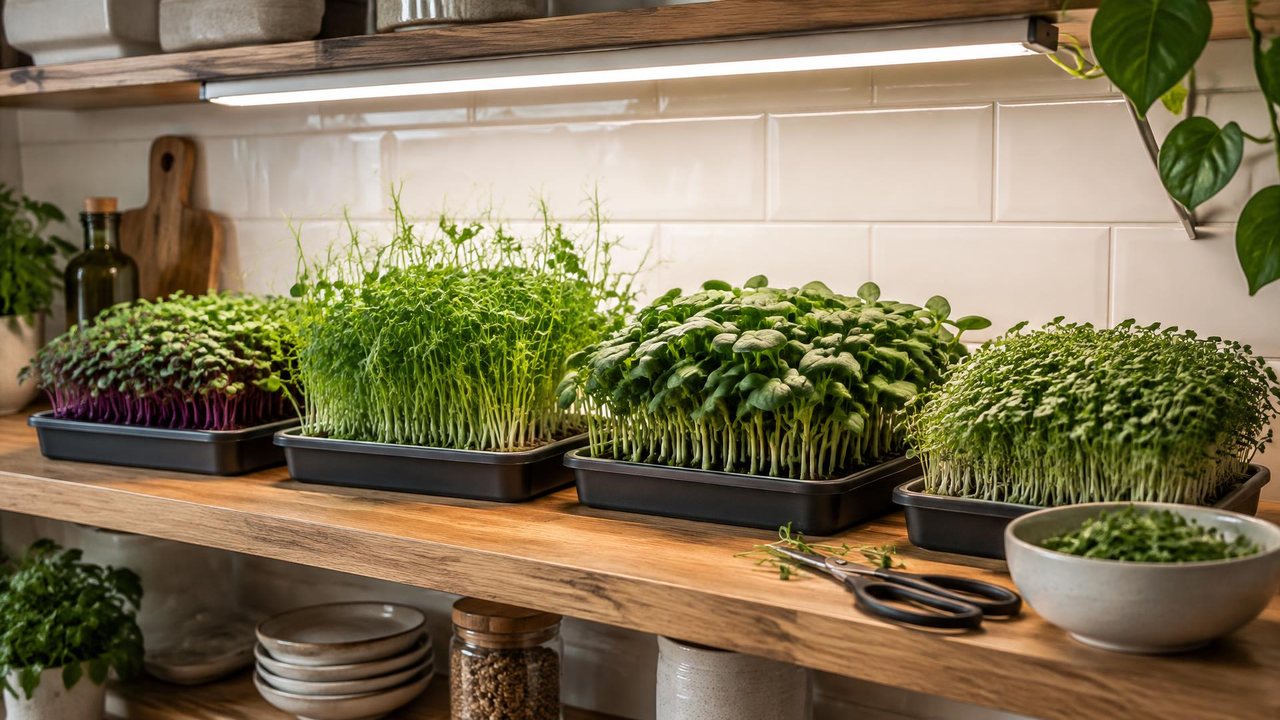
Microgreens are vegetable and herb seedlings harvested once their first leaves open, usually 7 to 14 days after sowing. You sow seed thickly on a shallow tray of moist mix, keep it dark and weighted for a few days, then give it strong light until it is 2-4 inches tall and ready to cut. They need no garden, very little space, and give a steady harvest even in midwinter.
Which seeds are easiest for beginners?
| Crop | Soak first? | Seed per standard 1020 tray | Days to harvest |
|---|---|---|---|
| Radish | No | About 1 oz | 7-10 |
| Broccoli | No | About 0.75-1 oz | 8-12 |
| Pea shoots | Yes, 8-12 hours | About 8 oz | 10-14 |
| Sunflower | Yes, 8-12 hours | About 5 oz | 8-12 |
| Arugula | No | About 0.5 oz | 8-12 |
| Basil | No | About 0.25 oz | 14-21 |
Buy seed sold for sprouting or microgreens. It is usually untreated, tested for germination and far cheaper per ounce than garden packets, which matters when one tray uses as much seed as a whole row outdoors.
What do you grow microgreens in?
Use a shallow tray with drainage holes set inside a solid tray, filled with about 1-1.5 inches of fine seed-starting mix or coconut coir. Level and lightly firm the surface, mist it until evenly damp but not soggy, then scatter the seed so it covers the surface in a single dense layer with seeds nearly touching. Mist the seed once more.
Why keep the trays dark at first?
Cover the sown tray with another tray and set a light weight on top, such as a 5 lb bag of rice, for 3-4 days. The darkness and pressure make the seedlings push down strong roots and grow evenly before they reach for light. When the shoots are lifting the cover tray, remove it and move them under lights.
How much light do microgreens need?
A south-facing window works for some crops in summer, but most growers get thicker, greener shoots from an LED shop light or grow light hung 4-12 inches above the tray for 12-16 hours a day. Too little light gives pale, leggy stems that flop over. If the leaves curl or bleach at the tips, raise the light a few inches.
How do you water without causing mold?
- Water from below once the shoots are up: pour about a cup of water into the solid tray and let the mix wick it up for 10-15 minutes, then tip out the rest.
- Keep air moving with a small fan on low. Still, humid air is the main cause of mold.
- Aim for room temperatures of roughly 65-75°F. Warmer rooms dry trays faster and favor mold at the same time.
- Fine white fuzz on the roots of radish and broccoli is usually root hairs, not mold. Root hairs vanish when misted; mold stays and smells musty.
When and how do you harvest?
Cut when the first pair of leaves, the seed leaves, are fully open and before the first true leaves get large, usually when shoots are 2-4 inches tall. Hold a handful and cut just above the soil line with sharp scissors. Skip watering the day before harvest so the greens are dry, then refrigerate them in a closed container lined with a paper towel. Most keep 5-7 days.
How do you get a harvest every week?
Sow a new tray on the same day each week. With a 7-10 day crop like radish you will have one tray in the dark, one under lights and one ready to cut at any time. Two shelves and one light fixture are enough for a household of two to four.
What goes wrong most often?
- Sowing too thinly, which gives sparse trays and weak stems.
- Overwatering from the top, which flattens shoots and invites damping-off.
- Leaving the cover on too long, which gives yellow, stretched seedlings.
- Using garden seed treated with fungicide, which should never be eaten as sprouts or microgreens.
How much does it cost to start growing microgreens?
A basic setup costs little. Two sets of 1020 trays, a bag of seed-starting mix or coir, a spray bottle and a 2-4 ft LED shop light are often under the price of a few store-bought clamshells of microgreens. Seed is the ongoing cost: radish, broccoli and pea seed bought in 1 lb bags works out to a small amount per tray, while sunflower and specialty herbs cost more. Reusing trays after washing them in hot, soapy water keeps the running cost down.
Which crops are hardest to grow?
Basil, cilantro and other herbs germinate slowly and unevenly, so they take 2-3 weeks and suffer more from mold. Beets and chard need their hard seed hulls soaked and often keep the hulls on the leaves, which you rinse off before eating. Start with radish, broccoli and peas, then add slower crops once your watering and light routine is reliable.
Are microgreens the same as sprouts?
No. Sprouts are germinated in water and eaten whole, root and all, after a few days. Microgreens grow in a mix under light and only the stem and leaves are cut and eaten.
Can I grow microgreens without soil?
Yes. Hemp or coconut fiber grow mats work well, especially for small seeds like broccoli and arugula, though crops like sunflower and peas root more strongly in mix.
How much do microgreens yield per tray?
A well-grown 1020 tray often gives roughly 6-12 oz of greens depending on the crop, with peas and sunflowers at the heavier end.
Run the numbers for your own project
- Grow Light CalculatorHow high and how long should my grow light run?
- Seed Starting Schedule CalculatorWhen should I start my seeds indoors?
Keep reading
- Starting Your First Vegetable Garden Without Wasting a SeasonMost first gardens fail for reasons that have nothing to do with a green thumb. Here are the five that matter.
- Building Soil That Actually Grows ThingsFeeding plants is a short-term fix. Feeding the soil is what makes a garden easy.
- Storage for Small Rooms That Does Not Make Them SmallerSmall rooms do not need more storage. They need storage that stops interrupting the eye.