Growing Garlic From Clove to Cured Bulb
By Jim Vernon · 5 min read · Last updated
Garlic is a fall-to-summer crop, which trips up gardeners expecting a quick spring vegetable.
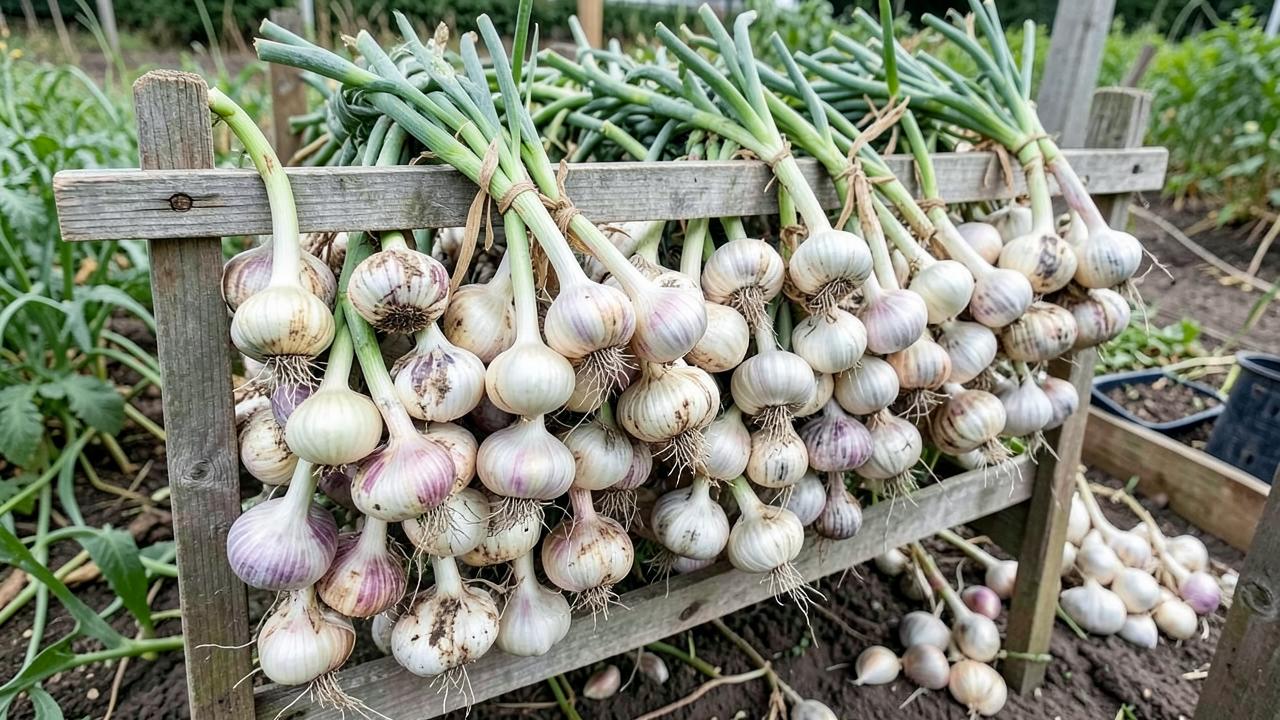
Garlic grown from a fall-planted clove reaches a cured, storable bulb roughly 8-9 months later, in early-to-mid summer. Individual cloves from a bulb are planted 4-6 weeks before the ground freezes, root through winter, push leaves in spring, and bulb up as days lengthen and warm through early summer. The whole cycle is slow but low-effort, and it occupies a bed over winter when little else grows there.
When should garlic actually go in the ground?
Plant 4-6 weeks before your average ground-freeze date, which for most of USDA zones 4-7 lands in mid-October to early November. This window lets roots establish before hard freeze without enough warmth to push top growth that would then be damaged by winter cold. In zones 8-10, plant later, from late October into December, since garlic still needs a cold period to form distinct cloves.
| Type | Clove spacing | Row spacing | Typical harvest window | Storage life |
|---|---|---|---|---|
| Hardneck (Rocambole, Porcelain, Purple Stripe) | 6 in | 10-12 in | Late June-July | 4-6 months |
| Softneck (Artichoke, Silverskin) | 4-6 in | 10-12 in | June-July | 8-12 months |
Hardneck or softneck: which should you grow?
- Hardneck varieties tolerate colder winters (zones 3-6), produce a curled flower stalk called a scape that's harvested in early summer, and have richer, more complex flavor but shorter storage.
- Softneck varieties are the supermarket type, store much longer, don't produce scapes, and perform better in milder winters (zones 6-9).
- In borderline zones (6-7), many gardeners grow both — softneck for long storage and hardneck for flavor and the bonus scape harvest.
How do you plant and mulch garlic correctly?
Break bulbs into individual cloves just before planting — don't separate them early, since exposed cloves dry out. Push each clove root-end down, pointed tip up, 2 inches deep, into loose, well-drained soil amended with compost. Mulch immediately with 3-4 inches of straw; in cold-winter zones this insulates against freeze-thaw heaving, and everywhere else it suppresses spring weeds that would otherwise compete with garlic's shallow roots.
What happens between planting and harvest?
Garlic sends up a few inches of green growth before winter dormancy, then resumes growth as soil warms in spring. Hardneck varieties send up a curling scape in late spring or early summer — cut it off when it curls one full loop, which redirects energy into bulb growth and yields a usable garlic-scape harvest as a bonus. Water regularly through spring bulb formation, then taper off and stop entirely about 2 weeks before harvest to prevent bulb splitting and mold.
How do you cure garlic for long storage?
- Dig gently with a fork rather than pulling by the stalk, which can snap the neck.
- Do not wash the bulbs; brush off loose soil only.
- Cure in a shaded, dry, well-ventilated spot (a garage or covered porch) for 3-4 weeks, hung in bundles or laid on a screen.
- Once the outer wrappers are papery and the neck is fully dry, trim roots and stems to about 1 inch and store in a cool, dark spot around 50-60°F.
Why did last year's bulbs come out small?
Small bulbs are almost always a spacing, fertility, or timing problem rather than a variety problem. Cloves planted closer than 4 inches apart compete for nutrients and produce smaller bulbs across the whole bed. Skipping a spring nitrogen feeding (garlic responds well to a light feed as leaves emerge) also caps size. Planting too late in fall gives roots too little time to establish before freeze, which shows up as undersized bulbs the following summer.
How much garlic should you plant for a household?
A single clove produces one bulb, so plan backward from how much garlic your household actually uses. A family that cooks with garlic regularly often uses 100-150 bulbs a year; planting that many cloves takes up roughly a 4-by-10-foot bed at 6-inch spacing. Many first-time growers plant far fewer than they need and are surprised the harvest is gone by midwinter — a modest 50-bulb planting from a single seed source is a reasonable starting scale for a household testing whether homegrown garlic is worth the bed space.
What can go wrong with garlic during the growing season?
- Heaving out of the ground during freeze-thaw cycles in late winter, common where mulch is too thin — press heaved cloves back into soil promptly rather than leaving roots exposed.
- Yellow-streaked or stunted leaves from onion maggot or thrips, more common where mulch stays wet or where alliums have been grown in the same spot repeatedly.
- White rot, a soil fungus that causes yellowing and bulb collapse, which persists in soil for years and has no in-season cure — affected plants and soil should not be reused for alliums.
- Rust, showing as orange pustules on leaves in humid weather, which reduces bulb size if it defoliates plants before bulbing finishes but rarely kills the plant outright.
Do garlic scapes need to be harvested, and what do you do with them?
Removing scapes is optional in the sense that the plant survives either way, but leaving them on typically reduces bulb size by 10-20% because the plant diverts energy into the flower stalk instead of the bulb. Harvested scapes are edible and mild-flavored, and a common bonus crop — they work chopped into stir-fries, blended into a scape pesto in place of basil, or pickled whole in a quick vinegar brine for a crunchy, garlicky condiment that keeps for months in the refrigerator.
Can I plant grocery-store garlic?
You can, but it's often treated to inhibit sprouting and may carry disease not suited to your climate. Seed garlic from a local nursery or mail-order supplier adapted to your zone gives more reliable, larger bulbs.
Do I need to rotate where I plant garlic each year?
Yes. Avoid replanting garlic or other alliums in the same spot for at least 3 years to reduce buildup of white rot and other soil-borne diseases that specifically target alliums.
Why are my garlic scapes not curling?
Some hardneck varieties produce looser or straighter scapes than others; this is normal varietal variation. Harvest scapes once they've fully emerged and firmed up, generally 3-4 weeks before bulb harvest, regardless of curl shape.
Run the numbers for your own project
- Garden Bed Plant SpacingHow many plants fit in my bed?
- Frost Date LookupWhen is my last frost and how long is my season?
- Soil Amendment and pH CalculatorHow much lime or sulfur do I need to fix my soil pH?
Keep reading
- Starting Your First Vegetable Garden Without Wasting a SeasonMost first gardens fail for reasons that have nothing to do with a green thumb. Here are the five that matter.
- Building Soil That Actually Grows ThingsFeeding plants is a short-term fix. Feeding the soil is what makes a garden easy.
- Reviving a Tired Lawn: A Season-Long PlanA thin lawn is a symptom. Treating the symptom with more seed is why it keeps coming back.