How Wide Should a Garden Path or Patio Be?
By Jim Vernon · 5 min read · Last updated
A path that looks fine on paper at 24 inches wide feels cramped the moment two people try to walk it side by side or a wheelbarrow needs to pass.
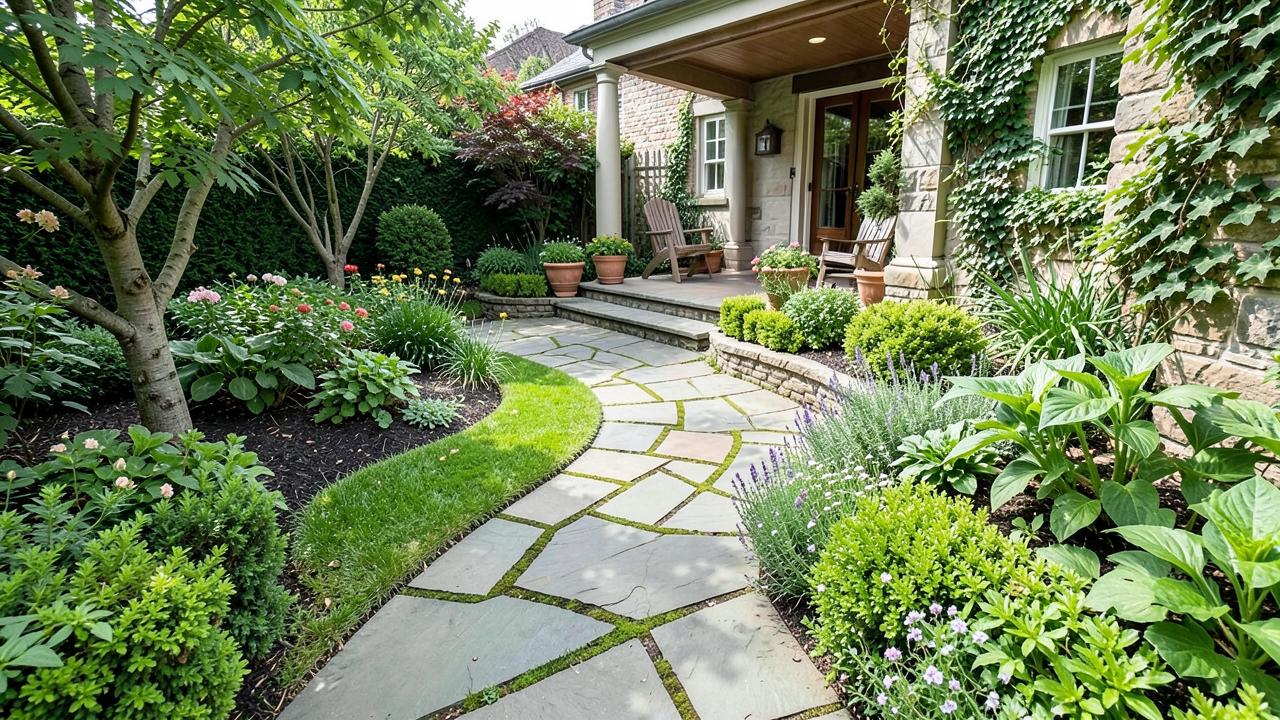
Size a main garden path 36-48 inches wide so two people can walk comfortably or a wheelbarrow can pass, and use 24-30 inches for secondary paths that see occasional single-file traffic. Patios should be sized to fit at least two functional zones — commonly dining and lounging — which usually means a minimum of 12x12 feet for a small patio and 16x18 feet or larger once you add a dining table for six or an outdoor kitchen element.
How do you decide path width for different uses?
| Path purpose | Recommended width | Notes |
|---|---|---|
| Main entry walk (front door) | 42-60 in | Should feel welcoming, allow two-abreast walking |
| Secondary garden path | 24-30 in | Fine for single-file strolling through beds |
| Utility/service path (trash cans, hose access) | 30-36 in | Needs to fit a wheelbarrow or garden cart |
| Stepping-stone path (casual) | 18-24 in of stone, spaced for stride | Informal look, lower cost, less all-weather use |
What determines patio size beyond just square footage?
Work backward from furniture footprints rather than picking a size first. A dining set for six needs roughly 12x12 feet including chair clearance for people to push back and walk around the table; a lounge seating area with a sofa, two chairs, and a coffee table needs about 12x14 feet. If you want both zones on one patio, plan for at least 16x24 feet total, ideally with a defined transition (a change in paving pattern, a low planter, or a step) between them rather than one undifferentiated slab.
Should a path be straight or curved?
- Straight paths suit formal, symmetrical garden styles and the shortest practical route between two fixed points like a door and a driveway.
- Gentle curves suit informal or cottage-style gardens and work well for slowing the visual pace through a larger space — but avoid curves with no functional reason, since people will cut across the lawn on the shorter route instead.
- A good rule of thumb: any curve should have a visible reason, such as moving around a tree, bed, or slope, not curve for its own sake.
What materials work best for paths versus patios?
Loose materials like gravel or decomposed granite cost less ($3-$6 per square foot installed) and suit informal paths but need edging to stay contained and periodic topping up. Pavers and natural stone ($12-$25 per square foot installed) cost more but hold up to heavier foot traffic and furniture weight, which matters more for a patio than a garden path. Poured concrete falls in between at roughly $8-$14 per square foot and works for both, especially where a clean, low-maintenance surface is the priority.
How much slope should a path or patio have for drainage?
Grade paths and patios at about 1-2% slope (roughly 1/8 to 1/4 inch of drop per foot) away from the house or from the high point of the space, enough to shed water without feeling noticeably tilted underfoot. No slope at all leads to standing water and ice in cold climates; too much slope makes furniture unstable and feels uncomfortable to walk or sit on.
How do you connect paths and patios into a coherent overall layout?
Start from the destinations — the door, the shed, the seating area, the mailbox — and draw the shortest reasonable line between each pair before deciding on width or material, since paths designed in isolation often end up disconnected or redundant. Keep material consistent across a small yard (one paving type for paths, one for the patio, at most) to avoid a patchwork look, and use a transition detail, like a change in coursing pattern or an edging strip, at the points where a path meets a patio.
What lighting and edging details make a path safer and more usable at night?
- Low-voltage path lights spaced every 6-8 feet along a main walkway provide enough light to see footing without creating a runway effect.
- Solar path lights cost less upfront ($15-$30 each) but produce dimmer, less consistent light than wired low-voltage systems ($30-$60 per fixture plus a transformer).
- Steel or aluminum edging keeps loose materials like gravel or decomposed granite from migrating into lawn or beds over time.
- A slightly raised or contrasting edge along a path helps mark its boundary for anyone walking after dark, reducing trip hazards where a path meets grass.
How does climate affect material choice for paths and patios?
In freeze-thaw climates, a properly compacted gravel base of 6-8 inches under pavers matters more than material choice itself, since inadequate base is the leading cause of heaving and cracking after winter. In hot, sun-intense climates, light-colored concrete or gravel reflects heat and stays more comfortable underfoot than dark pavers or stained concrete, which can reach uncomfortable surface temperatures in direct summer sun. Wood decking, while not covered here in depth, needs pressure-treated or naturally rot-resistant species in humid climates to avoid early replacement.
Frequently asked questions
How much gravel or base material do you need under a patio?
Plan on a compacted base of 4-6 inches of crushed gravel for a paver or flagstone patio in most soils, increasing to 6-8 inches in areas with heavy clay or freeze-thaw cycles, plus a 1-inch bedding layer of sand or fines directly under the pavers.
Can a garden path be too wide?
Yes, an oversized secondary path can feel institutional and eat into planting space without functional benefit. Match width to actual use: reserve wider dimensions for main routes and utility paths, and keep casual garden paths in the 24-30 inch range.
What is the minimum patio size that still feels usable?
A single-purpose patio for a small bistro table and two chairs can work in as little as 8x8 feet, but anything meant for a full dining set or lounge seating needs closer to 12x12 feet minimum to avoid a cramped, chair-scraping-the-edge feel.
Run the numbers for your own project
- Gravel and Path CalculatorHow much gravel do I need for my path or driveway?
Keep reading
- Starting Your First Vegetable Garden Without Wasting a SeasonMost first gardens fail for reasons that have nothing to do with a green thumb. Here are the five that matter.
- Building Soil That Actually Grows ThingsFeeding plants is a short-term fix. Feeding the soil is what makes a garden easy.
- Reviving a Tired Lawn: A Season-Long PlanA thin lawn is a symptom. Treating the symptom with more seed is why it keeps coming back.