How Do You Design Foundation Plants That Won't Outgrow a House?
By Jim Vernon · 4 min read · Last updated
Foundation shrubs planted at the recommended spacing on day one routinely swallow windows and siding within a decade because mature size, not current size, was never checked.
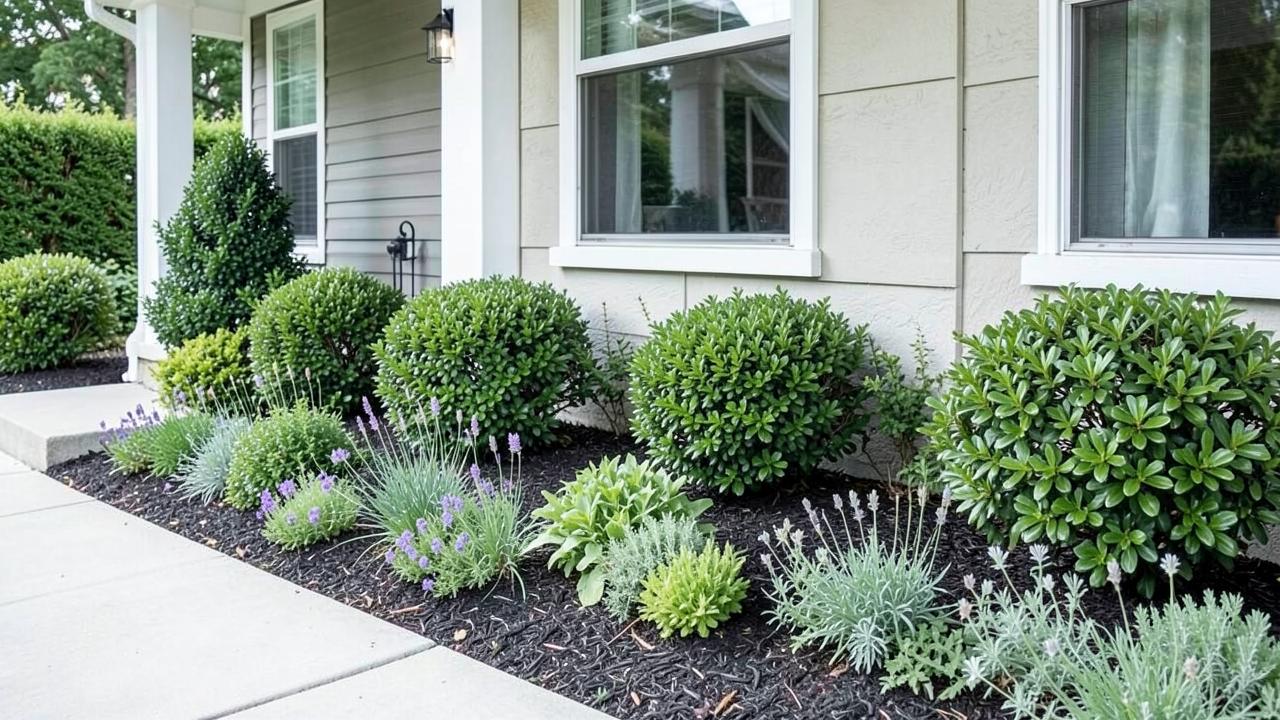
Design foundation plantings in layers: low groundcover or perennials nearest the house (within about 18 inches), mid-height shrubs at a distance equal to roughly half their mature width from the foundation, and any small ornamental trees set back at least their full mature canopy radius from the wall and roofline. This keeps growth away from siding, windows, and gutters without constant corrective pruning.
How far should plants sit from the foundation itself?
Leave at least 12-18 inches of clear space between the foundation wall and the nearest mature plant growth, both to allow air circulation that prevents moisture and pest problems against the siding, and to leave room for maintenance access and any future foundation or exterior work. For the plant's placement point (where you dig the hole), that usually means planting shrubs half their mature width away from the wall, not the 12-18 inch clearance itself.
What plant heights work at each layer?
| Layer | Distance from wall | Mature height range | Example plants |
|---|---|---|---|
| Groundcover/low perennials | 0-18 in | Under 18 in | Creeping sedum, hosta, dwarf liriope |
| Low-mid shrubs | 18-30 in | 2-3 ft | Dwarf boxwood, compact spirea, dwarf hydrangea |
| Mid shrubs (under windows) | 2-3 ft | 3-4 ft, staying below sill height | Dwarf abelia, compact viburnum |
| Corner/accent shrubs | 3-5 ft | 5-8 ft | Upright yew, dwarf holly cultivars |
| Small accent tree (if used) | 8-12 ft minimum | 15-25 ft canopy | Japanese maple, dogwood, serviceberry |
Why do so many foundation plantings end up overgrown within a few years?
Nurseries sell shrubs at a small, appealing container size, and it's tempting to plant tightly for an immediately full look. The species tag's mature size gets ignored, and within 5-8 years a shrub rated for 6 feet wide is jammed against the siding and pruned into an unnatural box shape just to fit the space. Buying dwarf cultivars — many species now have compact versions bred specifically for foundation use — solves this without sacrificing the look.
- Check the plant tag's mature height AND width, not just height — width is what collides with walkways and siding.
- Favor dwarf or compact cultivars (look for 'nana,' 'compacta,' or a named dwarf series) near windows and doors.
- Keep anything with aggressive roots — willows, many maples, bamboo — well away from foundations and utility lines.
- Leave a minimum 3-foot clearance around HVAC units, gas meters, and hose bibs for service access.
Should foundation plantings be evergreen, deciduous, or a mix?
A mix generally reads best and holds interest year-round: evergreens (boxwood, yew, holly) anchor the design through winter when deciduous shrubs are bare, while flowering deciduous shrubs and perennials add seasonal color and texture changes. A foundation planting that's 100% evergreen can look static and heavy; one that's 100% deciduous can look empty in winter in cold climates.
How does the direction a wall faces change plant choice?
A south- or west-facing foundation reflects significant heat off siding and pavement, often pushing the effective growing conditions a full zone warmer and drier than the rest of the yard, which favors drought-tolerant shrubs like juniper, dwarf yaupon holly, or lavender. A north-facing foundation stays shaded and cooler most of the day, suiting shade-tolerant plants like hosta, astilbe, and many hydrangea varieties that would scorch on a hot south wall. Matching orientation to plant choice avoids the common failure of a shade-loving hydrangea wilting daily against a hot brick wall in full afternoon sun.
What role do downspouts and grading play in foundation planting success?
Downspouts that discharge directly into a planting bed create a consistently wet zone that rots the roots of most standard foundation shrubs within a season or two, while areas under a roof overhang without gutters stay unusually dry and need drought-tolerant selections or supplemental watering. Extending downspouts at least 4-6 feet away from the foundation with a splash block or buried drain line protects both the foundation itself and whatever is planted nearby, and it's a cheaper fix than repeatedly replacing rotted-out shrubs.
How do you keep a foundation bed looking good through all four seasons?
Anchor the bed with evergreen structure at roughly 40-60% of the total planting, then layer in seasonal interest: spring bulbs or early bloomers near the front edge, summer-flowering shrubs and perennials in the mid-layer, and plants with fall color or winter berries (holly, viburnum) worked throughout. A bed that leans entirely on one season's bloom looks bare or overgrown the rest of the year, which is a common complaint with plantings chosen only for how they looked at the garden center in spring.
Frequently asked questions
How much does it cost to redo foundation plantings along a typical front elevation?
For a 40-foot front elevation with a mixed layered design using 3-gallon shrubs and perennials, DIY material costs typically run $800-$1,800 depending on plant selection, with professional design and installation running $3,000-$6,000 including soil prep and mulch.
Can you plant shrubs directly under windows?
Yes, as long as you choose a cultivar whose mature height stays a few inches below the windowsill, avoiding the constant shearing needed to keep a naturally taller shrub in check. Dwarf cultivars of abelia, spirea, and boxwood are common choices for this spot.
What is the biggest mistake in foundation planting design?
Planting based on the container size at purchase rather than the mature size on the plant tag is by far the most common mistake, leading to overcrowding, siding damage, and blocked windows within just a few growing seasons.
Run the numbers for your own project
- Hedge and Tree Spacing CalculatorHow far apart should I space my hedge or trees?
- Garden Bed Plant SpacingHow many plants fit in my bed?
- Mulch CalculatorHow much mulch do I need for my beds?
Keep reading
- Starting Your First Vegetable Garden Without Wasting a SeasonMost first gardens fail for reasons that have nothing to do with a green thumb. Here are the five that matter.
- Building Soil That Actually Grows ThingsFeeding plants is a short-term fix. Feeding the soil is what makes a garden easy.
- Reviving a Tired Lawn: A Season-Long PlanA thin lawn is a symptom. Treating the symptom with more seed is why it keeps coming back.