Fixing Bare Patches: Why Seed Alone Usually Fails
By Jim Vernon · 5 min read · Last updated
Throwing seed at a bare patch without diagnosing why it went bare is the most common reason patch repairs fail twice.
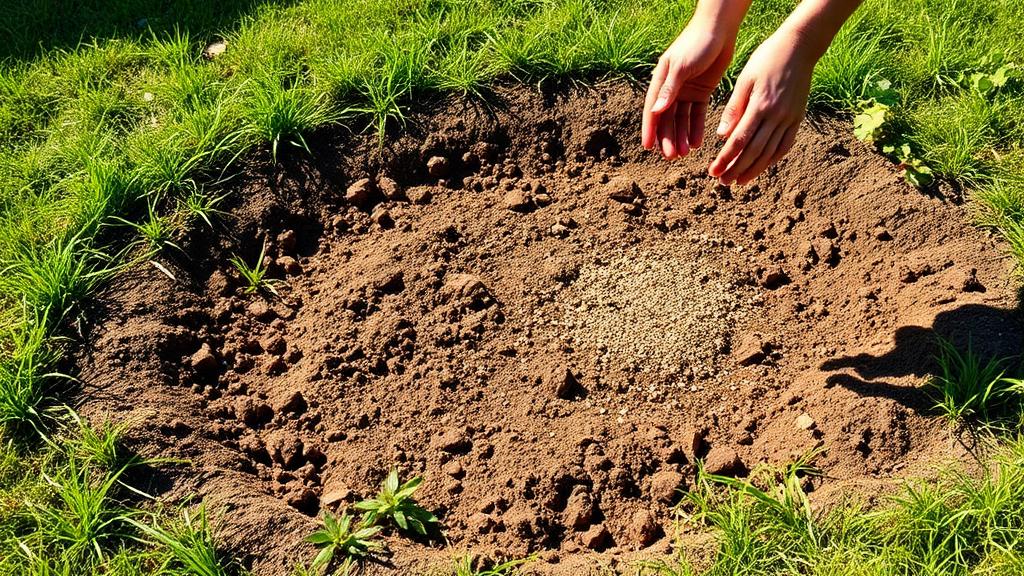
A bare patch is a symptom, not a diagnosis. Seed thrown onto compacted soil, deep shade, or a spot still carrying grub damage will fail the same way the original grass did, just more slowly. Identify the cause first — it changes what the repair actually needs.
Common causes and their tells
| Cause | Tell-tale sign | Fix before reseeding |
|---|---|---|
| Soil compaction | Water pools; soil feels hard underfoot | Core aerate the area |
| Grub damage | Turf lifts like a loose carpet | Treat grubs, then reseed |
| Dog urine spot | Dark green ring around a dead centre | Flush area with water, add gypsum |
| Deep shade | Thin, spindly growth before it died out | Prune overhead branches or switch to shade seed |
| Foot traffic path | Worn strip in a consistent line | Add stepping pavers or reroute the path |
| Fungal disease | Irregular patches with a dark border | Improve airflow and drainage first |
Preparing the patch
- Remove dead grass and loosen the top inch or two of soil with a hand rake or garden fork.
- Mix in a thin layer of compost or topsoil if the existing soil is compacted or poor.
- Level the area so the repair does not sit proud or sunken against the surrounding lawn.
- Spread seed at the rate recommended for bare-ground overseeding, then rake lightly to bury it a quarter inch deep.
- Cover with a thin straw mulch to hold moisture and deter birds, and water lightly once or twice a day until germination.
Matching seed to the existing lawn
Patch repairs sown with a different grass species than the surrounding lawn create a visible mismatch in colour, texture, and growth rate that becomes obvious within a season. Match the species where possible, and where the cause of dieback was shade, choose a shade-tolerant blend even if it does not exactly match the sunnier lawn nearby — a slight mismatch beats another dead patch.
Keeping the repair from failing again
- Keep new seedlings off-limits to foot and pet traffic for at least three to four weeks.
- Water lightly and frequently rather than deeply and rarely until roots establish.
- Hold off on any weed killer application for at least a month either side of seeding, since most products harm new seedlings.
- Mow for the first time only once new grass reaches about a third taller than the target mowing height.
A worked example: sizing a small repair
A dog-urine patch measuring roughly 8 inches across covers about a third of a square foot. At a typical bare-ground overseeding rate, that patch needs only a light pinch of seed, not a handful — over-seeding a small patch wastes seed and produces overcrowded seedlings that compete with each other for the same limited soil volume.
Common patch-repair mistakes
- Seeding directly over compacted soil without loosening it first, so roots never penetrate past the top quarter inch.
- Skipping the diagnosis step and reseeding the exact same spot repeatedly without fixing drainage, shade, or grubs.
- Watering once heavily instead of lightly and often, which washes seed into a low corner of the patch instead of germinating evenly.
- Mowing a new patch at the same height as the rest of the lawn before it has caught up in maturity, scalping fragile new seedlings.
When a patch is actually several smaller problems
A single bare area sometimes has more than one cause layered together — for example a shaded spot that is also on a compacted foot-traffic line. Addressing only one cause and reseeding often produces a partial recovery that thins out again within a season. Walking the site at different times of day to check sun exposure, and testing soil hardness in several spots within the same patch, catches these overlapping causes before reseeding rather than after a second failed attempt.
A worked example: comparing seed-only versus full-diagnosis repair
A grub-damaged patch reseeded without treating the grubs typically fails again within four to six weeks as the new larvae feed on fresh roots, meaning the seed, labor, and water invested were largely wasted. The same patch treated for grubs first, then reseeded two to three weeks later once the treatment has taken effect, has a meaningfully higher chance of establishing permanently, even though it takes longer from start to finish than the seed-only approach.
Product and rate specifics for grub and disease patches
Curative grub control products containing chlorantraniliprole or imidacloprid are typically applied at label rate — often around 0.2-0.4 oz of active ingredient per 1,000 square feet — and watered in with a quarter to half an inch of irrigation immediately after application to move the product down to the root zone where grubs feed. For fungal patch diseases like brown patch or dollar spot, a fungicide label often calls for a 14-21 day reapplication interval during active disease pressure; treating once and reseeding immediately without a second application in that window is a common reason the same fungal patch resurfaces the following month.
How long before a reseeded patch can be walked on?
Roughly three to four weeks for light traffic, once the new grass has been mowed once or twice and roots have taken hold.
Should I test the soil before repairing a stubborn patch?
Yes, if the same spot has failed repeatedly. A pH or compaction issue invisible above ground will keep defeating reseeding until it is corrected.
Is autumn or spring better for patch repair?
Autumn for cool-season grasses, since soil is warm, competition from weeds is lower, and there is less heat stress on new seedlings. Spring works for warm-season grasses once soil has warmed.
Can I speed up germination on a bare patch?
Covering the seeded area with a thin layer of straw and keeping it consistently damp rather than soaked speeds germination more reliably than any additive, since consistent moisture is the main limiting factor for most lawn seed.
What size patch is worth sodding instead of seeding?
Roughly anything larger than a dinner plate is usually still fine to seed if traffic can be kept off it for a few weeks. Sod earns its higher cost mainly on high-visibility spots or areas that cannot stay off-limits that long.
Run the numbers for your own project
- Grass Seed CalculatorHow much grass seed do I need?
- Soil Amendment and pH CalculatorHow much lime or sulfur do I need to fix my soil pH?
Keep reading
- Starting Your First Vegetable Garden Without Wasting a SeasonMost first gardens fail for reasons that have nothing to do with a green thumb. Here are the five that matter.
- Building Soil That Actually Grows ThingsFeeding plants is a short-term fix. Feeding the soil is what makes a garden easy.
- Reviving a Tired Lawn: A Season-Long PlanA thin lawn is a symptom. Treating the symptom with more seed is why it keeps coming back.