Tomato Problems: Blossom End Rot, Splitting, Blight
By Jim Vernon · 5 min read · Last updated
A black, sunken spot on the bottom of a tomato and a fruit that's cracked open at the top look different but often share the same root cause: uneven watering.
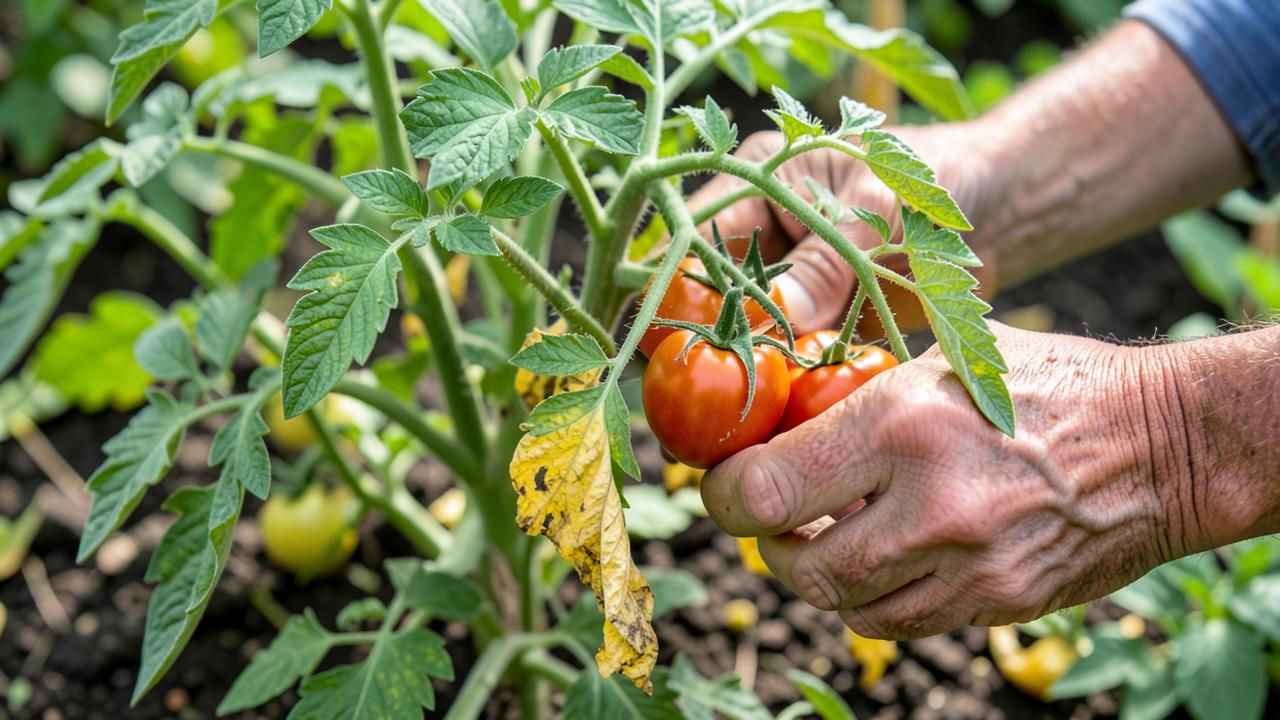
The most common tomato problems — blossom end rot, fruit splitting, and early or late blight — usually trace to watering consistency and airflow rather than soil fertility or variety choice alone. Blossom end rot comes from a localized calcium shortage triggered by uneven watering, splitting comes from a sudden water surge after a dry spell, and blight is a fungal disease that spreads fastest in humid, poorly ventilated foliage. Distinguishing them by appearance is the first step to fixing the actual cause.
How do you tell these three problems apart?
| Problem | What it looks like | Root cause | Fix |
|---|---|---|---|
| Blossom end rot | Flat, sunken, dark leathery patch on the fruit's blossom end (bottom) | Calcium can't reach the fruit due to inconsistent soil moisture, not usually a lack of calcium in soil | Even, consistent watering; mulch to buffer soil moisture |
| Fruit splitting | Concentric or radial cracks, often at the top of the fruit near the stem | Rapid water uptake after a dry period, especially near ripening | Consistent watering; harvest slightly early before heavy rain |
| Early blight | Dark concentric-ring spots on lower, older leaves first, yellowing around spots | Fungal (Alternaria), spread by soil splash and humidity | Remove affected leaves, mulch to block soil splash, improve airflow |
| Late blight | Water-soaked gray-green blotches on leaves, white fuzzy growth in humid conditions, rapid spread | Fungal/water-mold (Phytophthora), spreads fast in cool, wet weather | Remove and destroy infected plants promptly; preventive copper fungicide in high-risk weather |
Why does inconsistent watering cause blossom end rot if soil has enough calcium?
Calcium moves through a plant almost entirely dissolved in water moving up through the xylem, and it moves slowest to fruit, which transpires far less than leaves. When soil moisture swings between very dry and very wet, calcium delivery to developing fruit becomes erratic even if total soil calcium is adequate — the fruit simply doesn't get a steady enough supply during its critical early growth phase. This is why adding more calcium (crushed eggshells, lime) rarely fixes an existing outbreak; consistent watering does.
What actually prevents fruit splitting?
- Water on a consistent schedule — roughly 1-1.5 inches per week including rainfall, applied evenly rather than in occasional heavy soakings after long dry stretches.
- Mulch with 2-3 inches of straw or shredded leaves to buffer soil moisture swings between waterings and rain events.
- Harvest fruit that's already showing color a day or two before an expected heavy rain, since nearly ripe fruit is most prone to splitting from a sudden moisture surge.
- Choose crack-resistant varieties if splitting is a recurring problem in an area with unpredictable rainfall patterns.
How does airflow and spacing prevent fungal disease?
Fungal spores need moisture on leaf surfaces to germinate and spread, so anything that keeps foliage drier and better ventilated slows disease progression. Spacing tomato plants 24-36 inches apart rather than crowding them, pruning lower leaves that touch the soil, staking or caging plants upright instead of letting them sprawl, and watering at the soil line rather than overhead all reduce the humid, wet-leaf conditions that blight and other fungal diseases need to establish.
When is a tomato problem serious enough to remove the whole plant?
Blossom end rot and splitting affect individual fruit but not the plant's overall health — remove the damaged fruit and adjust watering, and subsequent fruit is often unaffected. Early blight, caught on a few lower leaves, can be managed by removing affected foliage and improving airflow without losing the plant. Late blight is the exception: because it spreads so fast and can jump to other plants and even overwinter in soil debris, a plant with confirmed late blight symptoms should be pulled, bagged, and disposed of (not composted) promptly.
Do container-grown tomatoes get these problems more often?
Yes, generally. Containers dry out faster than garden beds and swing between wet and dry more easily, which makes blossom end rot and splitting more common in container tomatoes than in-ground ones, even with attentive care. A self-watering container or drip irrigation on a timer reduces this risk substantially compared to hand-watering, since it removes the day-to-day inconsistency that's usually the actual trigger. Container size also matters — a 5-gallon pot dries out and swings in moisture far more than a 15-20 gallon one, so undersized containers see these problems more often.
Can fungicide actually stop blight once it's started?
For early blight, a copper-based or chlorothalonil fungicide applied at the first sign of spotting can slow spread on the remaining healthy foliage, though it won't reverse damage already present on affected leaves. For late blight, fungicide is far more effective as a preventive measure applied before symptoms appear during a stretch of cool, wet weather than as a treatment after infection is visible, since the pathogen spreads through tissue faster than most home treatments can keep up with. Removing infected material promptly remains the more reliable response for late blight regardless of fungicide use.
Will adding eggshells to the soil prevent blossom end rot?
Rarely helps on its own, since most garden soils already have adequate calcium and the real problem is inconsistent water delivery to the fruit. Consistent watering and mulch address the cause far more reliably than added calcium.
Can I still eat a tomato with blossom end rot?
Yes — cut away the affected sunken area and the rest of the fruit is unaffected and safe to eat. It's a physiological disorder, not a pathogen that spreads through the flesh.
Does mulch really make a measurable difference for splitting and blossom end rot?
Yes. A 2-3 inch mulch layer measurably buffers soil moisture swings between waterings and rain, which is precisely the inconsistency that drives both problems, making mulch one of the highest-return, lowest-cost fixes available.
Run the numbers for your own project
- Tomato Yield EstimatorHow many tomatoes will my plants actually produce?
- Soil Amendment and pH CalculatorHow much lime or sulfur do I need to fix my soil pH?
- Garden Bed Plant SpacingHow many plants fit in my bed?
Keep reading
- Starting Your First Vegetable Garden Without Wasting a SeasonMost first gardens fail for reasons that have nothing to do with a green thumb. Here are the five that matter.
- Building Soil That Actually Grows ThingsFeeding plants is a short-term fix. Feeding the soil is what makes a garden easy.
- Reviving a Tired Lawn: A Season-Long PlanA thin lawn is a symptom. Treating the symptom with more seed is why it keeps coming back.