Common Garden Pests: Identification and the Least-Toxic Fix First
By Jim Vernon · 5 min read · Last updated
Most garden pest damage is identifiable from the pattern alone, before you ever see the insect responsible.
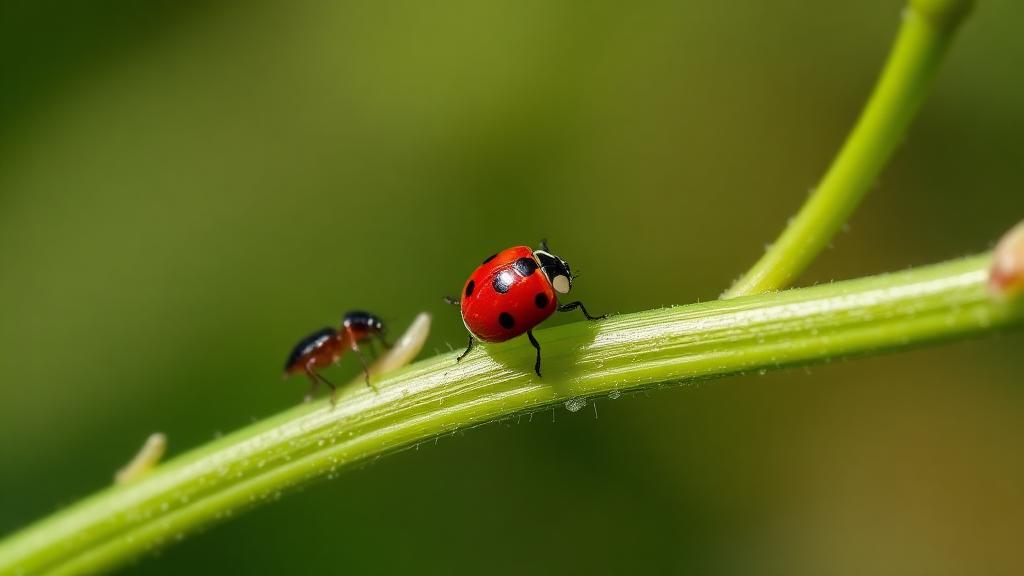
Effective pest management starts with correct identification, because the fix for aphids does nothing for slugs, and spraying broadly for an unidentified problem often kills the beneficial insects that would have solved it for free. Work from the damage pattern to the likely culprit, then reach for the least-toxic effective option first.
Reading the damage pattern
| Damage pattern | Likely pest | Time seen |
|---|---|---|
| Curled, sticky, distorted new growth | Aphids | Anytime, worse in spring |
| Ragged holes, slime trails | Slugs and snails | Cool, damp weather, night |
| Skeletonized leaves, green droppings | Caterpillars (cabbage worms, hornworms) | Summer |
| Wilting vines, yellow-spotted shell-shaped adults at base | Squash bugs / vine borers | Mid-to-late summer |
| Stippled, bronzed leaves, fine webbing | Spider mites | Hot, dry weather |
Start with the least-toxic option that fits the pest
- Aphids: a strong jet of water knocks most colonies off, and ladybugs and lacewings usually arrive within a couple of weeks if broad pesticides haven't already been used.
- Slugs: hand-picking at night, shallow beer traps, or crushed eggshell/diatomaceous earth barriers around vulnerable seedlings.
- Caterpillars: hand-picking is effective on a small scale; Bacillus thuringiensis (Bt) is a targeted, low-impact spray for larger infestations.
- Squash bugs: check leaf undersides for bronze egg clusters and crush them; adults hide at the base of plants and can be trapped under a board overnight and collected in the morning.
- Spider mites: increasing humidity and washing foliage disrupts them, since they thrive specifically in hot, dry conditions.
Physical barriers prevent problems before they start
- Floating row cover excludes cabbage moths, squash vine borer moths, and flea beetles entirely if sealed at the edges before the pest arrives.
- Collars cut from cardboard or cups around seedling stems stop cutworms, which chew through stems at soil level overnight.
- Copper tape around raised bed edges deters slugs and snails from crossing into a bed.
When a spray is genuinely warranted
Insecticidal soap and horticultural oil are effective against soft-bodied pests like aphids and mites with relatively low impact on beneficial insects if applied directly to the pest and not as a blanket preventive spray. Broad-spectrum synthetic insecticides should be a last resort, since they remove the natural predator population along with the target pest.
A simple response sequence
- Identify the pest from the damage pattern and, if possible, a direct sighting.
- Try physical removal or barriers first — hand-picking, row cover, or traps.
- Escalate to a targeted low-impact option like insecticidal soap or Bt if the pest persists.
- Reserve broad-spectrum sprays for infestations that threaten the whole crop, since they also remove beneficial insects.
- Recheck the affected plants every few days rather than assuming one treatment solved the problem.
Common mistakes
- Spraying broadly for an unidentified pest instead of identifying it first.
- Treating a single aphid sighting as an emergency instead of waiting to see if predators arrive.
- Missing squash bug egg clusters on leaf undersides until adults are already established.
- Watering overhead in the evening, which favours slug activity overnight.
- Removing row cover too early, right as the target pest's flight period begins.
Companion planting as a preventive layer
Interplanting strong-scented herbs like basil among tomatoes, or marigolds along a bed edge, has modest but real effects on some pests by disrupting the visual and scent cues insects use to find host plants, though it rarely eliminates a determined infestation on its own. It works best as one layer alongside barriers and correct identification, not as a substitute for them.
Monitoring makes early intervention possible
- A short walk-through every few days catches most pest problems while hand-removal or a targeted spray still solves them cheaply.
- Yellow sticky traps near seedlings give an early warning for flying pests like aphids and whiteflies before damage becomes visible on leaves.
- Checking the undersides of leaves, not just the tops, catches egg clusters and early-stage infestations that are otherwise missed until damage is obvious.
Worked example: responding to an aphid colony
A small cluster of aphids on new pepper growth, caught within the first few days, usually clears with two or three strong water sprays over a week, without any spray at all. If the colony triples in size over a few days despite that, insecticidal soap applied directly to the colony — not the whole plant — usually resolves it within another week, well before natural predators would have caught up on their own.
Setting an action threshold instead of reacting to every sighting
Integrated pest management works from a threshold — the pest level at which the cost of the damage exceeds the cost of intervention — rather than a zero-tolerance policy. A commonly used home garden guideline is roughly 5 aphids per shoot tip on a non-flowering vegetable before treatment is worthwhile, since natural predators often catch up before that point on their own. For Colorado potato beetle, a threshold of about 1 adult beetle or 2 egg masses per plant on small plants is a reasonable point to start hand-picking, since larvae can defoliate a young plant fast once they hatch in numbers. Squash bugs are managed more by egg-cluster removal than an adult count threshold, since even a handful of adults can rebuild a population quickly once eggs hatch. Recording pest counts on a couple of representative plants during a weekly walk-through, rather than reacting to the first individual insect seen, keeps intervention proportionate to actual risk.
How do I tell slug damage from caterpillar damage?
Slug damage leaves a slime trail and tends to be irregular holes anywhere on the leaf; caterpillar damage is drier, often starts at leaf edges, and leaves small dark droppings nearby.
Are all garden bugs pests?
No — most insects found in a garden are neutral or beneficial. Spraying preventively for anything seen is more likely to remove predators than to prevent a real outbreak.
When is the best time to check for pests?
Early morning or dusk, since many common pests, including slugs and several caterpillar species, are most active or visible outside the heat of midday.
Do coffee grounds or eggshells actually repel slugs?
Results are inconsistent and both break down quickly in damp conditions; a physical barrier like diatomaceous earth reapplied after rain, or hand-picking at night, tends to be more reliable.
Can I attract beneficial insects on purpose?
Yes — flowering plants like dill, fennel, alyssum, and yarrow attract and support ladybugs, lacewings, and parasitic wasps that help keep aphid and caterpillar populations down.
Run the numbers for your own project
- Plant Watering CalculatorHow often and how much should I water this plant?
- Composting CalculatorWhat ratio of greens to browns does my compost need?
Keep reading
- Starting Your First Vegetable Garden Without Wasting a SeasonMost first gardens fail for reasons that have nothing to do with a green thumb. Here are the five that matter.
- Building Soil That Actually Grows ThingsFeeding plants is a short-term fix. Feeding the soil is what makes a garden easy.
- Reviving a Tired Lawn: A Season-Long PlanA thin lawn is a symptom. Treating the symptom with more seed is why it keeps coming back.