Cover Crops for Home Gardens: What to Sow in Fall and When to Turn It In
By Jim Vernon · 4 min read · Last updated
A bed left bare all winter loses topsoil and nutrients. A pound of seed in fall keeps it working until spring.
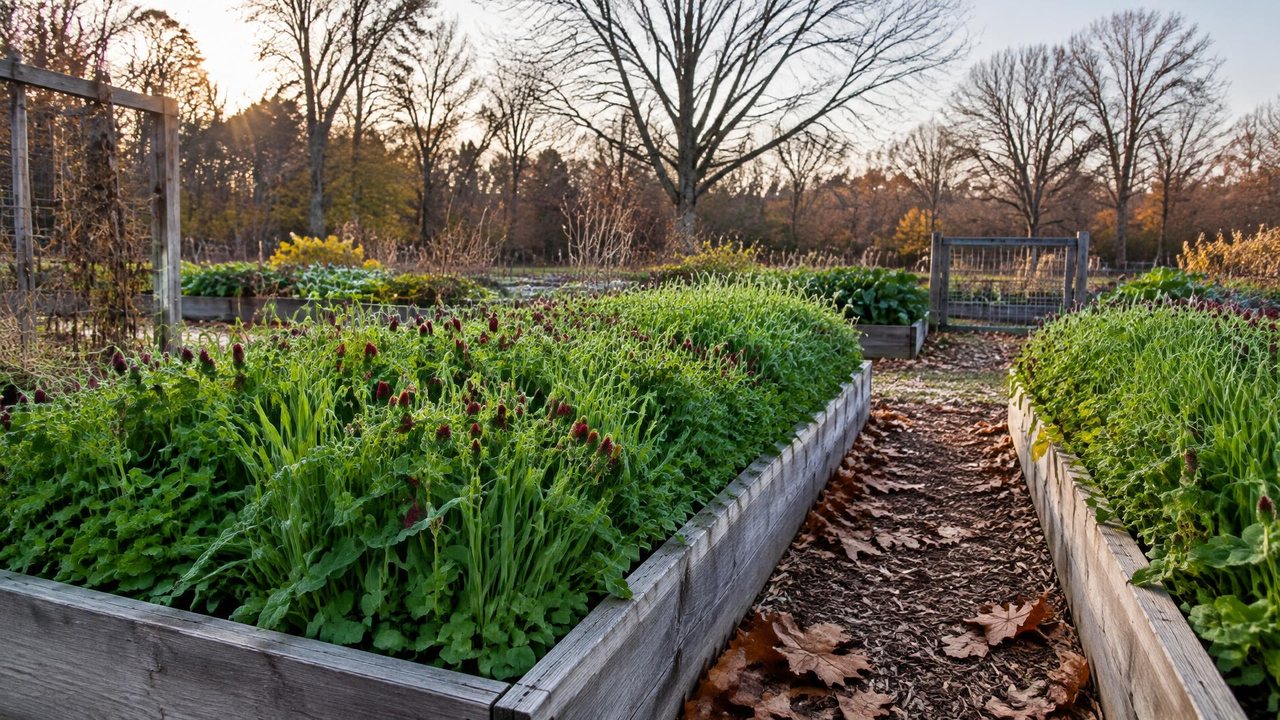
A cover crop is a plant grown to protect and improve soil rather than to harvest. Sown into empty beds in late summer or fall, crops like cereal rye, oats, crimson clover and hairy vetch hold soil in place through winter rain, smother weeds, catch nutrients that would wash away, and add organic matter when they are cut down in spring. Legumes also add nitrogen. Ending the crop 3-4 weeks before planting is the key to making it work in a home garden.
Which cover crops suit home gardens?
| Cover crop | Sow | Rate per 1,000 sq ft | Main benefit | Winter |
|---|---|---|---|---|
| Cereal rye | Late summer to late fall | 2-3 lb | Most biomass, best weed and erosion control | Very hardy |
| Oats | Late summer, 6-8 weeks before frost | 2-3 lb | Easy: dies in hard frost, no spring work | Winter-kills in most cold areas |
| Crimson clover | Late summer to early fall | About 0.5 lb | Adds nitrogen; flowers feed bees | Hardy in mild winters |
| Hairy vetch | Late summer to early fall | 1-1.5 lb | Adds the most nitrogen | Hardy |
| Buckwheat | Late spring to summer | 2-3 lb | Fast summer cover between crops | Killed by first frost |
How do you sow a cover crop?
- Clear finished crops and rake the bed smooth.
- Broadcast the seed evenly by hand, splitting it into two passes at right angles for even coverage.
- Rake lightly so most seed is covered by about 0.25-0.5 inch of soil.
- Water if the soil is dry. Rain usually handles it in fall.
- For clover and vetch, buy pre-inoculated seed or add the matching rhizobia inoculant so they can fix nitrogen.
Timing matters more than precision. Most cover crops need about 4-6 weeks of growth before hard frost to establish well, so sow cereal rye as late as early winter in many areas, but give clover and oats an earlier start.
When and how do you end a cover crop in spring?
End the cover crop 3-4 weeks before you plan to plant, so the residue starts breaking down and stops tying up nitrogen. The easiest home-garden methods are cutting it at the base with shears or a string trimmer, then either leaving it on the surface as mulch or turning it into the top few inches of soil. Cereal rye and vetch are easiest to kill by cutting once they start flowering; cut earlier and they often regrow.
- Small beds: cut, then cover the bed with a tarp or cardboard for 2-3 weeks to finish off regrowth.
- Larger areas: mow low, then dig or till in once the residue has wilted.
- Winter-killed oats need nothing at all; plant straight through the dead mat in spring.
What do cover crops actually do for the soil?
- Roots hold soil against winter rain and wind, so you keep your topsoil.
- Living plants take up leftover nitrogen that would otherwise wash below the root zone.
- Cut residue feeds earthworms and soil life, slowly building organic matter.
- Dense growth shades out winter weeds before they set seed.
- Legumes such as clover and vetch add nitrogen for the following crop.
Which cover crop should you start with?
Oats are the simplest first cover crop in cold-winter areas because they die on their own and leave a soft mulch for spring planting. Where winters are milder, a rye and crimson clover mix gives strong weed control plus some nitrogen. If you have only one bare bed, a single pound bag of seed covers most home gardens.
Can you plant cover crops between rows of vegetables?
Yes. Undersowing means scattering a low cover crop such as crimson clover between rows of tall crops like corn, tomatoes or brassicas in late summer, a few weeks before you expect to harvest. The cover establishes under the main crop and keeps growing once the harvest is cleared. Keep it to the paths and gaps so it does not compete with the vegetables while they are still producing.
How much does a cover crop cost?
For a typical home garden of a few hundred square feet, the seed costs little: a 1 lb bag of crimson clover or a 5 lb bag of cereal rye covers several beds. Garden centers sell small packets, while farm and feed stores sell larger bags for much less per pound. The biggest cost is time in spring, which is why winter-killed oats are popular with busy gardeners.
Can I use annual ryegrass instead of cereal rye?
They are different plants. Annual ryegrass is a lawn-type grass that can be harder to kill and may reseed, so most home gardeners choose cereal rye, sometimes sold as winter rye.
Do I still need to add compost if I grow cover crops?
Usually yes. Cover crops add organic matter slowly; compost adds it immediately. Many gardeners spread compost in fall and sow the cover crop into it.
Can cover crops grow in raised beds?
Yes. Oats or crimson clover suit raised beds well because they are easy to cut down by hand without tilling.
Run the numbers for your own project
- Soil Amendment and pH CalculatorHow much lime or sulfur do I need to fix my soil pH?
- Composting CalculatorWhat ratio of greens to browns does my compost need?
- Frost Date LookupWhen is my last frost and how long is my season?
Keep reading
- Starting Your First Vegetable Garden Without Wasting a SeasonMost first gardens fail for reasons that have nothing to do with a green thumb. Here are the five that matter.
- Building Soil That Actually Grows ThingsFeeding plants is a short-term fix. Feeding the soil is what makes a garden easy.
- Reviving a Tired Lawn: A Season-Long PlanA thin lawn is a symptom. Treating the symptom with more seed is why it keeps coming back.