Fruit Trees and Pollination Partners: How to Choose
By Jim Vernon · 4 min read · Last updated
A lone, healthy apple tree that never fruits is usually a pollination problem, not a growing problem.
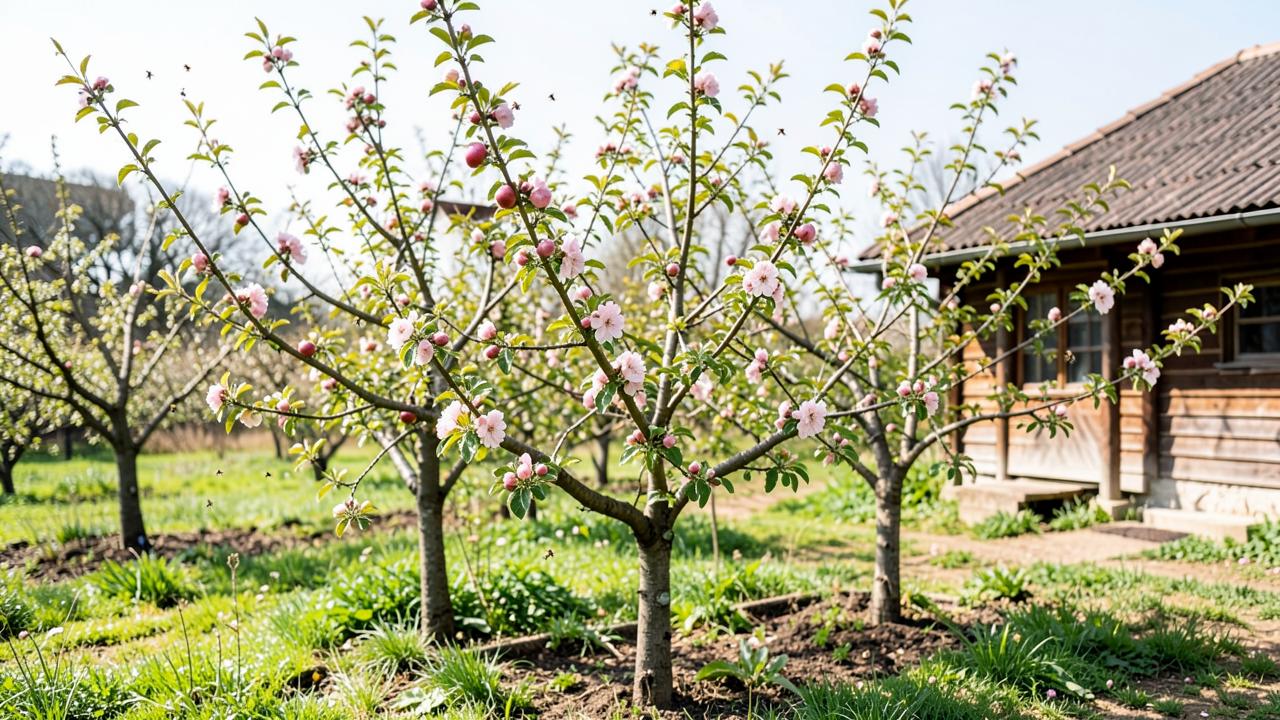
Choosing fruit trees means matching hardiness zone and rootstock size to your space first, then checking pollination needs, since many popular apple, pear, and sweet cherry varieties are self-unfruitful and need a genetically different, bloom-time-compatible variety within about 50 feet to set fruit reliably. Peaches, apricots, and most sour cherries are self-fertile and skip this requirement, which makes them a simpler choice for a single-tree yard.
Which fruit trees need a pollination partner?
| Fruit | Self-fertile? | Notes |
|---|---|---|
| Apple | Mostly no | Needs a different variety with overlapping bloom time; crabapples work as universal pollinators |
| Pear | Mostly no | Same rule as apples; Bartlett is partially self-fertile but fruits better with a partner |
| Sweet cherry | Mostly no | Needs a compatible partner variety; some newer varieties (Stella, Lapins) are self-fertile |
| Sour/tart cherry | Yes | Single tree fruits reliably |
| Peach and nectarine | Yes | Single tree fruits reliably |
| Apricot | Mostly yes | A few varieties benefit from a partner but most self-pollinate |
| Plum (European) | Often yes | Japanese plums often need a partner; check the specific variety |
How close does a pollination partner need to be?
Within about 50 feet is ideal for reliable bee-mediated cross-pollination; trees up to 100 feet apart can still work if bee activity is good, but yields drop off with distance. A neighbor's compatible tree across a fence often counts, which is worth checking before assuming you need to plant two trees yourself. Bloom time overlap matters more than exact distance — an early-blooming and late-blooming variety planted side by side may still fail to cross-pollinate if their flowering windows don't overlap.
What does rootstock actually control?
- Dwarf rootstock: mature tree 8-10 ft, bears fruit in 2-3 years, needs staking, best for small yards and easy hand-harvest.
- Semi-dwarf rootstock: mature tree 12-18 ft, bears in 3-4 years, a common middle-ground choice for suburban lots.
- Standard rootstock: mature tree 20-30+ ft, bears in 5-8 years, needs significant space and a ladder for harvest and pruning.
- Rootstock also affects disease resistance and soil tolerance independent of the fruit variety grafted onto it, so check both when buying.
How long until a new fruit tree actually produces a full crop?
Dwarf trees may give a handful of fruit in year 2-3 and reach full production by year 4-5. Semi-dwarf trees typically take a year or two longer at each stage, and standard trees can take 6-10 years to reach full bearing size, though they then produce far more per tree and often live for decades longer. Removing blossoms in the first year or two, though it feels wasteful, redirects the young tree's energy into root and structural growth rather than fruit, producing a stronger tree long-term.
What space and spacing should you plan for?
Dwarf trees need roughly 8-10 feet between trees, semi-dwarf 15-18 feet, and standard trees 20-30 feet, though these can be tightened somewhat with deliberate pruning for size control. Leave enough room around each tree for airflow, since crowded trees hold humidity that promotes fungal diseases like apple scab and brown rot. Also plan mower and ladder access before planting — a tree that seems well-spaced at planting can feel cramped once branches spread at maturity.
What does a new fruit tree actually cost, and what else does it need?
Bare-root fruit trees typically run $25-45, while potted trees from a nursery run $40-80 depending on size and variety. Beyond the tree itself, budget for staking material on dwarf rootstock ($10-20), a trunk guard to prevent rodent and mower damage ($5-15), and mulch. A backyard orchard of 3-4 trees, including a pollination partner or two, is a reasonable $150-350 first-year investment before considering fencing if deer are a problem in the area.
Can dwarf and standard trees of the same fruit pollinate each other?
Yes — pollination compatibility depends on genetic variety and bloom timing, not on rootstock or resulting tree size. A dwarf Honeycrisp and a standard-sized Gala can cross-pollinate each other just as well as two dwarf trees would, which is useful in a small yard: a compact dwarf tree can serve as the pollination partner for a larger existing standard tree without needing equal amounts of space for both.
What early-life care most affects whether a young fruit tree survives?
- Watering deeply once or twice a week through the first two growing seasons, since a new tree's root system hasn't yet spread far enough to find moisture on its own during dry spells.
- Protecting the trunk from rodent gnawing and mower or trimmer damage with a plastic guard, since girdled bark can kill an otherwise healthy young tree.
- Removing grass and weeds in a 2-3 foot circle around the trunk, since competing vegetation measurably slows establishment in the first two years.
- Staking dwarf rootstock trees for their first few years, since their root systems are naturally shallow and don't anchor the tree well against wind on their own.
Can I plant two of the same apple variety together for pollination?
No. Cross-pollination requires genetically distinct varieties; two trees of the same variety, even from different nurseries, generally can't pollinate each other.
Will a crabapple pollinate my regular apple tree?
Yes, in most cases. Crabapples bloom over an extended period and are compatible pollinators for most eating apple varieties, making a single ornamental crabapple a practical solution for a small yard.
Do I need a pollination partner for a potted patio fruit tree?
Check the specific variety — many dwarf patio trees are bred to be self-fertile for exactly this reason, but not all are, so confirm before assuming a single container tree will fruit.
Run the numbers for your own project
- Frost Date LookupWhen is my last frost and how long is my season?
- Garden Bed Plant SpacingHow many plants fit in my bed?
- Companion Planting ChartWhat should I plant next to this crop?
Keep reading
- Starting Your First Vegetable Garden Without Wasting a SeasonMost first gardens fail for reasons that have nothing to do with a green thumb. Here are the five that matter.
- Building Soil That Actually Grows ThingsFeeding plants is a short-term fix. Feeding the soil is what makes a garden easy.
- Reviving a Tired Lawn: A Season-Long PlanA thin lawn is a symptom. Treating the symptom with more seed is why it keeps coming back.