Planning a Berry Patch: Strawberries, Raspberries, and Blueberries Compared
By Jim Vernon · 5 min read · Last updated
Berries reward patience differently — strawberries fruit in year one, blueberries can take three. Plan around that.
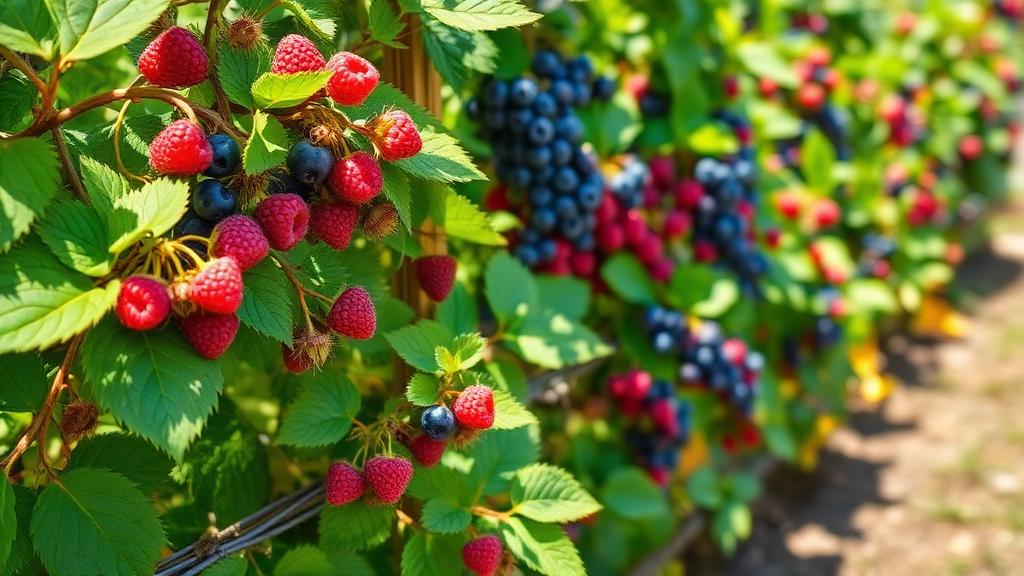
The three most commonly planted home berries — strawberries, raspberries, and blueberries — have very different soil, space, and patience requirements, and planting them side by side with identical care is a common reason one of the three underperforms.
Soil pH is the single biggest divider
| Berry | Ideal soil pH | Sun needs | Years to first real harvest |
|---|---|---|---|
| Strawberries | 5.8-6.5 | Full sun | 1 (June-bearing wait until year 2 for full crop) |
| Raspberries | 5.6-6.2 | Full sun to light shade | 2 |
| Blueberries | 4.5-5.5 | Full sun | 2-3 |
Blueberries need distinctly acidic soil that most vegetable garden soil does not naturally provide, and planting them in unamended garden soil is the most common reason home blueberry bushes struggle or yellow. A soil test before planting saves a season of guessing.
Strawberry types affect timing and effort
- June-bearing: one large harvest in early summer, produces runners for propagation.
- Everbearing: two to three smaller harvests through the season.
- Day-neutral: fruits continuously through the growing season regardless of day length, with smaller individual harvests.
Raspberries need trellising and space to run
Raspberries spread by suckering roots and will colonise well beyond their original row within a couple of seasons unless contained by a barrier or regular mowing at the row edges. A simple two-wire trellis keeps canes upright and fruit off the ground, which matters more for yield than most gardeners expect.
Blueberries need more than one variety, usually
Most blueberry varieties produce a larger, more reliable crop with a second variety nearby for cross-pollination, even though many are technically self-fertile. Two or more varieties that bloom around the same time also extends the harvest window slightly.
Spacing at a glance
| Berry | In-row spacing | Row spacing |
|---|---|---|
| Strawberries | 12-15 in | 24-36 in |
| Raspberries | 18-24 in | 6-8 ft between rows |
| Blueberries | 4-6 ft | 8-10 ft between rows |
Getting started, in order
- Test soil pH before choosing a berry planting site or amending anything.
- Amend soil for blueberries with elemental sulfur or peat months ahead if pH needs lowering significantly.
- Install trellising for raspberries and any support structure before plants go in the ground.
- Plant strawberries and raspberries in early spring; plant blueberries in either spring or fall depending on climate.
- Mulch all three heavily to conserve moisture and suppress weeds around shallow root systems.
Common mistakes
- Planting blueberries in unamended garden soil without checking pH first.
- Letting raspberries spread unchecked without a root barrier or mowed boundary.
- Expecting a full blueberry harvest in year one or two instead of waiting the typical two to three years.
- Skipping a second blueberry variety, reducing pollination and yield.
- Letting strawberry runners overcrowd the bed instead of thinning them for airflow.
Extending the berry harvest across the season
Combining June-bearing strawberries, summer-fruiting raspberries, and mid-to-late summer blueberries with a patch of fall-bearing raspberries stretches home berry harvests from early summer through the first frost, rather than concentrating everything into a few overlapping weeks. Staggering varieties within a single berry type, where available, adds further spread.
Protecting berries from birds and late frost
- Netting draped over a frame just before fruit begins to color is the most reliable defense against birds, which can strip a ripening patch in a day or two if left uncovered.
- A frost cloth thrown over strawberry blossoms on a late spring frost night can save an entire early harvest, since open blossoms are far more frost-sensitive than the dormant plant.
- Blueberry flowers are similarly vulnerable to a late frost during bloom, and covering during a forecast cold snap protects that year's crop.
Worked example: laying out a small mixed berry patch
In a 20x20 foot area, a reasonable layout gives strawberries a 4x8 foot bed (roughly 20-25 plants at 12-15 inch spacing), a single 15-foot row of raspberries on a two-wire trellis (about 10 canes at 18 inch spacing), and two blueberry bushes spaced 5 feet apart along the sunniest edge, amended with sulfur the season before planting to bring pH down into range.
Choosing cultivars for your zone
Blueberries split into northern highbush types like Bluecrop and Patriot, reliable through zone 4-7, and southern highbush or rabbiteye types like Tifblue and Climax bred for the milder, low-chill winters of zone 7-9; planting a northern highbush variety in a hot climate with too few chill hours often produces a bush that leafs out unevenly and fruits poorly. Raspberries divide similarly: Heritage and Caroline are reliable fall-bearing (primocane) types across zone 4-8, while Latham and Boyne are hardier summer-bearing options for colder zone 3-4 gardens. June-bearing strawberries like Earliglow perform well through zone 4-8, while day-neutral types such as Seascape tolerate the milder winters and longer seasons of zone 7-10 better than most June-bearing varieties, which need a real winter chill to set fruit well the following spring.
Do blueberries need special fertilizer?
They benefit from acidic, ammonium-based fertilizers formulated for acid-loving plants; standard all-purpose fertilizer can push soil pH in the wrong direction over time.
How long do strawberry plants stay productive?
Individual June-bearing plants are typically most productive for 3-4 years before yields decline, though runners naturally replace the original plants if allowed to root.
Can berries be grown in containers?
Strawberries and dwarf blueberry varieties both do well in large containers with the right soil mix; raspberries are harder to contain long-term due to their spreading habit.
How do I lower soil pH for blueberries?
Elemental sulfur worked into the soil months before planting is the standard method; it acts slowly, so retest pH the following season and reapply if needed rather than expecting an immediate shift.
Do raspberries and blueberries need full sun?
Both produce best in full sun, though raspberries tolerate a bit of light afternoon shade better than blueberries do.
Watering needs across the three crops
| Berry | Typical water need | Notes |
|---|---|---|
| Strawberries | 1-1.5 in/week | Shallow roots dry out fast; mulch is essential |
| Raspberries | 1-1.5 in/week | Deep watering less often beats frequent shallow watering |
| Blueberries | 1-2 in/week | Shallow, fibrous roots are sensitive to both drought and waterlogging |
Winter protection by climate zone
In colder zones, strawberries benefit from a loose straw mulch layer applied after the ground first freezes, removed gradually in spring once new growth starts. Raspberry canes in exposed sites can be bent and covered where winters are severe, though most established varieties tolerate cold well without help. Blueberries are generally hardy in the zones they are suited to, but young first- or second-year plants benefit from a mulch ring to buffer root temperature swings through their first couple of winters.
Run the numbers for your own project
- Soil Amendment and pH CalculatorHow much lime or sulfur do I need to fix my soil pH?
- Hedge and Tree Spacing CalculatorHow far apart should I space my hedge or trees?
Keep reading
- Starting Your First Vegetable Garden Without Wasting a SeasonMost first gardens fail for reasons that have nothing to do with a green thumb. Here are the five that matter.
- Building Soil That Actually Grows ThingsFeeding plants is a short-term fix. Feeding the soil is what makes a garden easy.
- Reviving a Tired Lawn: A Season-Long PlanA thin lawn is a symptom. Treating the symptom with more seed is why it keeps coming back.