How Do You Keep Balcony Container Gardens Alive in Wind and Heat?
By Jim Vernon · 5 min read · Last updated
A balcony ten floors up faces wind speeds and heat swings a ground-level garden never sees — treat it as its own microclimate, not a small yard.
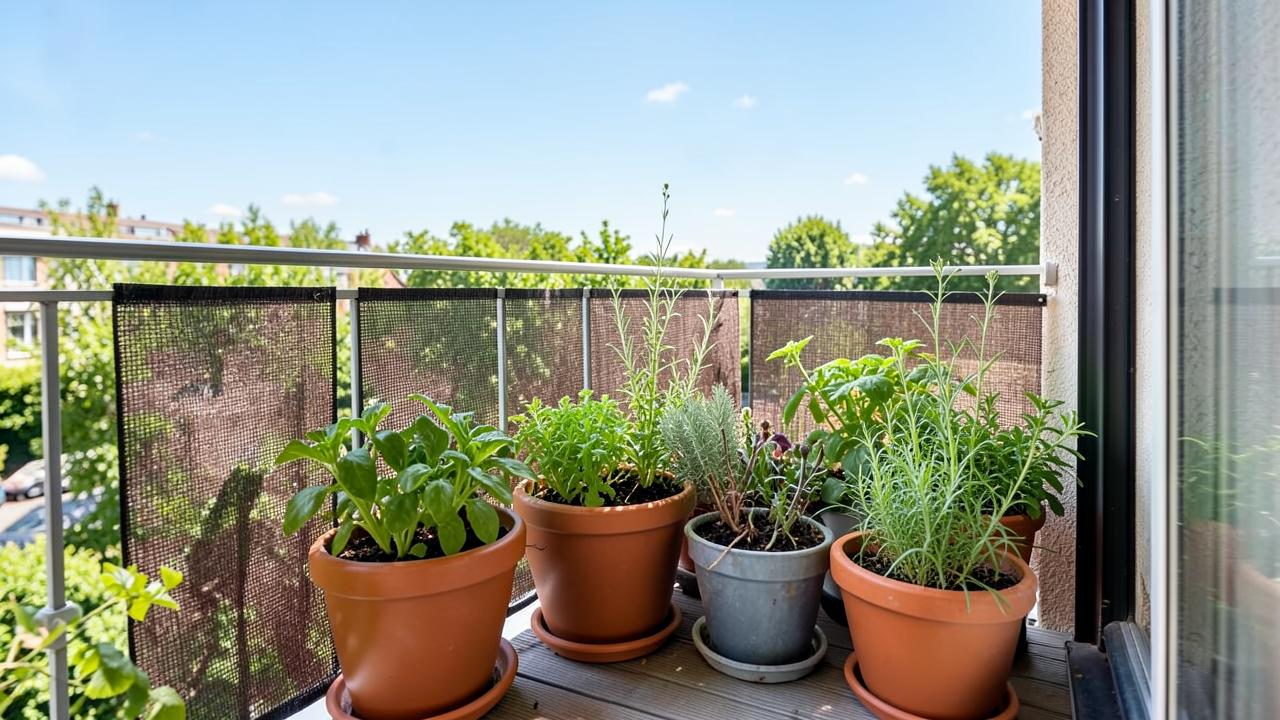
Balconies dry containers faster than ground gardens because wind strips moisture from soil and leaves, and railings, glass, and pavement reflect and hold heat well above the surrounding air temperature. The fix is heavier pots that resist tipping, larger soil volumes that buffer moisture swings, and a watering routine that checks daily during summer rather than following a fixed schedule.
Why does wind matter more than most gardeners expect?
Wind increases evaporation from both soil and leaf surfaces, and balconies above the third floor or so often see steady wind that a ground-level yard rarely experiences. This means a container that would need water every three days at ground level might need it daily on an exposed high balcony, even with identical sun exposure. Wind also causes physical damage — snapped stems, torn leaves, and toppled pots — that heat alone doesn't.
| Balcony condition | Effect on plants | Adjustment |
|---|---|---|
| Steady wind (above 3rd floor typical) | Faster soil drying, physical stem damage | Wider, heavier pots; wind-tolerant plants; daily moisture checks |
| South or west-facing, reflective railing | Heat 10-15°F above ambient air temp | Afternoon shade cloth, light-colored pots, extra watering |
| Glass or metal railing nearby | Reflected and radiated heat on pot sides | Space pots a few inches from railings, use insulating pot liners |
| Corner or high-rise exposure | Turbulent gusts, uneven wind direction | Group pots together for mutual wind-break, avoid tall top-heavy plants |
Which pots and plants handle wind and heat best?
- Choose wide, low, heavy pots (terracotta or concrete) over tall, narrow ones, which tip easily in gusts.
- Pick wind-tolerant plants — herbs like rosemary and thyme, ornamental grasses, and succulents — over broad-leafed or tall floppy species.
- Group several pots together; they create a partial windbreak for each other and slow moisture loss as a cluster.
- Use self-watering containers or add a layer of mulch on top of the soil to reduce evaporation between waterings.
How much extra heat does a balcony actually add?
South- or west-facing balconies with light-colored concrete, glass railings, or metal fixtures can run 10 to 15°F hotter than the ambient air temperature reported by a weather forecast, especially in the two to three hours after solar noon. Dark-colored pots absorb even more, sometimes reaching soil temperatures that stress or kill roots on the pot's sun-facing side. Light-colored or double-walled pots and a few inches of clearance from reflective surfaces meaningfully reduce this effect.
What's a realistic summer watering routine?
- Check soil moisture with a finger test every morning during summer heat, not just every few days.
- Water early in the morning so plants take up moisture before the day's heat and wind peak.
- On the hottest days, expect small pots (under 12 inches) to need water daily, and larger pots every 2-3 days.
- Add a saucer beneath pots to catch runoff and give roots a brief reserve during extreme heat.
Does shade cloth actually help on a small balcony?
A 30-50% shade cloth clipped above containers during the hottest afternoon hours can drop leaf surface temperature meaningfully and reduce water loss, often stretching a daily-watering routine to every other day during a heat wave. Install it on a simple frame or tension it between the railing and a wall rather than laying it directly on plants, since contact with hot fabric can still transfer heat to leaves. Remove it once temperatures ease so plants keep getting the light they need the rest of the season.
What's a realistic budget for wind- and heat-proofing a balcony garden?
Upgrading from lightweight plastic pots to heavier terracotta or concrete containers costs roughly $15-40 per pot depending on size, and a roll of 30% shade cloth with basic clips runs $15-25. Self-watering inserts or converted containers add $20-50 per pot. A modest balcony with six to eight containers can be reasonably wind- and heat-hardened for $150-300 total, spread across a season rather than all at once.
Which direction does the balcony face, and why does it matter this much?
A north-facing balcony gets mostly indirect, diffuse light and rarely overheats, making it the easiest exposure for leafy greens and shade-tolerant plants but too dim for tomatoes or peppers to fruit well. East-facing balconies get gentler morning sun and are often the best all-around compromise for a mixed container garden. South- and especially west-facing balconies get the most intense sun and heat, particularly in late afternoon when a west exposure combines peak temperature with peak light, and that combination is what pushes soil temperatures highest and dries pots fastest.
What soil mix holds up best to wind and heat stress?
A mix with more organic matter and water-retentive material — roughly 60% quality potting soil, 20% compost, and 20% perlite or vermiculite — buffers against the faster drying balconies cause better than a leaner, fast-draining mix meant for indoor houseplants. Adding a granular water-retaining polymer at the rate on the package (typically a tablespoon or two per gallon of mix) can stretch the interval between waterings by a day or more during a heat wave, though it shouldn't replace regular moisture checks entirely.
Do self-watering containers solve the wind and heat problem?
They help significantly by holding a reservoir that buffers against fast drying, often stretching the interval between refills to several days even in wind. They don't eliminate the need to monitor during heat waves, but they reduce the risk of a plant drying out during a missed day.
What size pot works best on a windy balcony?
Wider and shorter beats tall and narrow for stability — a 14-inch-wide, 10-inch-tall pot resists tipping far better than an 8-inch-wide, 18-inch-tall one holding the same soil volume. Larger soil volume overall also buffers temperature and moisture swings better than small pots.
Can vegetables handle a hot, windy balcony?
Compact, heat-tolerant vegetables like peppers, cherry tomatoes, and bush beans do reasonably well with consistent watering and afternoon shade during heat waves. Leafy greens like lettuce struggle more and often need partial shade and more frequent watering to avoid bolting or wilting.
How do you keep pots from blowing over in strong gusts?
Choose wide, heavy pots as the first defense, then add extra stability by grouping pots together, securing lightweight ones with removable adhesive anchors to the railing or floor, or partially filling hollow decorative pots with sand or gravel at the base before adding the lighter potting mix on top.
Run the numbers for your own project
- Plant Watering CalculatorHow often and how much should I water this plant?
- Drip Irrigation PlannerHow many emitters and how long should my drip system run?
- Garden Bed Plant SpacingHow many plants fit in my bed?
Keep reading
- Starting Your First Vegetable Garden Without Wasting a SeasonMost first gardens fail for reasons that have nothing to do with a green thumb. Here are the five that matter.
- Building Soil That Actually Grows ThingsFeeding plants is a short-term fix. Feeding the soil is what makes a garden easy.
- Storage for Small Rooms That Does Not Make Them SmallerSmall rooms do not need more storage. They need storage that stops interrupting the eye.