Insulation
Spray Foam Insulation
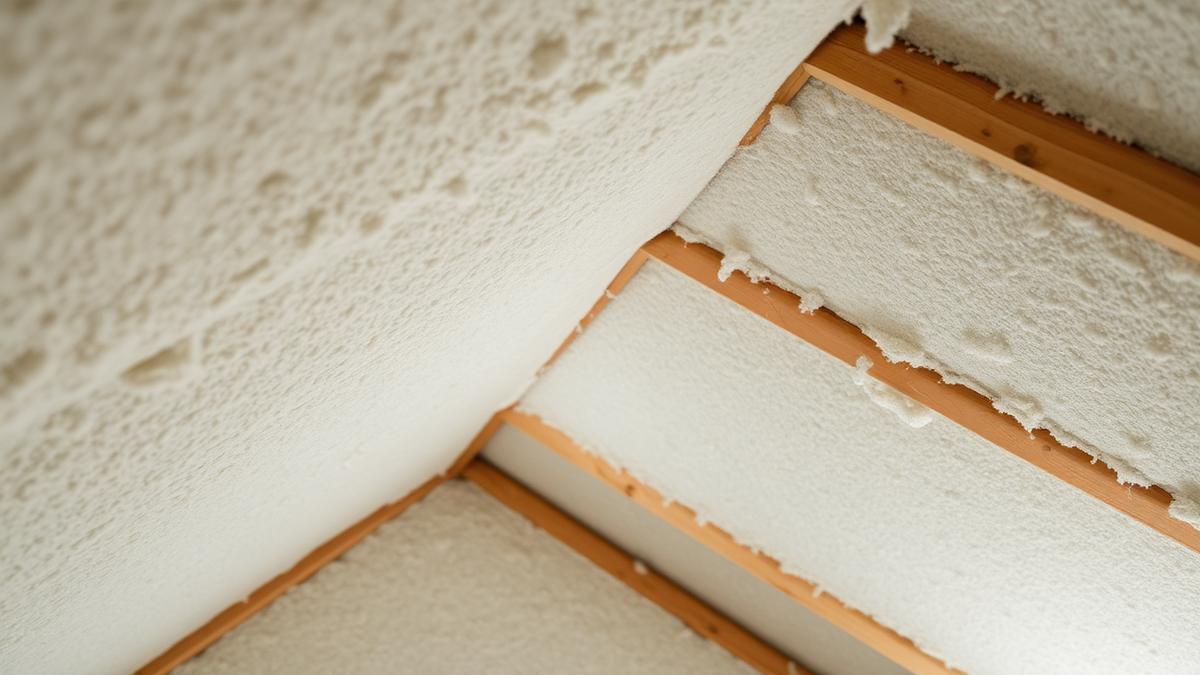
A liquid polyurethane sprayed in place that expands and hardens, sealing air gaps and insulating in one step, in open-cell or denser closed-cell formulations.
Best for
- Irregular cavities and hard-to-reach rim joists
- Air sealing combined with insulating in one pass
- Closed-cell: below-grade or damp-prone areas needing a vapour barrier
Avoid when
- Large open cavities where batt insulation is far cheaper for the same R-value
- DIYers without training — professional installation is standard and often required by code
Open-cell vs closed-cell
Open-cell foam is softer, cheaper, and vapour-permeable, suited to interior wall cavities. Closed-cell foam is denser, has a higher R-value per inch, and acts as its own vapour barrier, making it the choice for rim joists, basements, and other damp-prone spots.
It's an air seal first, insulation second
The biggest performance gain over batt insulation comes from eliminating air leakage through gaps, not from a much higher R-value per inch — spray foam's real advantage is sealing the irregular gaps batts can't fill.
Put this into practice
- Insulation R-Value CalculatorWhat R-value do I need, and how much?
- Energy Savings CalculatorWill this upgrade pay for itself?
More material guides
- Mineral Wool InsulationA fibrous insulation made from spun rock or slag, offering good fire resistance and sound dampening alongside thermal performance.
- Cellulose InsulationLoose-fill insulation made from recycled, fire-treated paper, blown into attics and wall cavities as a denser alternative to fiberglass.