Insulation
Cellulose Insulation
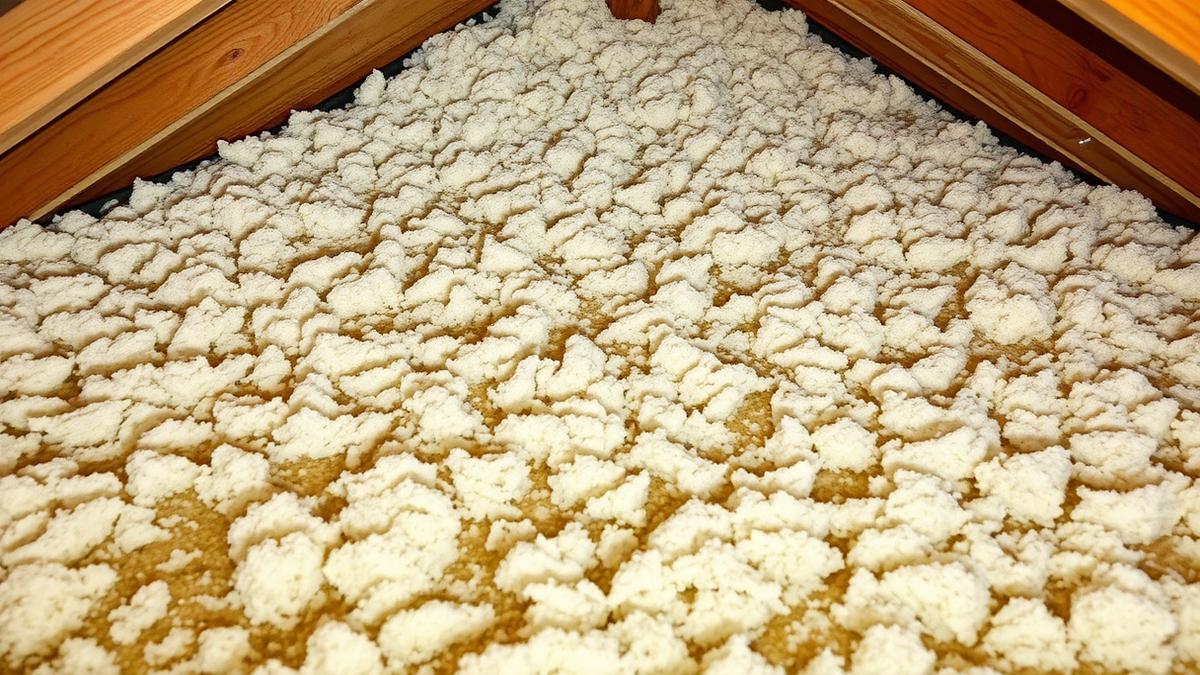
Loose-fill insulation made from recycled, fire-treated paper, blown into attics and wall cavities as a denser alternative to fiberglass.
Best for
- Attic top-ups over existing insulation
- Retrofitting closed wall cavities via small drilled holes
- Buyers wanting a higher-recycled-content material
Avoid when
- Areas prone to moisture intrusion, where it can hold water and lose R-value
- Do-it-yourself jobs without a blower rental — dense-pack wall installation especially needs experience
It settles over time
Loose-fill cellulose compresses several percent after installation, so attics are typically blown to a higher initial depth than the target R-value to account for settling — check the bag coverage chart's settled thickness figure, not the fluffed depth.
Denser fill resists air movement better than fiberglass
Cellulose's higher installed density reduces convective air movement within the insulation layer better than loose fiberglass, which is part of why it often performs closer to its rated R-value in real attics.
Put this into practice
- Insulation R-Value CalculatorWhat R-value do I need, and how much?
More material guides
- Mineral Wool InsulationA fibrous insulation made from spun rock or slag, offering good fire resistance and sound dampening alongside thermal performance.
- Spray Foam InsulationA liquid polyurethane sprayed in place that expands and hardens, sealing air gaps and insulating in one step, in open-cell or denser closed-cell formulations.