Grow
The Seed Depth Rule Is Simply Twice the Seed's Width
Sow any seed at roughly twice its own width. Buried too deep, it exhausts its stored energy before it reaches light.
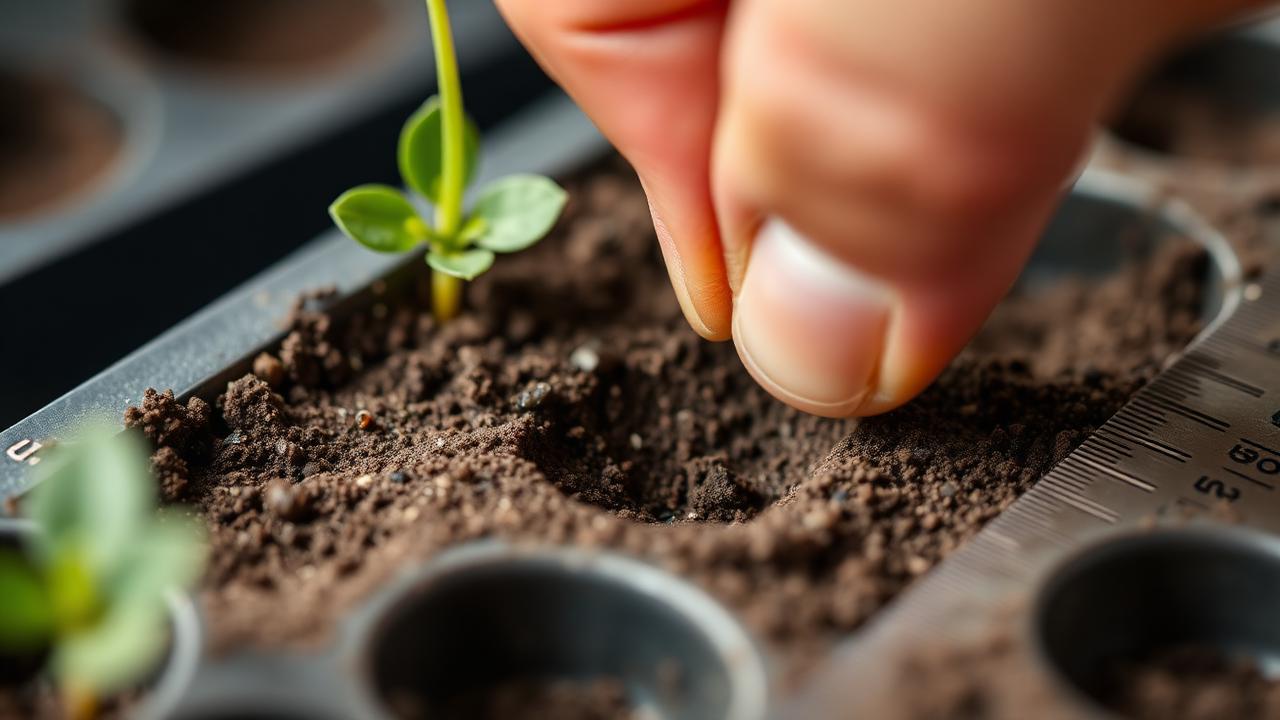
A seed carries a finite fuel tank: the endosperm or cotyledon reserves. Emergence is a race between that fuel and the distance to the surface. Double the seed's width is, for almost every garden species, the distance the reserve can comfortably cover.
This is why lettuce, celery, and snapdragons are surface-sown — the seeds are tiny and also need light to break dormancy — while beans and peas go an inch or two down. When a row fails to appear, depth is the first thing to suspect, not viability.
Written and reviewed by Jim Vernon, editor of Home & Garden Answers · Last updated
Put this into practice
- Garden Bed Plant SpacingHow many plants fit in my bed?
- What to Plant This MonthWhat can I plant right now where I live?
More facts like this
- Evening Watering Is Not Always the Safer ChoiceWatering at dusk saves water but can cost you the plant: wet leaves overnight are the single biggest invitation to fungal disease.
- The Second Coat of Paint Uses Less Than the FirstBuying 'two coats worth' at the first-coat rate routinely overshoots — the second coat stretches 10-25% further on most surfaces.
- Topsoil, Garden Soil, and Potting Mix Are Not InterchangeableFilling a raised bed with bagged topsoil is the most common reason a new bed compacts into a brick by its second season.