Home chart
Screw and Nail Size Guide for Common Projects
Fastener choice depends on what you're joining and how much load it carries. As a rule, a screw or nail should penetrate the base material by at least 1 to 1.5 times the thickness of the piece being fastened, and 1.5 to 2 times for structural framing connections.
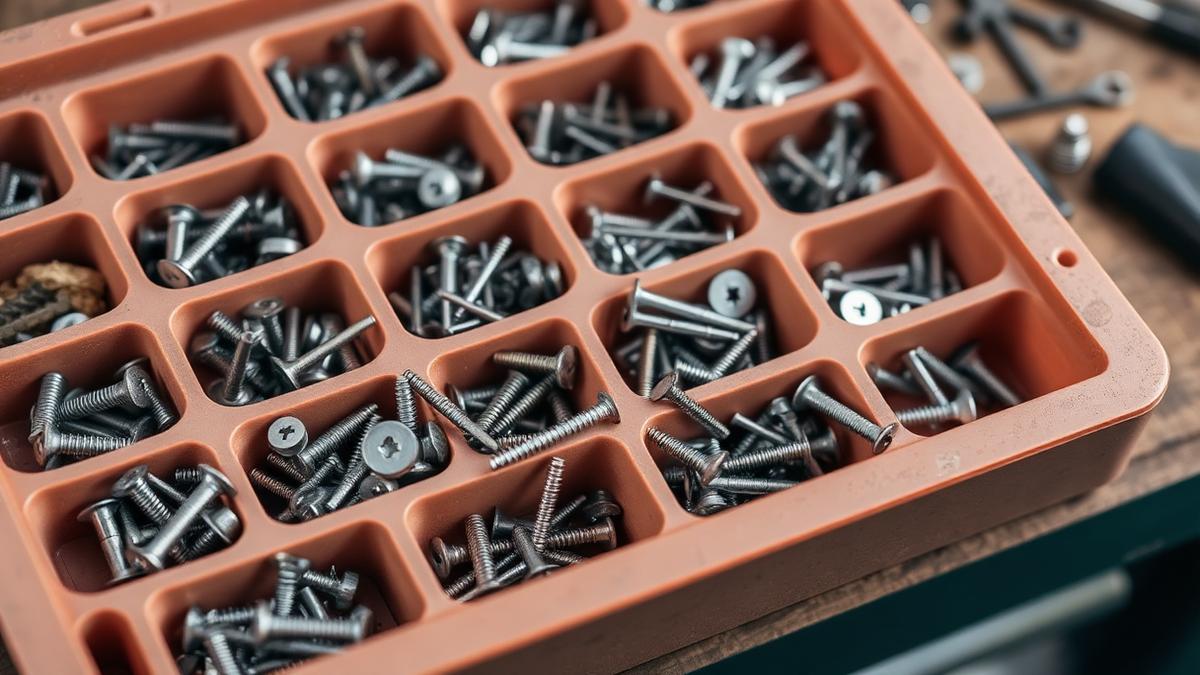
| Project | Fastener | Typical size |
|---|---|---|
| Drywall to wood studs | Drywall screw | #6, 1.25 in (1/2 in board) |
| Drywall to metal studs | Drywall screw, fine thread | #6, 1 in |
| Framing (stud to plate) | Common nail | 16d (3.5 in) |
| Toe-nailing studs | Common nail | 8d or 10d (2.5–3 in) |
| Sheathing to studs | Nail or screw | 8d nail or #8 x 2 in screw |
| Deck boards to joists (composite) | Deck screw | #8–10, 2.5–3 in, or hidden fastener clips |
| Deck boards to joists (wood) | Deck screw | #8, 2.5–3 in |
| Cabinet face frames | Pocket screw | 1.25 in coarse thread |
| Interior trim/casing | Finish nail | 6d–8d (2–2.5 in) or 15–16 gauge nailer |
| Baseboards | Finish nail | 8d (2.5 in) or 16 gauge nailer |
| Subfloor to joists | Screw or ring-shank nail | #8 x 2.5 in screw, or 8d ring-shank |
| Hanging a mirror/shelf into stud | Wood screw | #8–10, 2–2.5 in |
| Hanging into drywall only (no stud) | Anchor + screw | See anchor chart, matched to anchor |
Notes
- Screws hold better in shear-light applications (cabinets, trim); nails flex slightly and resist shear/impact better, which is why framing code still favors nails in many structural connections.
- Penny size (d) is a historical unit referring to nail length, not diameter — 16d is 3.5 inches regardless of nail thickness.
Put this into practice
- Deck and Fence Material CalculatorHow much timber does my deck or fence need?
- Drywall CalculatorHow many sheets of drywall do I need?
More charts like this
- Paint Coverage Chart by Surface TypeHow far a gallon of paint typically goes on different surfaces, and why porous or textured surfaces need more coats.
- Tile Trowel Size Chart by Tile SizeWhich notched-trowel size to use for mosaic, small, and large-format tile, matched to typical thinset coverage.
- Concrete Bag Chart: Bags Needed per Cubic Yard and Cubic FootHow many 40, 60, and 80 lb bags of pre-mixed concrete it takes to make a cubic yard or cubic foot, for small pours.