Home chart
Lumber Nominal vs. Actual Size Chart
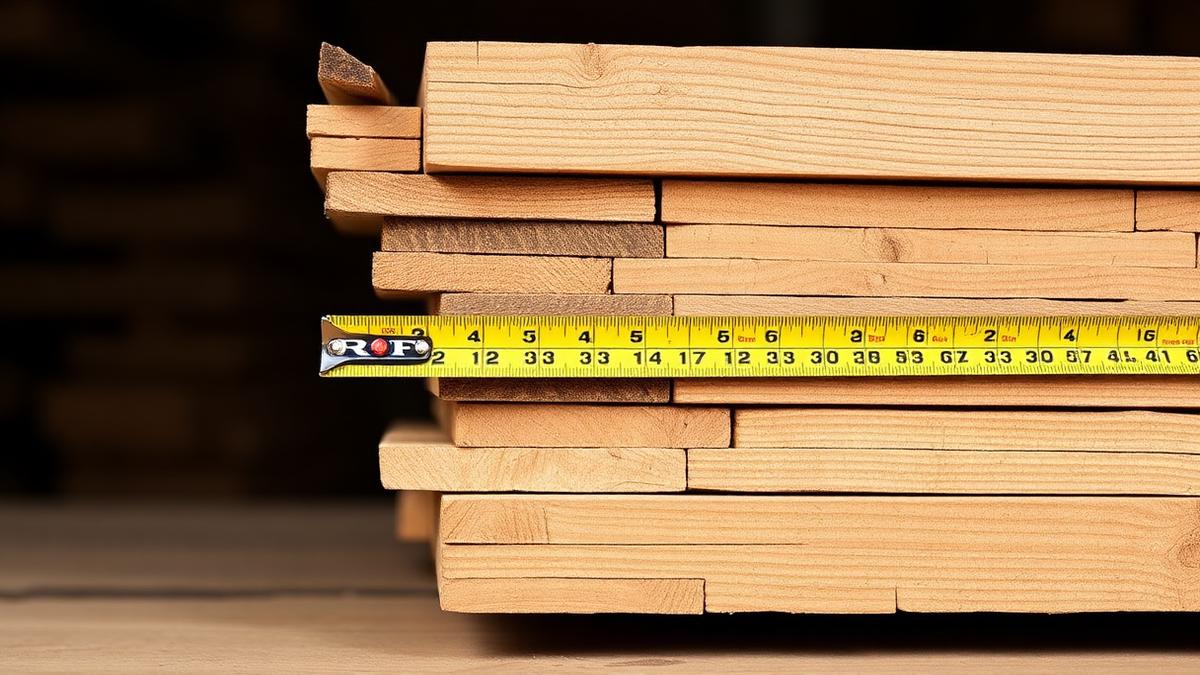
A '2x4' hasn't measured 2 by 4 inches since it left the sawmill. Rough-cut lumber is trimmed and planed smooth (surfacing), which removes roughly 1/4 to 1/2 inch per dimension, then it shrinks slightly further as it dries to standard moisture content. The nominal name stuck as an industry convention even though the actual size is smaller.
| Nominal size | Actual size (dry, surfaced) |
|---|---|
| 1x2 | 3/4 x 1.5 in |
| 1x4 | 3/4 x 3.5 in |
| 1x6 | 3/4 x 5.5 in |
| 1x8 | 3/4 x 7.25 in |
| 1x10 | 3/4 x 9.25 in |
| 1x12 | 3/4 x 11.25 in |
| 2x2 | 1.5 x 1.5 in |
| 2x4 | 1.5 x 3.5 in |
| 2x6 | 1.5 x 5.5 in |
| 2x8 | 1.5 x 7.25 in |
| 2x10 | 1.5 x 9.25 in |
| 2x12 | 1.5 x 11.25 in |
| 4x4 | 3.5 x 3.5 in |
| 6x6 | 5.5 x 5.5 in |
Notes
- Framing calculations (stud counts, header sizing, load tables) are based on actual dimensions, not nominal — always double-check span tables use the real 1.5 or 3.5 inch figures.
- Rough-sawn lumber (some fencing and barn board) is closer to its nominal size because it skips the planing step; check before assuming standard actual sizes apply.
Put this into practice
- Deck and Fence Material CalculatorHow much timber does my deck or fence need?
More charts like this
- Paint Coverage Chart by Surface TypeHow far a gallon of paint typically goes on different surfaces, and why porous or textured surfaces need more coats.
- Tile Trowel Size Chart by Tile SizeWhich notched-trowel size to use for mosaic, small, and large-format tile, matched to typical thinset coverage.
- Concrete Bag Chart: Bags Needed per Cubic Yard and Cubic FootHow many 40, 60, and 80 lb bags of pre-mixed concrete it takes to make a cubic yard or cubic foot, for small pours.