Garden chart
Companion Planting Pairing Chart
Companion planting evidence ranges from solidly demonstrated (physical benefits like shade, support, or pest confusion) to folklore passed down with little research behind it. This chart focuses on pairings with a clear mechanical or observed reason, alongside a few well-known plants to separate.
| Crop | Good companions | Plants to avoid nearby | Reason |
|---|---|---|---|
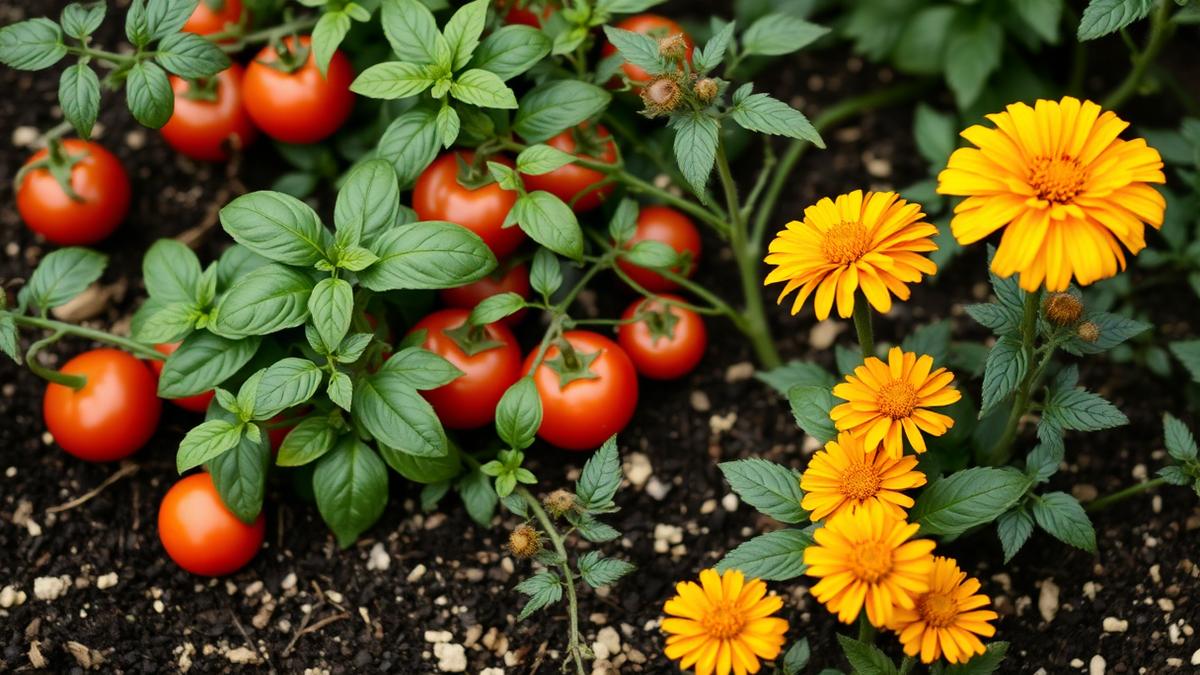
| Tomato | Basil, marigold, carrots | Brassicas (cabbage family), fennel | Basil/marigold may deter pests; brassicas compete heavily for nutrients |
| Beans (bush/pole) | Corn, squash, carrots | Onions, garlic, other alliums | Alliums are shown to inhibit bean growth |
| Corn | Beans, squash, cucumber | Tomatoes | Classic Three Sisters structure; tomatoes compete for same nutrients/space |
| Squash/pumpkin | Corn, beans, nasturtium | Potatoes | Nasturtium can trap aphids/squash bugs away from the crop |
| Carrots | Onions, leeks, rosemary | Dill (mature) | Onion family scent may confuse carrot fly; mature dill can inhibit carrots |
| Cabbage family (brassicas) | Dill, chamomile, onions | Tomatoes, strawberries | Brassicas and tomatoes are heavy feeders competing for the same resources |
| Cucumber | Beans, corn, radish | Aromatic herbs (sage) | Strong aromatics may slow cucumber growth in some observations |
| Onions/garlic | Carrots, beets, brassicas | Beans, peas | Alliums suppress legume nitrogen-fixing bacteria |
| Peppers | Basil, onions, carrots | Beans, fennel | Similar competition/inhibition concerns as tomatoes |
Notes
- The most reliable companion planting benefits are structural (a cornstalk as a bean pole) or about attracting pollinators/beneficial insects, not chemical 'protection' between species.
- Crop rotation and diverse plantings generally do more for pest and disease management than specific companion pairings.
- Treat plants-to-avoid columns as a reason to space crops apart in the same bed, not necessarily a reason to avoid the same garden entirely.
Put this into practice
- Companion Planting ChartWhat should I plant next to this crop?
- Garden Bed Plant SpacingHow many plants fit in my bed?
More charts like this
- Vegetable Spacing Chart: In-Row and Between-Row DistancesRecommended in-row and between-row spacing for the most commonly grown vegetables, in a raised bed or a traditional row garden.
- Seed Sowing Depth Chart by Vegetable and FlowerHow deep to sow common vegetable and flower seeds directly in the garden, plus days to germination as a rule of thumb.
- Mulch Coverage Chart: Square Feet per Cubic Yard by DepthHow much area one cubic yard of mulch covers at common application depths, plus recommended depth by mulch type.