How Do You Set Up a Vertical Shelf Garden With Grow Lights?
By Jim Vernon · 5 min read · Last updated
The top shelf of a plant rack often gets three times the light of the bottom one — plan for that gradient instead of fighting it.
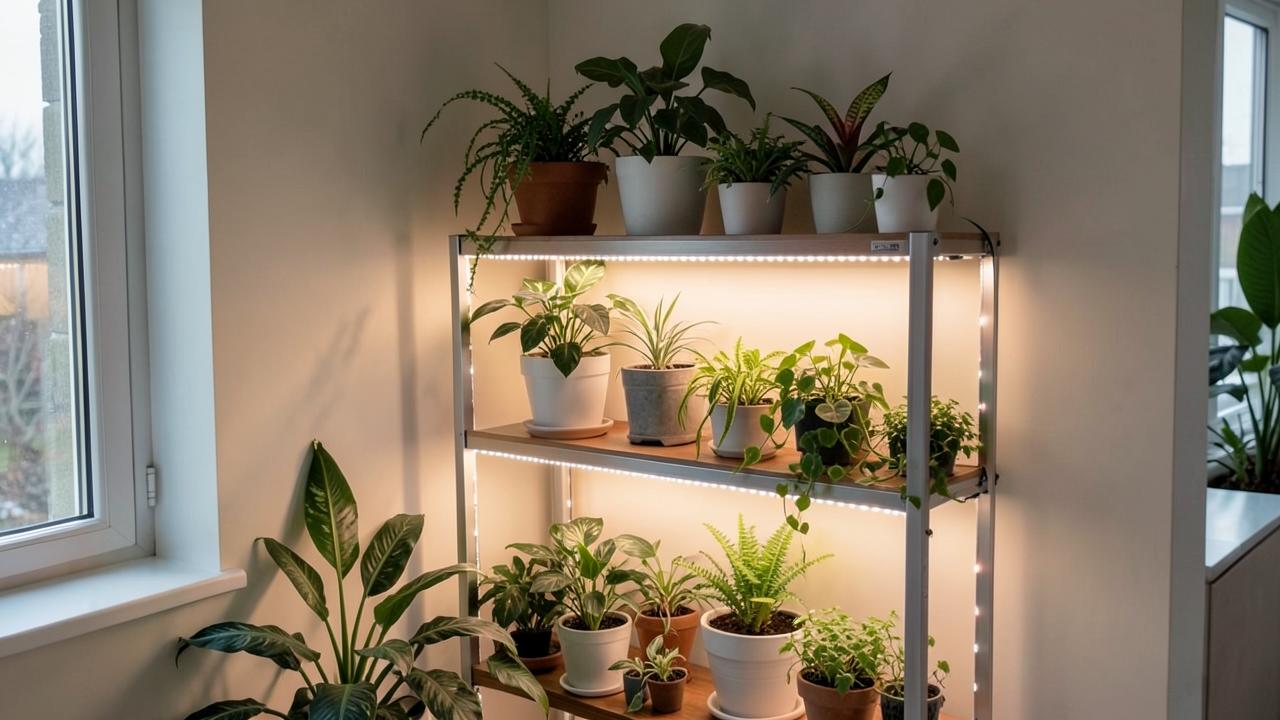
A vertical shelf garden pairs a multi-tier wire or wood shelving unit with an LED grow light mounted under each shelf, letting a 2-by-4-foot footprint hold as many plants as a small garden bed would need. The key design decision is matching plant light needs to each shelf, since the shelf closest to your primary light source or fixture gets meaningfully more light than shelves further away or shaded by growth above.
What does a basic setup cost and include?
| Component | Typical cost (USD) | Notes |
|---|---|---|
| 4-tier wire shelving unit (24x48 in shelves) | $60-150 | Metal wire units allow better airflow than solid wood shelves |
| LED grow light bar per shelf (4 units) | $25-50 each ($100-200 total) | Full-spectrum, 20-40W per bar for a 4-ft shelf |
| Timer (mechanical or smart plug) | $10-25 | Set for 12-14 hrs/day |
| Trays/saucers per shelf | $5-15 each | Protects shelves from water damage |
| Total starter setup | $200-450 | Scales down with fewer tiers or simpler lights |
How do you match plants to each shelf?
Put higher-light plants (herbs, succulents, seed-starting trays) on the shelf with the light mounted closest to leaf level, typically 6-12 inches away, and put lower-light tolerant plants (pothos, ferns, snake plants) on shelves where the light source is farther or partially blocked by growth from the shelf above. Measuring with a light meter app or a basic PPFD meter at leaf height on each shelf takes the guesswork out of this placement.
How much light should each shelf actually deliver?
- Seed starting and high-light herbs: 300-400 µmol/m²/s PPFD, light 4-6 inches above seedlings, raised as they grow.
- General foliage houseplants: 150-250 µmol/m²/s PPFD, light 8-12 inches above the canopy.
- Low-light tolerant plants (pothos, ZZ plant): 75-150 µmol/m²/s PPFD is sufficient to maintain, though growth will be slower.
- Run all lights on a timer for 12-14 hours daily; more than 16 hours provides little added benefit and can stress some plants.
What airflow and drainage problems come up on shelves?
Wire shelving is worth the slightly higher cost over solid wood or laminate because it allows airflow underneath each tier, reducing fungal issues and helping soil dry evenly — solid shelves trap humidity against the bottom of pots. Always use trays or saucers under every pot, since a single overflowing watering session on an upper shelf can drip through several tiers and damage electronics or flooring below.
How do you avoid overcrowding as plants grow?
Space pots so leaves don't touch neighboring plants once mature, typically leaving 2-4 inches between pot edges for small plants and 6-8 inches for larger ones, since crowded foliage traps humidity and reduces airflow around each plant, raising the risk of fungal issues. Reassess spacing every few months as plants fill out, and rotate slower growers to a shelf with more headroom before they start shading themselves or their neighbors from the light bar above.
Is a vertical setup actually cheaper than buying more houseplants for windowsills?
The upfront cost of shelving and lights is higher than simply lining a windowsill, but a shelf setup lets you grow two to three times as many plants in the same floor footprint and removes total dependence on natural window light, which is especially valuable in apartments with north-facing or heavily shaded windows. Electricity for four small LED bars run 12 hours a day typically adds only a few dollars a month.
How do you choose the right shelving unit for the job?
Look for a unit rated to hold at least 150-250 pounds per shelf once soil, pots, and water are accounted for, since a fully watered 10-inch pot of potting mix can weigh 8-12 pounds on its own and a shelf holding six of them adds up fast. Adjustable-height shelves are worth the modest extra cost, since they let you raise or lower each tier as plants grow taller or as you swap in a taller grow light fixture. Avoid units with solid backs or enclosed sides unless you plan to add active ventilation, since enclosed shelving traps humidity and heat from the lights far more than an open wire frame.
What's the most common reason a shelf garden underperforms?
The most frequent mistake is treating every shelf as equal and placing high-light plants like succulents or seedlings on a lower or shaded tier where they slowly stretch and weaken over a month or two. The second most common issue is skipping a timer and relying on manually switching lights on and off, which almost always results in inconsistent day length that stresses plants more than a lower but steady light level would. A basic mechanical outlet timer costing $10-15 solves this permanently and is one of the higher-value small purchases in the whole setup.
Can you grow vegetables on an indoor vertical shelf, not just houseplants?
Yes, compact vegetables like lettuce, microgreens, and herbs do well on a well-lit shelf with strong grow lights (300+ PPFD) and good airflow. Fruiting vegetables like tomatoes generally need more light and space than a typical shelf setup provides.
How far should a grow light hang above a shelf's plants?
Most small LED bars work best 6 to 12 inches above the plant canopy; check the specific fixture's guidance, since higher-wattage lights need more distance to avoid leaf scorch and lower-wattage lights may need to sit closer to deliver adequate intensity.
Do vertical shelf plants need less water than windowsill plants?
Not necessarily — grow lights can dry soil similarly to strong natural sun, especially on upper shelves closest to the fixture. Check soil moisture per plant rather than assuming the whole shelf dries at the same rate.
How many plants can a typical 4-tier shelf hold?
A 24-by-48-inch shelf per tier comfortably fits 4-8 small to medium pots depending on plant size, so a four-tier unit can hold 16-30 plants total, considerably more than the same footprint would support spread across windowsills.
Run the numbers for your own project
- Grow Light CalculatorHow high and how long should my grow light run?
- Houseplant Light MatcherWhich houseplants suit this window?
Keep reading
- How Much Paint Do You Actually Need for a Room?The tin says 400 square feet. Your wall says otherwise. Here is the arithmetic that actually holds up.
- DIY or Hire a Pro? A Decision Framework That Is Not About MoneyThe labour saving is real. So is the cost of a job done twice — and of tools you use once.
- Storage for Small Rooms That Does Not Make Them SmallerSmall rooms do not need more storage. They need storage that stops interrupting the eye.