What Actually Reduces Sound Through an Interior Wall?
By Jim Vernon · 5 min read · Last updated
Adding mass and decoupling the wall's two sides does far more than any foam panel sold as a soundproofing product.
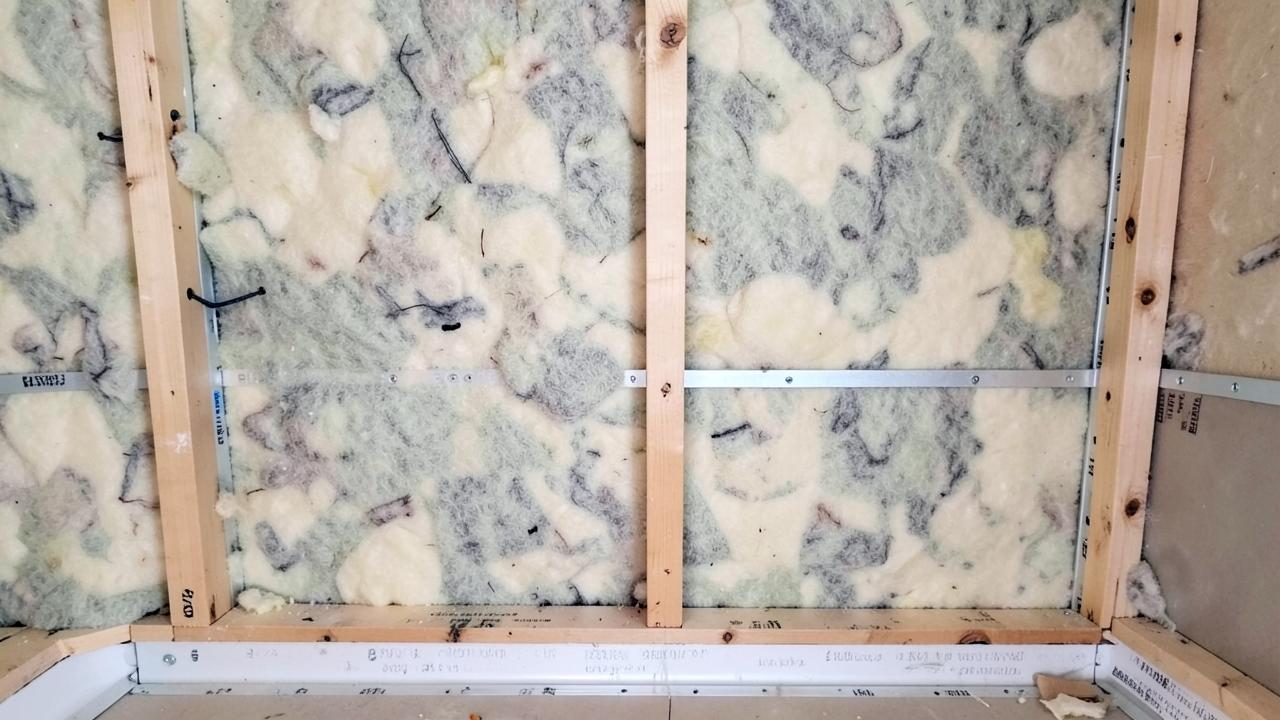
Reducing sound through an interior wall means adding mass (denser layers that resist vibration), decoupling the two wall surfaces so vibration can't transfer directly through studs, and sealing every air gap, since sound leaks through gaps as easily as air does. Foam acoustic panels, by contrast, mainly absorb echo within a room and do very little to block sound from passing through to the next room.
Why don't foam panels stop sound between rooms?
Foam panels address reverberation — sound bouncing around inside a room — which is a different problem from transmission, sound passing through a wall assembly to an adjacent space. A wall's ability to block transmission is measured by its Sound Transmission Class (STC) rating; a standard single 1/2-inch drywall wall on wood studs rates around STC 33, meaning normal speech is audible and understandable through it. Foam panels applied to that same wall change its interior acoustics but add essentially nothing to its STC rating.
| Wall treatment | Approx. STC rating | Relative cost (per linear wall foot, 8 ft tall) |
|---|---|---|
| Standard 1/2 in drywall, single layer, wood studs | ~33 | Baseline |
| Add second layer 5/8 in drywall (double layer) | ~38-40 | $8-$14 |
| Add mass-loaded vinyl (MLV) between drywall layers | ~45-50 | $15-$25 |
| Resilient channel + double drywall (decoupled) | ~50-55 | $18-$30 |
| Staggered-stud or double-stud wall with insulation | ~55-62 | $30-$60 (new wall build) |
What's the single most cost-effective upgrade?
For an existing finished wall, adding a second layer of 5/8-inch drywall over the existing layer, ideally with a bead of acoustic sealant or a thin layer of Green Glue damping compound between the two layers, is the best cost-to-improvement ratio — typically raising STC from the low-30s to the low-40s for $8-$15 per linear foot of wall plus labor. This is far cheaper than opening the wall to add resilient channel or mass-loaded vinyl, though those steps do more.
Why does sealing gaps matter as much as adding mass?
Sound behaves like air or water — it finds the path of least resistance. An otherwise excellent STC-55 wall assembly can perform closer to STC-40 in practice if there's an unsealed gap around an electrical outlet box, a hollow-core door, or a gap under the baseboard. Acoustic putty pads around outlet boxes ($3-$6 each), acoustic caulk at the wall perimeter, and a solid-core door with a door sweep close these leaks and often make a bigger practical difference than people expect from such small gaps.
Is a full stud-decoupled wall worth the disruption?
For a home theater, music room, or shared-wall condo noise problem, yes — decoupling (resilient channel, sound isolation clips, or a staggered/double-stud wall) blocks the direct vibration path through studs that no amount of added mass alone fully solves. This requires opening the wall to the studs, which typically runs $15-$40 per square foot including new insulation and drywall, and is best planned alongside any other renovation in that room rather than as a standalone project given the disruption.
Does insulation alone soundproof a wall?
Adding batt insulation into an empty stud cavity typically improves STC by only about 2-5 points on its own, mostly by damping the air cavity resonance — it helps but isn't a fix by itself. Insulation is most effective as one part of a full assembly (insulation plus decoupling plus added mass), not as a standalone soundproofing measure, despite it often being marketed that way.
Do windows and floors need the same treatment as walls?
Yes, and they're often overlooked. A standard double-pane window rates roughly STC 26-28, well below even an untreated wall, so upgrading wall assemblies while leaving a single adjacent window untreated can leave the noise problem largely unsolved. Laminated acoustic glass or adding a storm window can raise window STC into the mid-30s to low-40s. Floors between levels benefit from similar principles — a resilient underlayment plus mass (like an added layer of gypsum board on the ceiling below) reduces both airborne and impact noise, though impact noise (footsteps) generally needs a resilient underlayment specifically rated for Impact Insulation Class (IIC), not just STC.
How much soundproofing is realistic on a limited budget?
For $200-$500, sealing gaps around outlets and baseboards, adding a door sweep, and hanging heavy, dense curtains over any adjacent window addresses the easiest and cheapest sound leaks first, often producing a noticeable subjective improvement even without touching the wall assembly itself. For $500-$1,500, adding a second layer of drywall with damping compound on the noisiest shared wall targets the next biggest gain. Full decoupled wall construction, at $15-$40 per square foot, is worth reserving for genuine problem rooms — home theaters, music practice spaces, or a shared wall with a consistently noisy neighbor — rather than applying it as a first step everywhere.
What STC rating actually stops normal speech from being heard?
Around STC 50 or higher is generally needed for loud speech to become unintelligible, and STC 55-60+ is typical for professional home theaters or music rooms. Most standard homes sit in the low-to-mid 30s, where normal conversation is easily heard through the wall.
Does mass-loaded vinyl work as well as it's marketed?
Mass-loaded vinyl (MLV) genuinely adds useful mass and can raise STC by roughly 5-10 points when installed correctly between drywall layers, but it needs to be paired with sealed seams and proper installation — simply stapling MLV to a wall without addressing seams and edges under-delivers on its potential.
Is soundproofing an existing finished wall realistic without demolition?
Yes, to a meaningful degree — adding a second drywall layer with damping compound, sealing gaps, and upgrading the door can move a wall from roughly STC 33 to the low-40s without opening it up. Getting into the 50s generally does require opening the wall to add decoupling.
Run the numbers for your own project
- Drywall CalculatorHow many sheets of drywall do I need?
- Project Cost EstimatorWhat will this project cost me?
Keep reading
- How Much Paint Do You Actually Need for a Room?The tin says 400 square feet. Your wall says otherwise. Here is the arithmetic that actually holds up.
- DIY or Hire a Pro? A Decision Framework That Is Not About MoneyThe labour saving is real. So is the cost of a job done twice — and of tools you use once.
- Storage for Small Rooms That Does Not Make Them SmallerSmall rooms do not need more storage. They need storage that stops interrupting the eye.