Smart Thermostats: What They Actually Save, Without the Marketing Math
By Jim Vernon · 4 min read · Last updated
A smart thermostat saves you nothing if nobody sets it up — the savings come from the schedule, not the app.
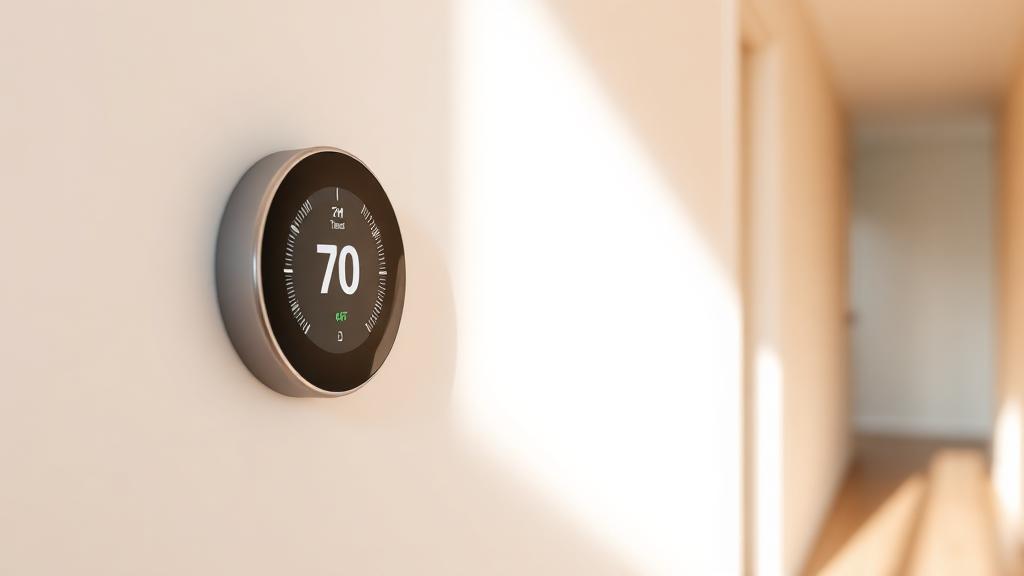
Manufacturer claims of 10-15% savings on heating and cooling are plausible under specific conditions, not guarantees. The mechanism behind the savings is straightforward: reducing conditioning when the home is empty or asleep and it isn't needed. A smart thermostat makes that easier to do consistently; it doesn't save energy by itself while sitting idle at a fixed temperature.
Where the savings actually come from
- Automatic setbacks during sleeping hours and while the home is unoccupied, based on schedules, geofencing, or occupancy sensors.
- Learning algorithms that build a schedule from your actual behavior instead of requiring manual programming.
- Remote access, letting you adjust settings if plans change instead of leaving the system running on a stale schedule.
- Usage reports that make inefficient patterns visible — long system run times, frequent overrides, or a schedule that never actually activates.
A programmable (non-smart) thermostat can achieve most of this
A basic programmable thermostat, set with a sensible schedule and left alone, delivers the bulk of the setback savings a smart thermostat offers — for a much lower price. The smart thermostat's real advantage is convenience and consistency: it's harder to forget or override a schedule that adjusts itself based on your phone's location or your actual patterns, and reporting makes gaps in the schedule visible.
| Thermostat type | Typical cost | Requires manual scheduling? | Remote/app control |
|---|---|---|---|
| Basic manual | $15-40 | N/A (no scheduling) | No |
| Programmable | $30-80 | Yes, one-time setup | No |
| Smart / learning | $130-280 | Optional — can learn automatically | Yes |
Where smart thermostats add real, distinct value
- Households with irregular schedules, where a fixed program doesn't match actual occupancy but geofencing can adapt automatically.
- Second homes or rental properties, where remote monitoring and control prevent wasted conditioning of an empty space and can alert to HVAC malfunctions.
- Multi-zone systems, where some smart thermostats coordinate across zones more effectively than standalone programmable units.
- Households that want usage data to identify whether the HVAC system itself is running excessively, which can be an early sign of a maintenance issue.
Compatibility matters more than most buyers expect
Not every HVAC system pairs well with every smart thermostat. Systems without a C-wire (common wire) sometimes need an added wire run or a compatible adapter, heat pump systems have different wiring conventions than standard furnace/AC systems, and some multi-stage or zoned systems have limited smart thermostat compatibility. Check compatibility with your specific system, not just the thermostat's marketing page, before buying.
Setback depth and duration matter more than the thermostat brand
The size of the savings depends much more on how far back you set the temperature and for how long, than on which smart thermostat model you choose. A modest 3-4 degree setback for 8 hours overnight is a reasonable, comfort-preserving starting point; larger setbacks save more energy but can mean a longer, higher-energy recovery period to get back to a comfortable temperature.
A worked example: setback savings in dollars
For a household spending roughly $150/month on heating, a consistent 4-degree, 8-hour overnight setback commonly reduces heating energy by somewhere around 5-10%, or roughly $7.50-15 a month during the heating season. Over a 4-5 month heating season that's $30-75 saved, which puts a $150-200 smart thermostat's payback in the 2-4 year range for a household that wasn't previously setting back consistently — much longer if they already were.
- Common mistake: buying a smart thermostat and leaving it on a single constant setpoint, which forfeits the entire mechanism the savings come from.
- Common mistake: setting back so aggressively that the system runs at high output to recover, offsetting some of the setback's savings, especially with a heat pump.
- Common mistake: assuming compatibility without checking for a C-wire or heat pump-specific wiring before buying.
- Common mistake: ignoring the usage reports the thermostat provides, which are one of its more useful ongoing features for catching problems.
- Common mistake: comparing a smart thermostat's advertised savings percentage against your own already-efficient habits, rather than against a genuinely non-adjusted baseline.
Do I need a C-wire for a smart thermostat?
Many modern systems have one already; if not, some smart thermostats include a workaround (like a power-stealing design), though these can cause issues with certain HVAC systems. Check your specific model's requirements, or have an HVAC technician confirm compatibility.
Is the payback period for a smart thermostat actually short?
For a household with genuinely inconsistent thermostat habits, a $150-200 smart thermostat can pay for itself within 1-3 years through setback savings. For a household that already sets back consistently, the payback period is much longer or may not materialize.
Do smart thermostats work with heat pumps the same way?
Mostly, but large temperature setbacks can be less efficient with heat pumps than with furnaces, since recovering from a big setback may trigger less-efficient auxiliary/resistance heat. Many smart thermostats have a heat pump-specific mode to manage this — make sure it's enabled if you have a heat pump.
Do multi-zone or multi-thermostat homes see the same savings pattern?
Yes, and often more, since zoning lets you set back or condition only the rooms actually in use rather than the whole house uniformly — the same setback logic just applies at a finer level.
Is geofencing reliable enough to trust over a fixed schedule?
For most people it's reliable, but phone battery savings settings or a forgotten phone at home can cause missed detections occasionally. A fallback schedule alongside geofencing avoids relying on it entirely.
Run the numbers for your own project
- Energy Savings CalculatorWill this upgrade pay for itself?
- AC and Heater BTU CalculatorHow many BTUs do I need to heat or cool this room?
Keep reading
- How Much Paint Do You Actually Need for a Room?The tin says 400 square feet. Your wall says otherwise. Here is the arithmetic that actually holds up.
- DIY or Hire a Pro? A Decision Framework That Is Not About MoneyThe labour saving is real. So is the cost of a job done twice — and of tools you use once.
- Storage for Small Rooms That Does Not Make Them SmallerSmall rooms do not need more storage. They need storage that stops interrupting the eye.