Siding Options Compared: Vinyl, Cement, Wood, Metal
By Jim Vernon · 5 min read · Last updated
Fiber cement costs roughly twice as much as vinyl installed but lasts two to three times as long — the math favors different choices depending on your time horizon.
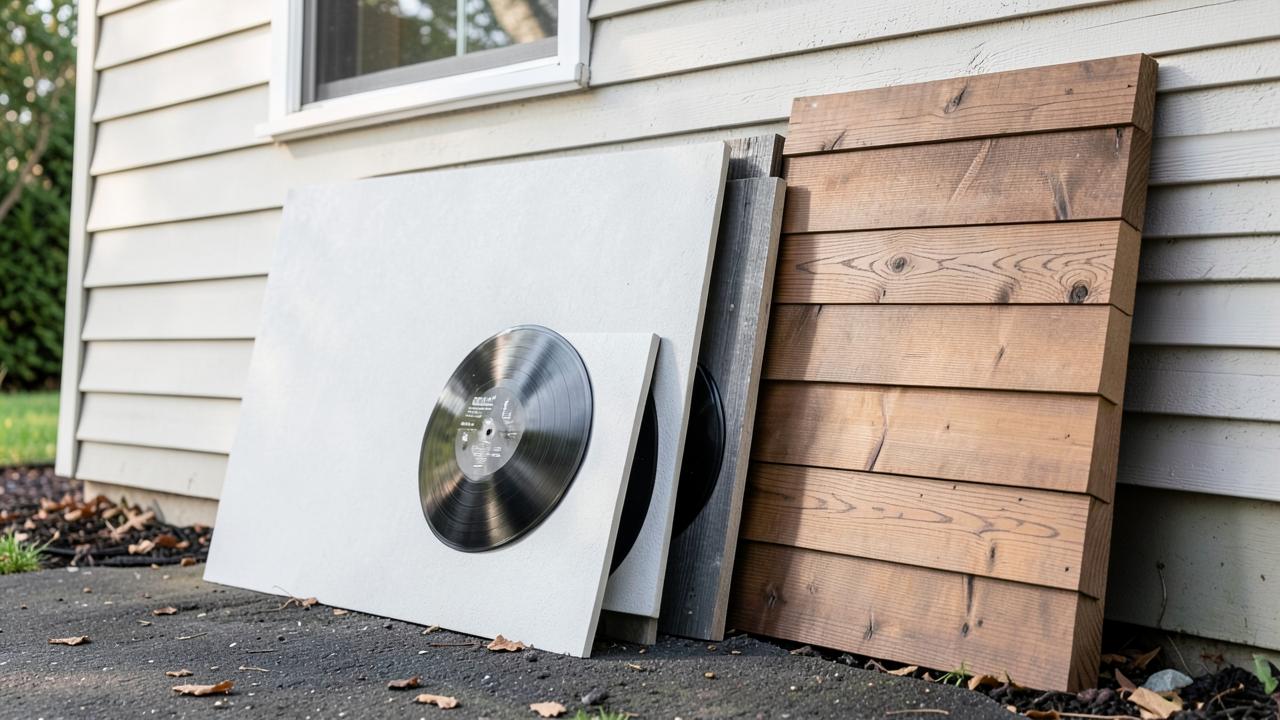
The right siding choice depends mostly on how long you plan to own the home and how much annual maintenance you're willing to do: vinyl is the cheapest upfront and nearly maintenance-free but shows its age and can crack in hard freezes; fiber cement costs more but resists fire, insects, and rot for 30-50 years; wood offers the best look but demands repainting or restaining every 5-8 years; metal panel siding sits at a premium price but can outlast the house.
How do the major siding types compare on cost and lifespan?
| Siding type | Installed cost/sq ft | Expected lifespan | Maintenance |
|---|---|---|---|
| Vinyl | $4-9 | 20-40 years | Occasional wash; no painting |
| Fiber cement (e.g., HardiePlank) | $8-14 | 30-50 years | Repaint every 12-15 years |
| Engineered wood | $6-11 | 25-30 years | Repaint/reseal every 8-10 years |
| Natural wood (cedar, pine) | $8-16 | 20-40 years with upkeep | Repaint/stain every 5-8 years |
| Metal panel (steel or aluminum) | $9-16 | 40-70 years | Rare touch-up on scratches |
| Stucco (traditional 3-coat) | $8-14 | 50+ years | Recaulk joints every 5-10 years |
Which siding holds up best in extreme climates?
In freeze-thaw climates, fiber cement and metal outperform vinyl, which becomes brittle below roughly 20°F and can crack on impact from hail or a stray baseball. In coastal and high-humidity climates, fiber cement and vinyl both resist rot better than wood, but fastener and trim hardware needs to be stainless or hot-dip galvanized to avoid rust streaking within a few years. In wildfire-prone areas, fiber cement and stucco carry a Class A fire rating that vinyl and untreated wood cannot match.
How much does long-term maintenance change the real cost?
Over a 30-year ownership horizon, wood siding's repainting cycle (roughly $3,000-6,000 per repaint on an average home, every 6-8 years) can add $12,000-24,000 in maintenance costs on top of the initial install — often exceeding fiber cement's higher upfront price. Vinyl and metal largely avoid this recurring cost, which is why total-cost-of-ownership comparisons often favor them even when the sticker price looks worse than wood.
What installation details matter regardless of siding type?
- A drainage plane (house wrap or building paper) behind the siding, not caulk alone, is what actually keeps water out of the wall assembly.
- A minimum 1/4-inch gap at the bottom of siding above grade, decks, and roofs to prevent wicking moisture into the material.
- Proper nailing patterns — over-driven nails on vinyl restrict its thermal expansion and cause buckling or cracking.
- Flashing at every window, door, and penetration, integrated with the house wrap in a shingle-lap sequence so water sheds outward at each layer.
- Rainscreen furring strips (3/4 inch) behind fiber cement or wood in humid climates, which extend paint life significantly by letting the back of the siding dry.
Does siding choice affect resale value?
National remodeling cost-value surveys consistently show fiber cement siding replacement recouping roughly 80-90% of its cost at resale, among the higher returns of any exterior project, while vinyl replacement typically recoups 65-80%. The gap reflects buyer perception of durability and lower future maintenance rather than any functional difference in weathertightness when both are installed correctly.
How do you decide between siding types for a specific project?
Start with how long you expect to stay in the home: under 7-10 years, vinyl's low upfront cost usually wins on pure economics since you likely won't own it long enough to benefit from fiber cement's longevity premium. Past 10-15 years of expected ownership, fiber cement or metal panel typically wins on total cost even with the higher install price, because you avoid one or more repainting cycles. Climate should override budget in extreme conditions — coastal salt air, wildfire zones, and hard freeze-thaw regions each favor a specific material regardless of how long you plan to stay, since a poor climate match can mean premature failure well before the expected lifespan.
What warranty and insurance factors come with each siding type?
- Vinyl siding warranties commonly run 20-30 years but are often prorated after year 10, meaning a failure at year 15 might only cover a fraction of replacement cost.
- Fiber cement manufacturers typically offer 30-50 year non-prorated material warranties, though labor to reinstall is rarely covered past the first few years.
- Class A fire-rated siding (fiber cement, stucco, some metal systems) can reduce homeowners insurance premiums by a small percentage in wildfire-designated zones — worth checking with your insurer before finalizing material choice.
- Impact-resistant vinyl and metal siding sometimes qualify for hail-related premium discounts in regions with frequent severe storms; ask for the specific product's impact rating documentation.
Can different siding types be mixed on the same house?
Yes, and it's a common design choice — fiber cement or stone veneer on a front facade with vinyl on less visible sides, for example, balances curb appeal against budget. The main technical concern is ensuring compatible flashing and transition details where two materials meet, since each expands and contracts differently; a poorly flashed transition strip is a frequent source of water intrusion on mixed-material homes.
Is vinyl siding a bad choice for a nicer home?
Not inherently — premium vinyl with thicker gauge (0.046-0.052 in.) and dimensional profiles looks far better than economy vinyl and holds color longer. It remains a value-driven choice, but a well-installed premium version performs and looks respectably.
Can you install new siding over old siding?
Sometimes, for vinyl over existing vinyl or wood lap in good condition, using furring strips to create a flat plane. It's not recommended over damaged sheathing or rotted siding, since problems get sealed in rather than fixed, and it adds wall thickness that complicates window and trim details.
How long does a full siding job typically take?
For an average 2,000-2,500 square-foot home, a professional crew typically completes vinyl or fiber cement siding in 1-2 weeks, weather permitting; wood siding with staining or painting can take 2-3 weeks due to finish drying time between coats.
Run the numbers for your own project
- Project Cost EstimatorWhat will this project cost me?
- Deck and Fence Material CalculatorHow much timber does my deck or fence need?
- Home Maintenance ScheduleWhat should I be doing to my home this month?
Keep reading
- How Much Paint Do You Actually Need for a Room?The tin says 400 square feet. Your wall says otherwise. Here is the arithmetic that actually holds up.
- DIY or Hire a Pro? A Decision Framework That Is Not About MoneyThe labour saving is real. So is the cost of a job done twice — and of tools you use once.
- Storage for Small Rooms That Does Not Make Them SmallerSmall rooms do not need more storage. They need storage that stops interrupting the eye.