Using Salvaged and Reclaimed Materials Without Renovation Regret
By Jim Vernon · 4 min read · Last updated
Reclaimed materials save money and landfill space — but only if you inspect for rot, lead paint, and hidden hardware first.
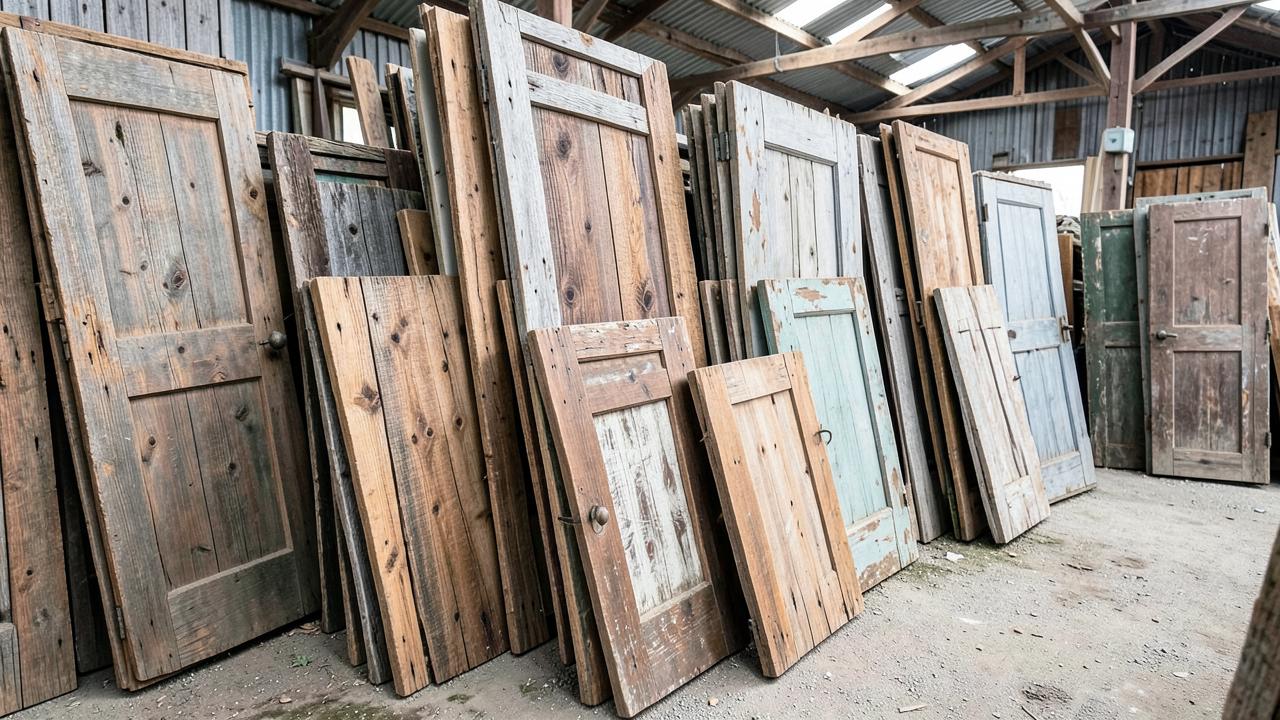
Salvaged and reclaimed materials can cut project costs by 20-60% compared to new — reclaimed lumber, salvaged doors, and architectural fixtures often run well below retail — while diverting usable material from landfills. The savings only hold up if you inspect carefully for structural soundness, lead paint, and pests, and budget extra time for cleaning, milling, or refinishing that new materials don't require.
What materials are good candidates for salvage?
- Solid wood doors and vintage hardware — often better built than modern hollow-core equivalents.
- Reclaimed structural or barn lumber for accent walls, shelving, and furniture.
- Brick and stone from demolition, cleaned and reused for patios or veneer.
- Clawfoot tubs, sinks, and light fixtures from architectural salvage yards.
- Kitchen cabinets in good condition from renovation resale outlets like Habitat for Humanity ReStore.
What should you always inspect before buying salvage?
| Item | What to check | Deal-breaker |
|---|---|---|
| Painted wood (pre-1978 homes) | Lead paint test kit ($10-$15) | Positive lead test without a safe abatement plan |
| Reclaimed structural lumber | Rot, insect damage, embedded nails/metal | Soft spots, active insect holes, heavy warping |
| Salvaged tubs/sinks | Cracks, chips, glaze condition | Hairline cracks that can spread under weight or heat |
| Cabinets | Box squareness, soft particleboard, water damage | Swollen or delaminating particleboard bottoms |
| Windows/doors | Warping, rot at bottom rail, glazing condition | Rotted frame or non-square opening that won't seal |
How much time and labor should you budget for reclaimed materials?
Plan for 15-30% more labor time than new materials require: reclaimed lumber often needs de-nailing and re-milling ($1-$3 per board foot at a local mill), salvaged doors may need rehanging and hardware fitting, and old fixtures sometimes need re-plumbing to modern connection standards. Factor this labor time into your cost comparison — the material savings can be real even after accounting for it, but only if you plan for it upfront.
Where do you find quality architectural salvage?
- Habitat for Humanity ReStores — cabinets, doors, appliances, hardware, often 50-90% below retail.
- Local architectural salvage yards — specialize in doors, mantels, hardware, and fixtures from demolished older homes.
- Demolition and deconstruction companies — some sell directly and can supply larger quantities of matching lumber or brick.
- Online marketplaces and local classifieds — good for one-off finds but require in-person inspection before paying.
When does reclaimed material actually cost more than new?
For code-critical systems — electrical wiring, plumbing fixtures needing modern efficiency ratings, structural framing lumber requiring stamped grading — reclaimed material often isn't worth the risk or added labor, and new material is both cheaper in total cost and compliant with current code. Reserve salvage for cosmetic, non-structural, and character-driven elements where age and imperfection are part of the appeal.
How do you negotiate price at a salvage yard?
Salvage yard pricing is usually more negotiable than retail, especially for larger lots or items that have sat unsold for a while. Ask about volume discounts if you're buying several matching pieces (multiple doors, a full run of brick), and ask whether the yard offers a discount for cash or for taking an item as-is without additional cleaning or prep work. Visiting near closing time on a slow weekday sometimes surfaces motivated pricing on larger or bulkier pieces the yard would rather move than store.
What tools or skills does working with reclaimed material require?
- A metal detector or careful visual inspection to find embedded nails and screws in reclaimed lumber before it hits a saw blade.
- Basic refinishing skills — sanding, stripping old finish, re-staining — since salvaged wood rarely arrives ready to install.
- A lead paint test kit for any painted material from a home built before 1978.
- Patience for mismatched dimensions — reclaimed lumber and salvaged doors often need trimming or shimming to fit modern openings exactly.
- A relationship with a local mill or woodworker if you plan to reclaim structural lumber for finish use, since re-milling is rarely a DIY-friendly step.
Is reclaimed material a good fit for a first-time renovator?
Reclaimed materials work best for renovators with some hands-on experience and flexible timelines, since sourcing, inspecting, and prepping salvage takes longer than ordering new material on a schedule. A first-time renovator on a tight deadline may find the unpredictability of salvage sourcing (inconsistent quantities, variable condition, limited color/size matching) adds stress that outweighs the savings. Starting with a single low-stakes accent — a salvaged mantel or a few reclaimed shelves — is a reasonable way to build comfort with the process before relying on salvage for a larger share of a renovation.
How do you budget realistically for a salvage-heavy project?
Add a 10-15% contingency on top of your salvage material budget to cover unexpected refinishing, hardware replacement, or the occasional piece that turns out unusable after a closer inspection at home. Buying slightly more reclaimed material than the project needs, when the price is right, is often worth it since matching dimensions or finish on a second trip is rarely guaranteed at a salvage yard with rotating inventory.
Is reclaimed wood safe to use indoors?
Yes, once properly inspected, cleaned, and treated for pests if needed. Have lumber from pre-1978 painted sources tested for lead, and have any wood that was stored outdoors checked for rot and insect activity before installing indoors.
How much cheaper is salvage than buying new?
Savings of 20-60% are common for doors, cabinets, and fixtures, though exact savings depend on condition, local salvage yard pricing, and how much refinishing labor is required.
Can I get a tax deduction for donating materials during a renovation?
In many cases yes, if you donate reusable materials to a qualified nonprofit like a Habitat ReStore instead of demolishing them; ask the organization for a donation receipt and consult a tax professional for your specific situation.
Run the numbers for your own project
- Project Cost EstimatorWhat will this project cost me?
- Home Maintenance ScheduleWhat should I be doing to my home this month?
Keep reading
- How Much Paint Do You Actually Need for a Room?The tin says 400 square feet. Your wall says otherwise. Here is the arithmetic that actually holds up.
- DIY or Hire a Pro? A Decision Framework That Is Not About MoneyThe labour saving is real. So is the cost of a job done twice — and of tools you use once.
- Storage for Small Rooms That Does Not Make Them SmallerSmall rooms do not need more storage. They need storage that stops interrupting the eye.